Ada Colau: "I am worried that Esquerra does not consider the elections lost"
Broad Front Candidate
-
CAT -
CAST
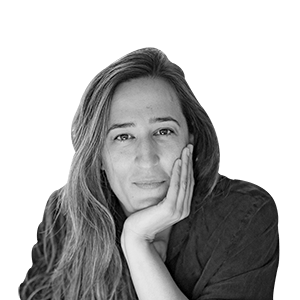
BarcelonaThe Broad Front candidate, Ada Colau (Barcelona, 1974), calls for not giving up in the final stretch of the campaign to avoid a right-wing government. The former mayor makes it clear that she will fight until the last minute so that a progressive executive can be re-elected.
Is there still a game to be played?
— You bet there is still a game. Until the last day, until the last moment, there is a game. We have not come here to resign ourselves or to give up.
There are polls suggesting that around 20% of voters who opted for Sumar in 2023 would now go to the PSOE. Why do you think this is happening?
— There are polls that can describe trends, but in recent years many said one thing and something else ended up happening. Polls can be turned around, and I am optimistic: on the street there are more and more people aware of the critical moment we are facing.
Is Sánchez running a good campaign for the useful vote?
— For the first time in Spanish democracy there is a risk that there could be a far-right government and the PSOE is mistaken if it bets everything on the useful vote, because it knows that alone it cannot govern nor can it guarantee a progressive government. The Broad Front is the only one that can force braver policies than those the PSOE would make alone. What I want is for the PSOE not to give up, as we saw in the face-to-face debate between Sánchez and Feijóo.
Is Rufián taking votes away from them?
— I will not speak ill of other left-wing options. There are differences between what Esquerra and the Broad Front offer. Rufián has made it very clear that he will not get involved in a progressive government and there needs to be another force that enters it with strength. And I am worried that the leaders of Esquerra will consider the elections lost and appeal for a coalition government. Catalonia cannot surrender.
Would you look favorably upon a concentration government?
— I do not consider this hypothesis. I work 24 hours every day so that there is no PP and Vox government. Catalonia is anti-fascist and we must mobilize the vote to stop a right-wing government and ensure there are brave policies. I have not come to resign myself, I have come to fight the battle.
And what separates them from Podemos?
— We made an effort to create a Broad Front where there are 15 groups and where Podemos was also invited. At no point did Podemos want to sit down and talk, and they made a different type of agreement. It is legitimate and respectable, and they have to provide the explanations. We are clear about who the adversary is.
It was said that you were the one chosen for the Broad Front due to your good relationship with Montero. Do you still maintain it?
— I have always respected her, but when someone does not want to sit down, you cannot force them. And since then we have not spoken again.
Seeing the strength that the BNG has in Galicia and Bildu in the Basque Country, was it a good option to run there?
— They are equally valid options. The BNG and Bildu are fellow travelers and part of an anti-fascist left-wing bloc in the State. But there are also people who want a strong state-wide candidacy that can take co-responsibility for a progressive government. They are two types of votes with different audiences that do not contradict or compete with each other.
He said that the PSOE and Sumar government has failed in housing matters. Why should the voters vote for them again?
— The majority force of this government has been the PSOE. Wherever the forces of the Broad Front have legislated and managed, that is where the bravest measures have been taken. Yolanda Díaz's labor reform, the historic increase in the minimum wage, the equalization of paternity leave with maternity leave, are the only measures that Sánchez boasts about in his rallies. He does not boast about his ministries, but about ours. This is proof that it is not the same for the PSOE to govern alone as it is to have to do so in coalition with a more left-wing and courageous force. Housing was a competence that was under the mandate of the PSOE. That I am the candidate is a clear declaration of intent from the Broad Front, and my personal commitment is to end speculation, reduce rental prices, and stabilize the rental market.
In fact, it proposes linking it to the neighborhood income, right?
— A state index so that, depending on the territories and their income, no one has to pay more than 30%.
Is there a risk that this will take rental apartments off the market?
— This is always said by big vulture funds and big speculators. In Germany, they have had regulated rent for many years and have it stabilized. It is not true that one thing leads to the other.
There is unanimity that more apartments are needed. They propose 125,000 homes per year by allocating 1% of the GDP to it.
— We said we would increase the housing budget by 1%, but not that everything has to be financed with this 1%. In Barcelona, we doubled the public social rental housing stock, and not only through direct construction, which takes too long, but also by intervening in the private market with a right of first refusal regulation that resulted in 1,600 apartments in Barcelona that were in the hands of investment funds moving into the public social rental market. Now we are considering expropriating vulture funds because there are thirteen of them that own 100,000 homes.
The Catalan housing law already provides for the possibility of being able to expropriate flats. Is there money to be able to expropriate all these flats?
— No, but current market prices are abusive and it would be unacceptable to pay for that with public money. We would do it with a specific expropriation law for large vulture funds, those that may own more than 1,000 apartments, where the price at which it could be expropriated would be taxed, which would be closer to the protection price rather than the free market price. The other way is to place a 10% tax on those who accumulate more than four apartments so that it is not profitable for them to speculate.
Should private entities have incentives to invest?
— In this country, if there is one thing we have in excess, it is incentives for private individuals, and especially large speculators, to invest, but they do it to speculate. And this must end; it is no longer about approving small subsidies, but about changing the rules of the game. Houses are for living in, not for speculating.
The 30% measure allocated to social housing has not worked.
— The 30% works in Paris, London and other cities of the world. Here it does not work because right now there is no political will. The Tenants' Union has filed a complaint against Mayor Collboni for not applying the 30%. The socialists are very sensitive to the pressure of the real estate sectors, and that is why they agreed with Junts that the 30% should not be applied. If you do not assign inspectors, if you do not open files on those who do not comply with the 30%, the law is not applied.
700,000 people have arrived in Catalonia and the number of apartments has not increased.
— With the real estate bubble, we built more housing than several EU countries combined. Currently, we have a higher average of housing per inhabitant than many EU countries have. We do not have a housing shortage. The problem is the use that is made of it. It has begun with the Maricarmen decree, but we must go deeper.
Is a Catalonia of 10 million sustainable?
— Indeed! And there are 10 million working people who contribute, who contribute with their work and their taxes to the common fund to be able to guarantee pensions, public services. I do not think we have a population problem right now in Catalonia. But we have one of the highest levels of inequality in our environment and, therefore, we must increase revenue by raising taxes on the rich to strengthen public services.
But are these public services sustainable in this Catalonia of 10 million and a low-wage economy?
— What is not sustainable is that in the Spanish state 1% of the population accumulates 26% of the wealth. There has been strong economic growth and what is needed is to redistribute this wealth, because the gap between the rich, who are getting richer, and the social majority is getting larger and larger.
Speaking of migrants: do you understand that there are people who may feel uncomfortable about their neighborhood changing?
— What I receive the most complaints about is people complaining that their neighborhood is being gentrified and neighbors have to leave because of speculation, not because of immigration. I do not find people telling me that an immigrant person is forcing them out of the neighborhood.
Is there a risk of war among the poor?
— The greatest risk is buying into the far-right's narrative, which spends all day repeating that immigration is a problem. And in our daily reality, this is false. Immigration is your neighbors with whom you live happily and in peace every day. And immigration does not strain public services. It contributes 10% to the public coffers and receives 1% of the aid.
What did you think of Puigdemont's appearance in the campaign?
— I am very glad that Puigdemont can finally return, that all the exiles can return, that the amnesty is effective, which has cost us a great deal and which has been driven by so many people, especially in Catalonia. Despite the Supreme Court and the PP, it is finally a reality. And what I regret is that now Puigdemont does not value this amnesty, and how we have achieved it, which is through the effort of all the Catalanist and democratic forces, and which takes us to where we want to be, which is returning politics to the political sphere and completely de-judicializing it.
If there is an absolute majority of the right, will it be maintained in Congress?
— Whatever happens, whether we have to assume responsibilities in government positions or in the opposition, I commit to defending our commitments and the program with which we have presented ourselves.
Also in government positions, for example, as Minister of Housing?
— I am not thinking about any position. I am committed to ensuring that the working social majority is defended in a future progressive government and that it starts with the right to housing.
Before the interview, I was talking about handing over the baton.
— We are at the end of a cycle. The transformative left ended the bipartisanship in the State, and there are things that have been done well and other things that have not turned out so well, and we have learned from them. Now there are mobilizations, from which new leaderships and new ways of doing politics will emerge that will have to spearhead a new cycle. It will be important for there to be figures who can act as a link.
Should the Broad Front be a party or is it just an electoral brand?
— It is the response to a demand for unity on the left and is the greatest effort of this unity with 15 political formations that have a common program. The Broad Front right now is a program. Later on it will be seen if it ends up being structured as a political formation, but the point is that it is at the service of the political project.
