What is culture?
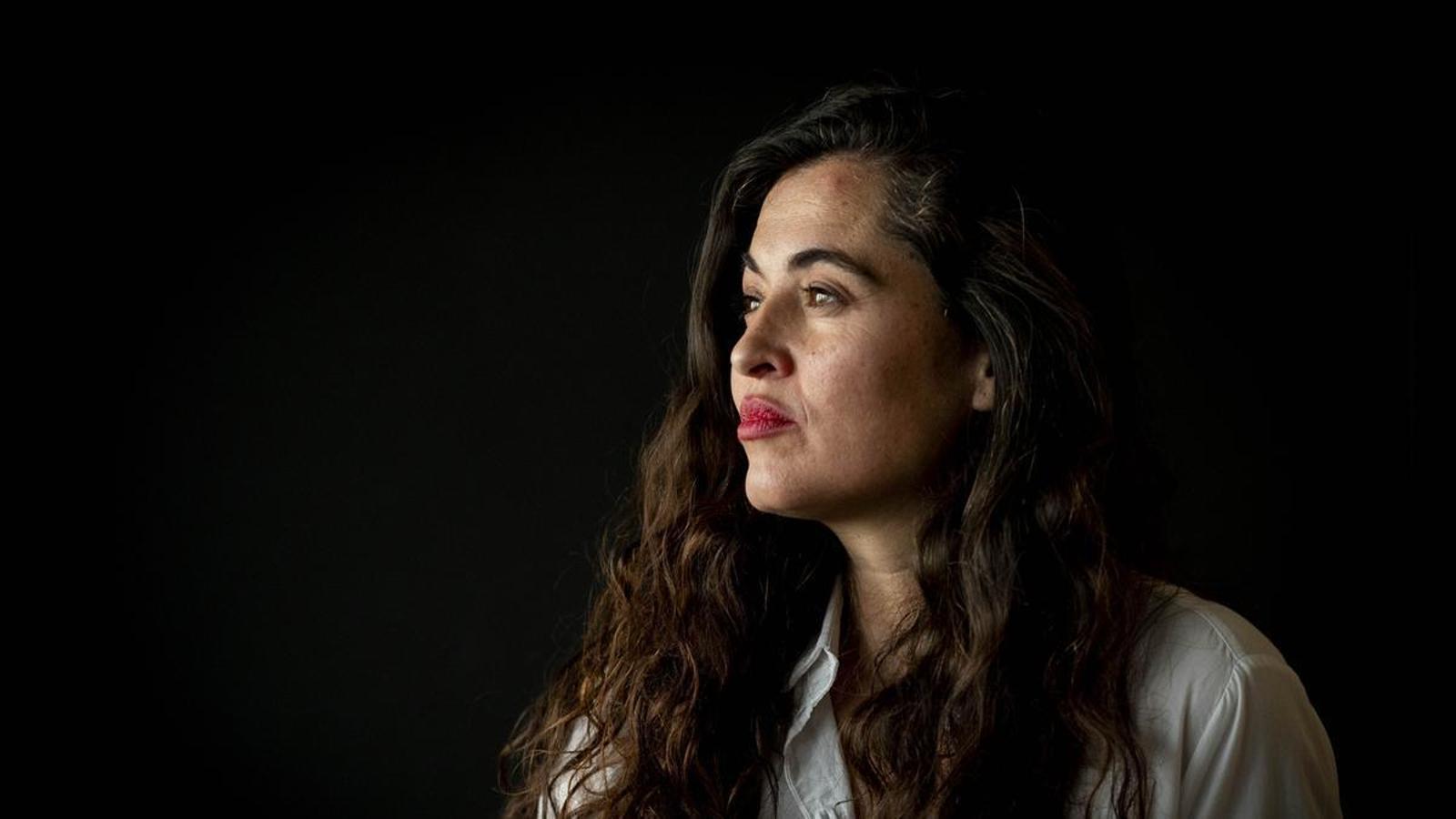

A few days ago, Sílvia Pérez Cruz, upon accepting the National Culture Award, ended her acceptance speech by saying that if we take care of culture, culture will take care of us. It seemed to me that I had heard her say it on some other occasion, and I found it very fitting: it is hard to think of anyone who can state it with such conviction, and at the same time with such meaning. One only needs to evoke one of Sílvia's songs, or any of her concerts, or even her way of speaking, moving, acting, to see that, certainly, she takes her craft as an act of caring. And of responsibility, too. Mireia Sallarès says this, that having an idea is having a responsibility, and I like how both ideas resonate together because, beyond the political thing or the social dimension of creation in terms of a manifesto or a claim, there is a political action in the gesture of writing (poems, songs, ideas, art...) that deals with a more delicate and sinuous political intention, I would say, more subtle and perhaps imperceptible, which is that of caring and that of having responsibility.
I have been thinking about this for a few days, when I went to the cinema to see La bola negra after having read several interviews with its directors, and perceiving that the political value of the film had to do, according to the media, with the act of recovering the memory of the Civil War: a memory, like all memory, partial and limited. I had been surprised by the directors' insistence on highlighting that the film recovers the buried stories of those years of horror and that the film does so, furthermore, in a spectacular way (in the sense of spectacle). At times it seems that the device and the constant search for emotion dilute the will to explain. I do not know. As with everything, there were things that interested me a lot and others that did not, but I wanted to evoke the film not to analyze it, but to return to Sílvia Pérez Cruz's idea and ask myself if it is necessary to have such large objectives, when creating, as that of commemorating the ghosts of a country and unearthing them, or if there is something relevant and urgent in the act of understanding the act of creation from care and responsibility. I suspect that this delicate and sinuous movement, as I said before, is more complicated to execute than it seems.
Also a few days ago, the Irreconciliables poetry festival in Malaga announced that none of its events would be broadcast in the form of a reel on social media: "We want to take care of the intimacy and beauty of what happens when we meet," they stated. The day before, the Pérgamo bookstore in Madrid, one of the oldest in the city, announced its closure, and Pablo, one of its booksellers, explained on the radio that it was necessary to start making the public understand that one of the great dangers for bookstores today is real estate speculation, and not the digital book. When he spoke about the bookstore, he did so in the plural, because he could not distinguish between the booksellers and the community they had managed to generate around the project: the closure went against everyone. It might be hard to find the connection between these events, but it is there: they are examples, or demonstrations, that culture has to do with the act of caring, as Sílvia claimed, and with the possibility of creating spaces where we can continue to meet. It could be at one of her concerts, at an Irreconciliables event of which there will be no trace on social media, or in a centenary bookstore, before they make it close. I think even Angélica Liddell creates this, although she would probably burn all the words I write here, but rarely have I felt such communion as in the main hall of the National Theatre with Vudú (3318) Blixen. Also a few days ago, the Biennial of Thought inaugurated and I thought about it again: in its destruction there is, whether it seeks it or not, the possibility of meeting. Despite the excessive dimension of her theatre and her writing, despite the desire to expel the audience and the reader, there remains the communion of so many hopeless solitudes in the stalls. Something happens.
I don't know about you, but I find that in all of this there is a desire to take care of something important and necessary. I listen to Sílvia again and then I affirm it with conviction, with her: if we take care of culture, culture will take care of us.
