Against the trivialization of politics
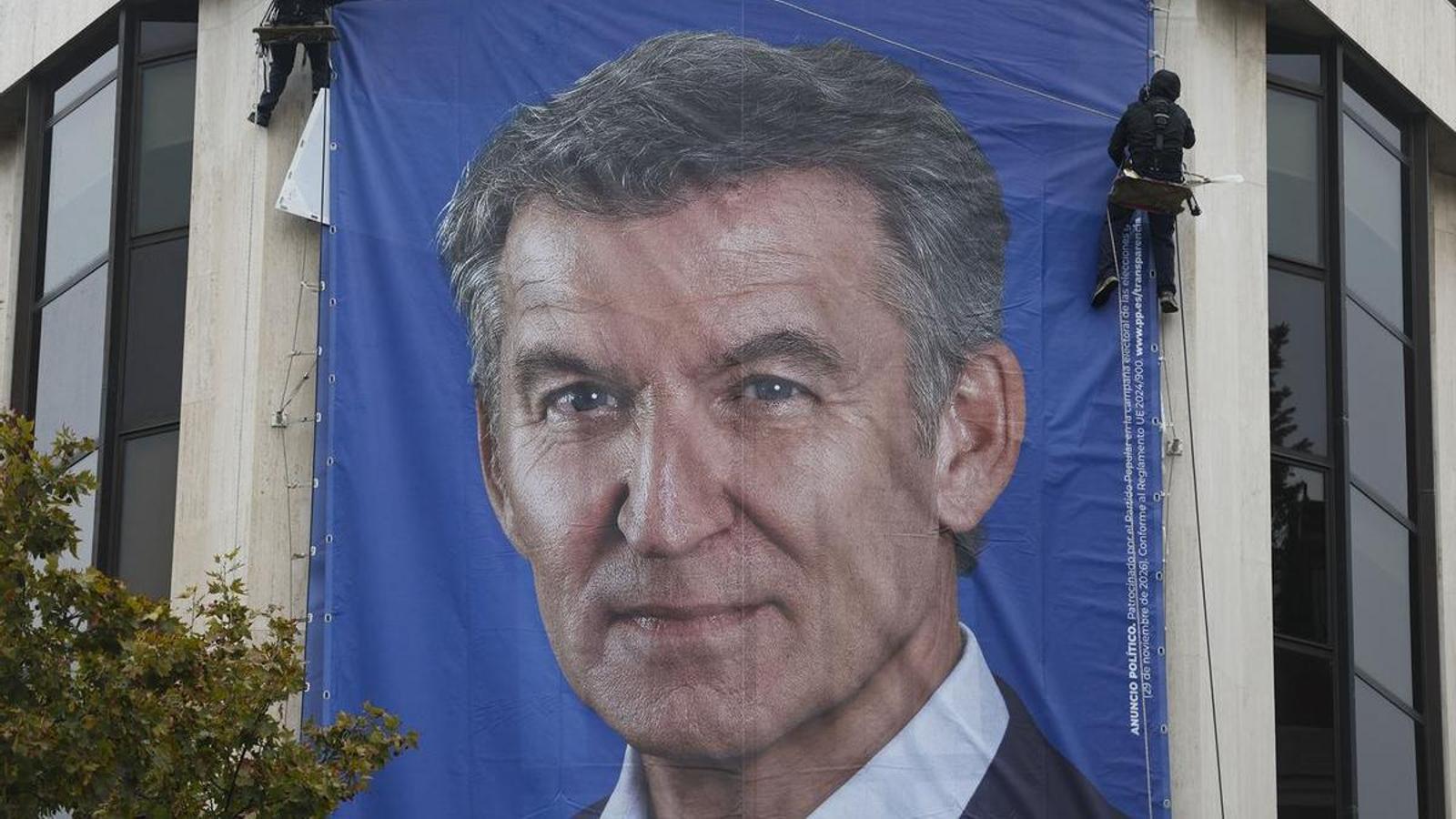
1. Feijóo says: “Forming a government coalition with Vox does not depend on me”. What a curious idea the PP leader has regarding the responsibilities of a head of government. What authority can he have if he cannot decide the partners with whom he will govern? A curious way of evading the responsibility of bringing the neo-fascist far-right into government. It is truly his style: dodging questions when they prove uncomfortable. A double sign of fragility: he shrugs off an unavoidable responsibility and gives free rein to the potential partner that intends to lead him down, shall we say, rather dark paths.
In a government, not just anyone can enter; it is the president who has the responsibility to form it and bring it to Parliament. Therefore, it depends on him whether or not there is a coalition government of the right. And he will, yes, be the one primarily responsible. With this nonchalance, Feijóo not only highlights his weakness—in all probability, he will depend on Vox. What he does is empower Abascal by making him believe he is the one holding the reins. We already know the result. By evading responsibilities, we already have the PP and Vox governing four autonomous communities. And obviously, the pair will continue. If they add up, they will govern together, signing on to the reactionary wave sweeping through Europe.
If Feijóo did not want to, there would be no shared government. Who is he trying to fool with this “larga cambiada (long shift)”, as the bullfighters would say? Or is it that he is already resigned to doing it and wants to pass the burden to Abascal? An absurdity: if there is a coalition, it will be because Feijóo wants it. And furthermore, Abascal will be able to present it, without nuance, as his own triumph. The far-right gives nothing away.
This display of weakness by the PP candidate coincides with a moment in which Aliança Catalana and Vox are starting to wink at each other. Certainly, Abascal has seized the opportunity to seek votes from Catalan neo-fascism as Orriols has decided not to run in the Spanish elections. A gift that Junts thinks it can fish something from and which Abascal is heading towards head-on. It is clear that neo-fascist urges transcend patriotic borders and that Sílvia Orriols has aligned herself quite well with Vox's interests.
The radicalization of the right, which is bringing neo-fascism to power while democratic rights are faltering, had not reached Catalonia. How long will it take for Junts—if it gets out of its dead end—to rush to seek out Sílvia Orriols, who has grown largely at its expense? These are times of Trump-branded cynicism. The American president says the Republican catastrophe was because he was not a candidate, and here Feijóo gifts Abascal the initiative to govern together. And he has the audacity to say that it does not depend on him.
2. This reactionary wave has disturbing effects beyond politics. Robert Talisse, an American philosopher, appeals in an interview with Philosophie Magazine “to find spaces for a depoliticized social life”. In other words, that democracy is currently threatened by an excess of politicization. And he points to the current communication system: “The tendency to surround ourselves with friends, on social media, who think like us and who stimulate us to adopt more extremist versions of ourselves”. That is, politics as an evil, as a danger, that should be left in the hands of a few. I am sorry, but that is what Francoism sold. And we all know how that went.
There are no two identical people; potential differences determine all areas of society. Democracy has achieved certain balances, which obviously do not resolve the deep differences in the power relations of a society, but they do attenuate their effects. How can we think that we will organize society with spaces of cooperation free from the power and force relations that structure any collective space? Deep down, it was the communist dream, and we already see what it has yielded: exacerbated forms of totalitarian power.
As Talisse himself says: “Democracy allows people to fulfill themselves beyond politics”. This is what we call civil society, upon which governance structures are built, with democracy as the most accurate form. And totalitarianism is the occupation of this space by certain powers. So far, the point of equilibrium that gives the most recognition to people is democracy. The depoliticization of social life would only give more power to those who feel they are the masters. And beware, because that is precisely what Musk and company were looking for, and the American citizens have left them empty-handed. It has been the citizenry, through the use of democratic institutions, who have put Trump against the ropes.
