The present as vertigo

-
CAT -
CAST
For days now, an acute sensation of overload and irrepressible vertigo has been invading me. I don't think this is just something personal, individual, but rather a sensation shared with those who, to a greater or lesser extent, try to follow current events with attention and somewhat closely. I also don't find it to be a capricious ailment. Even more, I would say that, if we stop for a moment to ponder it, we will immediately realize that this dizzying and elusive sensation that I believe is shared presents perfectly real causes.
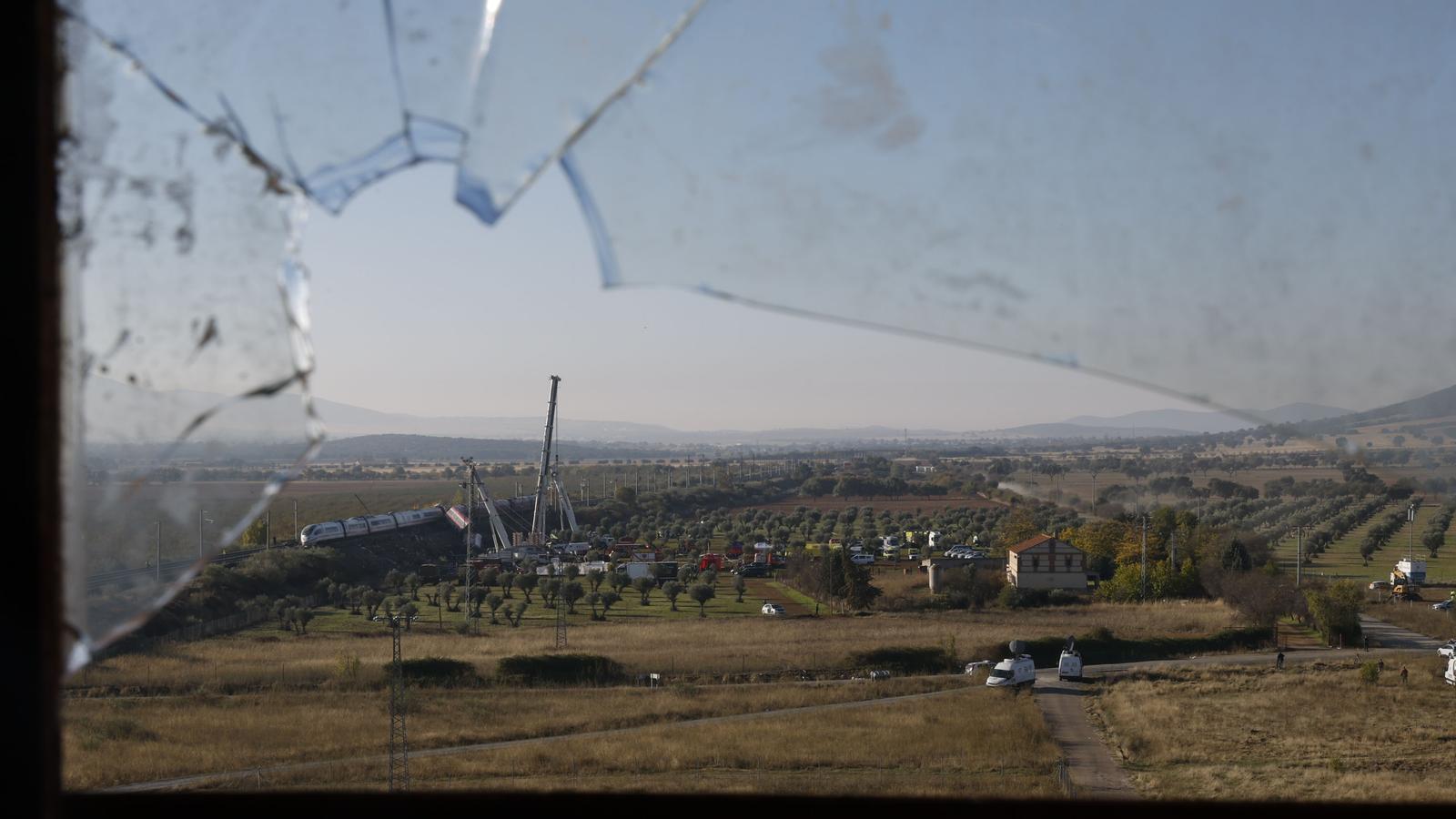
Let's see. At the end of July, there was a massive influx of immigrants into Ceuta (between 70,000 and 80,000). Many others died in the attempt. A little over a week later, the Supreme Court made the decision to provisionally suspend the right to vote for a portion of the people who obtained Spanish nationality through the Democratic Memory Law. On September 23, the eviction of 87-year-old Maricarmen Abascal took place in Madrid, which led to protests and a massive sit-in at the Puerta del Sol. Still in September, the Spanish government tried to pass two decrees dedicated to the housing problem. Congress rejected them with the votes of PP, Vox, Junts per Catalunya, and UPN. It is Friday, October 2. On Monday, Pedro Sánchez calls—radically contradicting what he had said and repeated until then—for early elections on November 29. That same Monday, the unions announce their intention to call a general strike for housing, an unprecedented strike, because it apparently goes more against the opposition than against the government. On Wednesday the 7th, Maricarmen dies. The Friday of the following week, the 16th, the PSOE spokesperson, Montse Mínguez from Lleida, resigns. The reason for the resignation is—precisely—the lucrative real estate businesses of her husband. Sánchez, who had called for elections encouraged by the forecast that the central issue would be housing, modifies the direction of the pre-campaign. He will base everything on his own image and on seeking the proximity and empathy of the citizen. Thus, for example, during the PSOE federal committee, he makes a theatrical declaration of love to his wife, Begoña Gómez, who is pursued by the justice system: “Let them hear it loud and clear: I love you”. Just a week later, on Saturday, October 24, violence and looting take over the center of Barcelona. Four days later, a brutal collision occurs in Toledo between a Renfe high-speed train and a stationary train from the Iryo company. Et cetera.
The facts succinctly enumerated have each had a strong political and social impact. In many cases, also beyond the Spanish borders. But perhaps the most surprising characteristic is that they have occurred in a period of time—attention—of less than three months, that is to say, between July 30 and October 28. In fact, it is possible that by the time these lines are before the reader's eyes, new shocks will have taken place.
A few years ago, the American futurist Jamais Cascio coined the acronym BANI to describe our present: brittle (fragile, breakable), anxious (anxious), non-linear (non-linear, in which small elements can produce giant and surprising effects) and incomprehensible (incomprehensible, indecipherable). It captures quite well, I think, what we have experienced these last three months. The philosopher Peter Sloterdijk, in Stress and Freedom (Arcàdia publishing house), also reflects on our contemporary societies. “In my view, we must conceive of the political macro-bodies we call societies primarily as force fields integrated by stress, more precisely as systems of concerns that self-stress and that are always rushing forward”. A few pages later he indicates that society is “a community of concerns that vibrates by virtue of stress-inducing topics mediated by the media”. To the traditional media we must now add the explosive and reconfiguring power of social networks and, increasingly, of generative AI.
As the German author says, one of the characteristics of this society of perpetual acceleration and anguish is the sensation of a flight forward, the nightmare—I add—that we are inevitably heading towards an unknown and, at the same time, dark and threatening future. As if we were precariously holding on to the back of a runaway horse, that is, uncontrolled and uncontrollable. Insomniac stress and tension do not only affect the political sphere: in reality, they affect us all. They shape a neurotic context, always on the verge of disorder, in which hyper-speed and the emotional flood barely let us think and condemn us to superficiality. It is a loop that feeds on itself, and which, as we have begun to see in many countries, can have serious, even terrible, consequences.
