A new banality of evil?

La Velada del Año VI, organized by Ibai Llanos, is a major event of streamers and celebrities with a large following among young people. The act, held last July, consists of boxing matches between internet personalities, interspersed with performances by well-known singers, especially trap and reggaeton. 80,000 people, mostly young, filling the La Cartuja stadium in Seville, and millions following it live from all over the Spanish-speaking world. A grandiose staging filled with grandiloquent tales, sentimentality, and, obviously, plenty of slaps, all to end up reproducing already well-known values: stories of personal improvement represented by streamers flush with money who train for months for a fight from which they take home a good cut. All seasoned with tacky references to Romans, many Spanish flags, romantic relationships of the streamers typical of the Disney of forty years ago, objectification of the woman's body – bad boy trap accompanied by Christian crosses– and many boys with the same haircut, very short, obviously.
They say that young people face an uncertain present and that, given this situation, they turn towards traditional values seeking security. But Ibai's show helps us to see that this supposed shift does not build a social-conservative alternative; rather, young people embrace a Darwinian capitalism that understands uncertainty as a virtue, individualism as a precept, and tradition only as another space to be commercially exploited. Values and life models that generate precisely insecurity: the ode to individual effort, the cult of a permanent antisocial competition in which nothing is guaranteed, the anxiety of those who seek what is differential but end up buying a laboratory aesthetic, closely linked to the capitalism of immediacy, conventional and incapable of achieving the long-awaited security and vital meaning. They are young people trapped in a present in which rebellion remains dissolved in escapism towards dopaminergic hyperbole disguised as false transcendence, perfectly represented in Ibai Llanos's show.
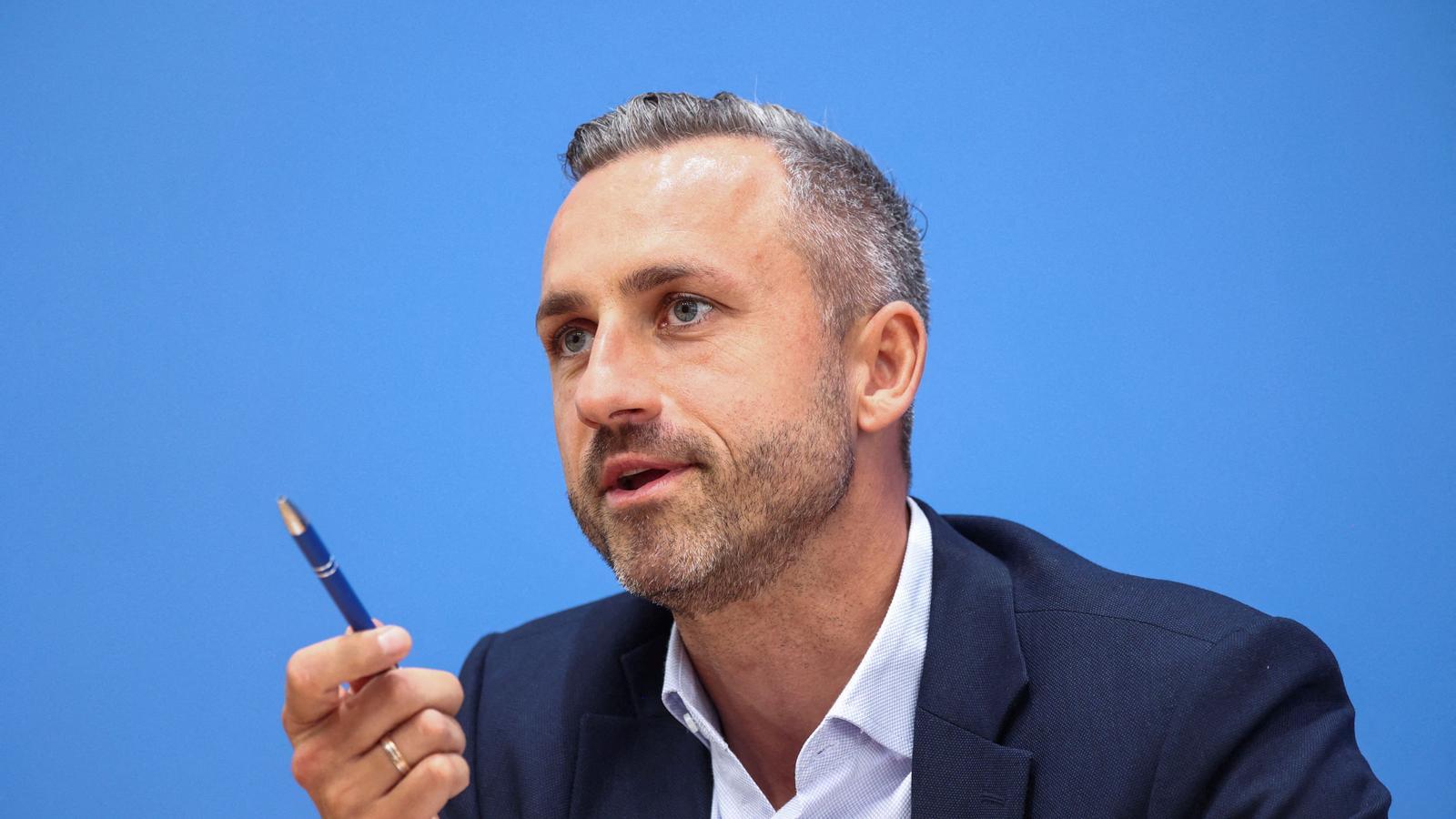
Let's take a leap. Weeks after La Velada del Año VI, on September 6th, 35-year-old Ulrich Siegmund of Alternative for Germany (AfD) won the elections in the state of Saxony-Anhalt, reaching nearly 44% of the vote. Analysts from all over pointed out that his success was partly due to the fact that he is a guy who does normal things: drinking beer, riding a motorcycle, and, especially, always having time to take selfies with his admirers. Siegmund seems to be the paradigm of the perfect son-in-law: his attire, his business studies, his smile. A feel-good populist, that is, a charismatic and likable guy who exploits what is conventional and well-known. However, Siegmund does things like attending, in November 2023 and while he was already the leader of the AfD parliamentary group, a secret meeting of white supremacists, neo-Nazis, and other influential far-right individuals in Potsdam where the concept of remigration was discussed in depth, a euphemism to advocate for the ethnic cleansing of "non-Europeans" in Europe. Some of his closest trusted advisors were in their youth militants of neo-Nazi organizations.
Siegmund is not a radical hidden cynically behind the appearance of a good guy, but an ordinary man who defends what is supposedly already normal. So “the most dangerous man in Germany”, as Der Spiegel titled, can defend ethnic cleansing while wolfing down a Thuringian sausage at the Christmas market among selfies, while chatting with his in-laws. Hatred no longer appears as a break with conventionality, but rather integrates into it.
And it is here that Siegmund and La Velada del Año cease to be such distant phenomena. Ibai Llanos' event solidifies that Darwinian substrate, that of the body, competition, money, individual success, the gym, the masculinity of camaraderie between warriors but at the same time the all-against-all, the flag, and consumption. And it fosters a collective sense of insecurity by promoting an individualistic and competitive culture. The extreme right does not need to introduce a new grammar. It is enough for it to mobilize and mark a political direction for an already existing state of mind. Therefore, what is truly disturbing is not that the extreme right has become mainstream, but that it is mainstream culture and the dominant values that embrace the extreme right, because they need it to calm an insecurity that they themselves continually feed, and to which they are incapable of providing a response or solution.
We could speak, then, of a new banality of evil, one that is not linked, for the moment, to grey bureaucrats who implement genocidal programs without batting an eye, but rather to a society so full of fear and uncertainty that it embraces hatred to preserve the statu quo. In any case, without a deep cultural change we will remain trapped in this continuous present, made of dopamine shows and prefabricated identities in which the potential for political rebellion and the capacity to imagine the future are diluted.
