The far right is serious
-
CAT -
CAST
Nearly two years ago I went to Merced, a city in central California, to give a talk at the university. On the way back, I took a taxi for quite a while to the airport. The taxi driver, who was Latino and lived in that area, made conversation with me. As often happens to me on these occasions, we ended up talking about politics. And the fact is, moreover, Donald Trump had recently won the presidential elections. I was very worried about what would happen in my adopted country starting in January, when Trump was to be inaugurated as president with a favorable majority in both Congress and the Senate, but the taxi driver was much calmer than I was. I didn't get the feeling that the taxi driver was a Trump voter, but he didn't seem very worried about what would happen either. He said that Trump talked and gestured a lot, but that in practice he didn't do everything he said. According to him, his first term had already shown that there was a great distance between his discourse and the policies he ended up carrying out.
Unfortunately, time proved me right, and things started to get very dark in the United States from January 20, 2025. In fact, since that day I often remember the taxi driver from California and what he must be thinking, now that he may know people who have been deported or brutally harassed by ICE, now that filling the taxi's gas tank costs him practically double what it cost him then and that he pays much more for his groceries. But the taxi driver is not the only one who downplayed the MAGA discourse. At a dinner in the fall of 2024, when a friend mentioned, very worriedly, Project 2025, most of those of us at the table brushed the matter off. "They won't do all that," they tended to say. And now, two years later, it seems that a good part of the goals of the disastrous Heritage Foundation report have already been met.
The MAGA movement, then, was not bluffing. One only needs to think, for example, of the brutal dismantling of the United States Agency for International Development (USAID), which has had serious consequences for the people who benefited from its development aid programs around the world. In Washington DC, we also witnessed the dismantling of the United States Institute of Peace (USIP), whose workers found themselves, overnight, no longer able to enter their beautiful building. For many, all of this was unimaginable until it became a reality that is difficult to reverse.
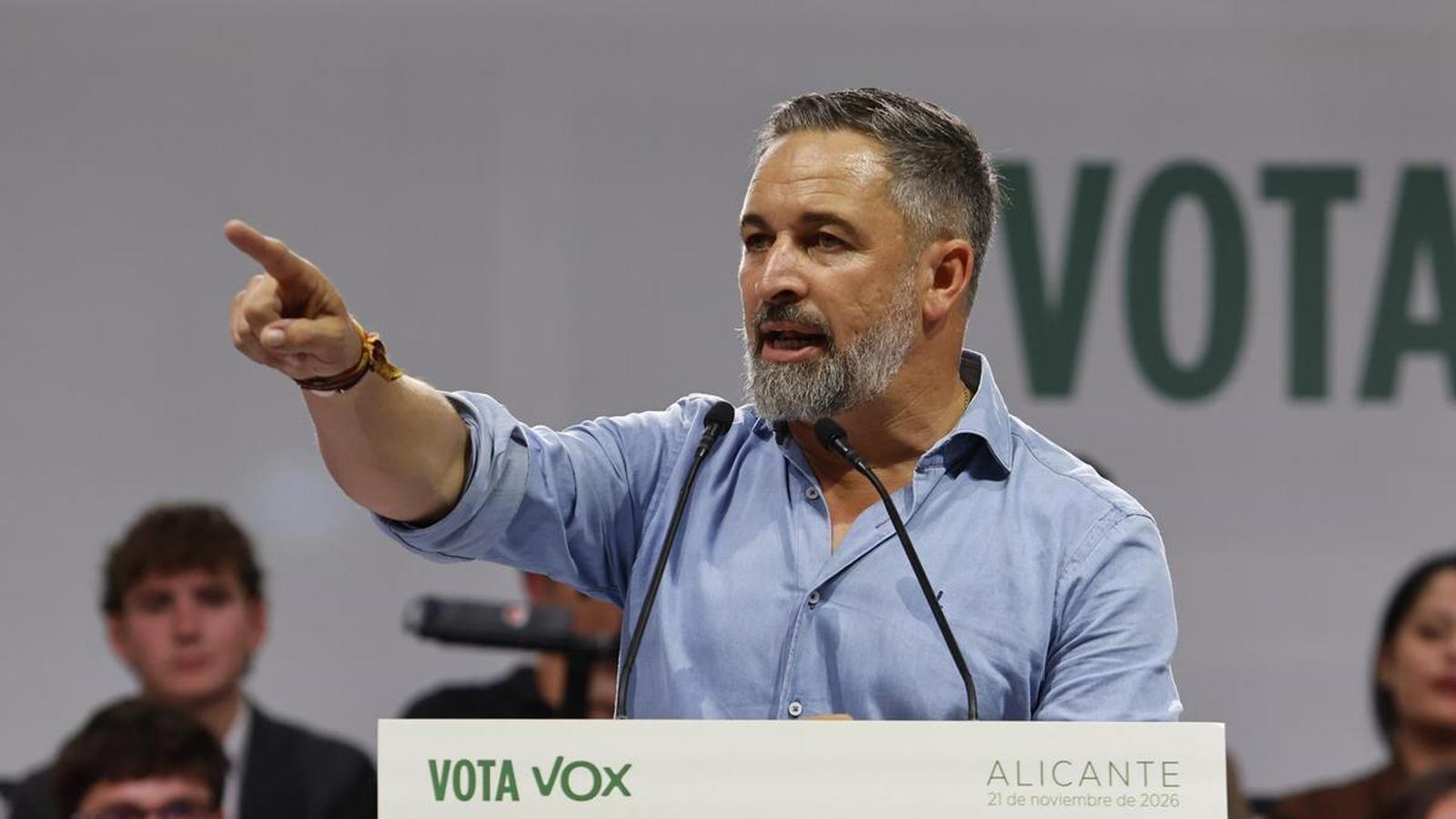
In a study I conducted with Sergi Martínez (Universidad Carlos III) and Ethan van der Wilden (University of Utah), published last year in the journal Political Science Research and Methods, we analyzed how the normalization of the far-right can cause its extreme rhetoric to be perceived as less authentic or credible. Through a survey experiment, we observed that when Vox is presented as a normalized party, people tend to downplay its more radical messages, such as those that attack the rights of LGTBIQ+ individuals. Furthermore, we found that this effect occurs primarily among moderate right-wing voters, and not among the most extremist ones.

What we observed on a small scale, in the context of a survey, has much broader implications. If people see Vox as a normalized party, with which other parties negotiate and form pacts, or as a party that their coworkers or neighbors vote for, they tend to downplay its more extreme rhetoric. In other words, they are likely to think that this rhetoric is not serious and that, when it comes down to it, the party will not do even half of what it proposes. And this can lead people who would never have considered voting for it to end up doing so.
We Americans, however, have learned that downplaying the rhetoric of the far right is very dangerous. When a far-right party announces what it wants to do, it must be taken seriously. The experience in the United States has shown us that failing to do so can have serious consequences that go far beyond the country's borders.

