Delusions of grandeur with a tragic result
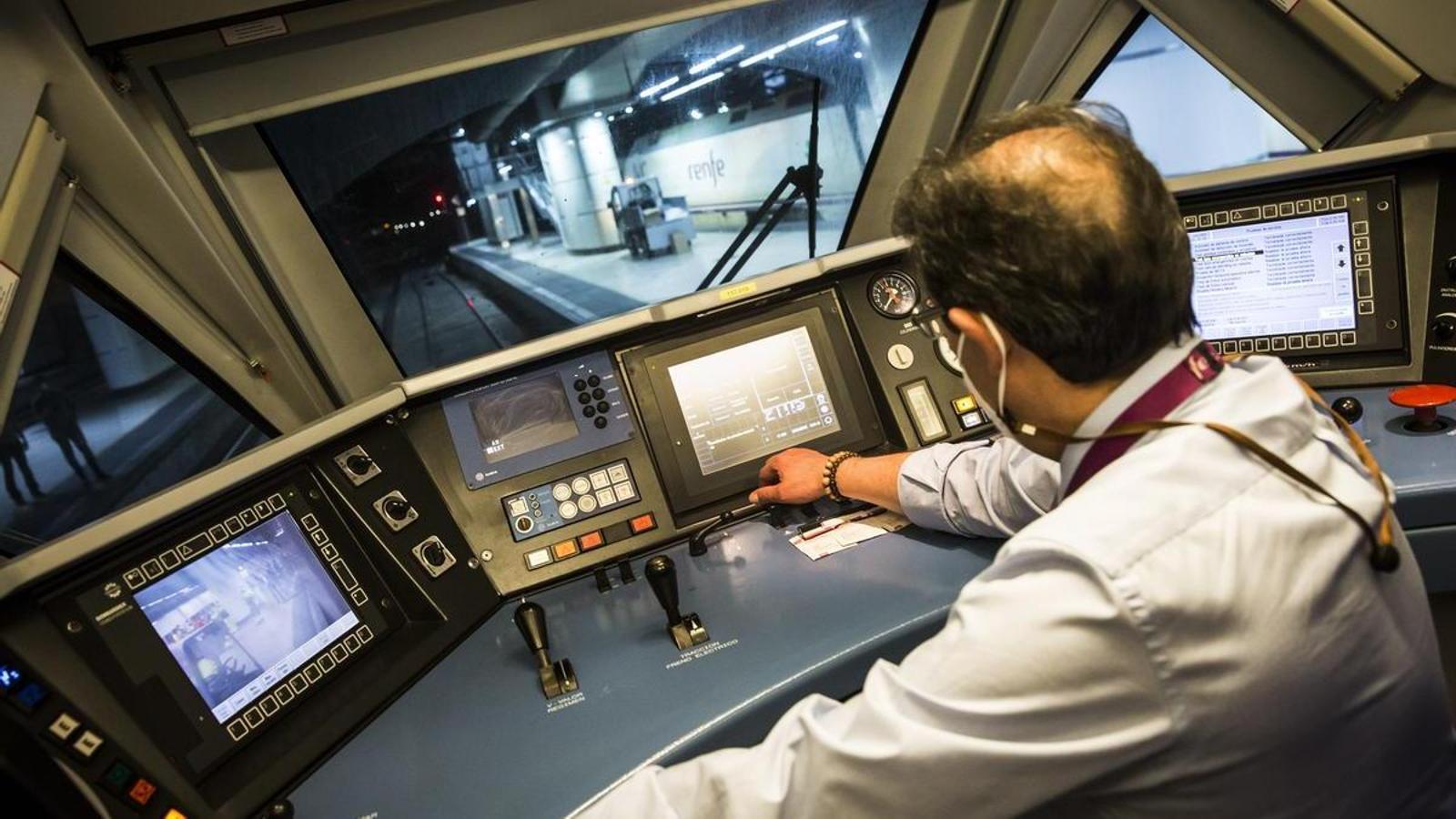

The Spanish commitment to high-speed rail has always seemed to me a matter worthy of analysis in political, sociological, and even historical terms, because it has transcended governments and parties and has established itself as a mantra of public management, which reveals, in my opinion, some obsessions that have become unhealthy.
One of the reasons for promoting the Spanish AVE was a recurring obsession over the last three centuries: to imitate France (and if possible, to surpass it). It is the result of an atavistic inferiority complex. Nowadays, Spain has more kilometers of track than its northern neighbor (and more than any other European country). But the French TGV transports many more passengers and, therefore, is more profitable. Many sections of the Spanish AVE still have to prove their utility in a certain Spain that is now called vaciada.
Another reason was also of French inspiration: converting Madrid into Paris, into the core of a centralized and radial territory. To compensate with mobility the centrifugal temptation of the State of Autonomies and –theoretically– to compensate for the territorial imbalance (that is why the first section inaugurated, in 1992, was the Madrid-Sevilla one).
The third reason has to do with the second, and it is of a nationalist nature. It was made explicit by Magdalena Álvarez when she was Minister of Public Works for the PSOE: “Estamos cosiendo España con hilos de acero. [...] Esta es la mejor forma de defender la unidad nacional”. This has been state doctrine, adopted by both the PSOE and the PP. Because in addition to “sewing,” the AVE has been used to direct human exchanges. Aznar arrived at the presidency promising that all Spaniards would be within a few hours of Madrid by train. This was the idea: Madrid as a center and also as a gateway to the world, through intercontinental flights at Barajas.
And as a complement, an unwritten directive: to postpone as much as possible the connection between the two capitals of the Mediterranean axis (Barcelona and Valencia), which concentrates half –half!– of Spanish foreign trade. So much so that 34 years later it has still not been done. Neither the PSC, nor the Catalan PP, nor the business lobbies of the two territories have managed to get Spain to climb down from its high horse. If not even the European institutions, who pay for the party and who consider the Mediterranean Corridor to have a fundamental strategic value, have succeeded! Why? First, so as not to put the primacy of Madrid at risk; second, because the rapprochement between Catalans and Valencians is Spain's main nightmare. It cost them a lot to break the cultural and linguistic bridge that united us. They cannot allow this bridge to be rebuilt in the name of logistics.
In Spain, politics corrects geographical and economic logic. Public management is guided by hubris, delusions of grandeur, and the most infantile suspicions. And all of it, done wholesale, without foresight (accidents are accidents, but the lack of investment in maintenance compared to France is an incontrovertible fact). It is terrible that it has taken so many innocent deaths to make it evident.
In 2015, the PP Foreign Minister, García-Margallo, visited Austria and exhibited Spain's progress before political and economic agents, showing pharaonic investments such as the T4 at Barajas or the tunnels and viaducts that had allowed for the expansion of the AVE. A journalist asked him: “Minister, Austria is a mountainous country, and it is also one of the few net contributors to the EU, and it has not been able to afford a railway network like the Spanish one. How have you managed to pay for all of this, if you depend, year after year, on European aid?”
