Between helplessness and hope

“Networks are not limited to reflecting unrest, but rather summon it”. This was stated by the director, Esther Vera, in her Monday column, in which she invited us to reflect on the destiny of democracies in the digital age, and I join her. It is evident that the history of the media explains and accompanies the evolution of societies. And it is also true that in modernity –when information technologies have been modifying themselves in an increasingly accelerated manner– the idea of change is inscribed in day-to-day life. By definition, economic structure, evolution of communication, and configuration of institutions determine the processes. And there is no doubt that things change with a celerity that makes prediction difficult.
Here we have experienced in this sense a moment of intensity in which the Urda railway catastrophe has contributed to making visible some ongoing changes, which point beyond conventional discourses. Suddenly, signals begin to arrive that force us to broaden our gaze. We were warning of the danger that the extreme right would capitalize on the fruits of a generalized malaise, which is usually described based on housing, work, and immigration. But little by little, elements appear that were not in the script.
Evidently, the idea of democracy in danger had been reinforced since Trump came to power, an idiosyncratic expression of post-democratic authoritarianism without any scruples when it comes to blowing up essential rights and values. And in Europe, signs were taking hold in this direction, with France as the center of attention and with Marine Le Pen cornering Emmanuel Macron and consolidating the French extreme right. The narrative seemed written and, in this logic, the growing bewilderment of social democracy, the blurring of the left, and the segmentation of the right, increasingly pressured by the extreme right, were read as a radicalization resulting from the transition from industrial to financial and digital capitalism. Elon Musk and company seemed to set the pace.
But lo and behold, some telltale signs have suddenly emerged that something is stirring. And that it is of little use to look at the present through the clichés of the past. The factors of societal mutation pass us by, and we struggle to see them when they begin to manifest. And current events give us clues. In France, there is a wave of demonstrations, unprecedented since the year 68, which makes visible Macron's failure, unable to govern a crisis while thinking of the general interests. And this has meant that while the extreme right capitalizes on it from one side, from another there are mobilizations on the street that only coincide on one point, but on one that is not minor: that one cannot operate politically from a position of arrogance. And the result is that the traditional parties of the right and left pay for it and that authoritarianism is empowered.
The bewilderment moves to the street: here, we have seen the appearance of mobilizations summoned through social networks with vandalism –destroying and taking things home– as a way of being. Initially, there was a suspicion that there was someone behind it, but the truth is that by the second attempt they had already begun to dilute. Which means that waging war from the networks also requires strategy and organization.
In any case, the reality is that politics operates from a position far removed from the citizenry. This has been seen with the government's management of the AVE accident, which has made itself look ridiculous by looking for culprits and has seen the worst thing that could happen to it fall upon it: a reputation for management deficit that seems to put an end to Pedro Sánchez's leadership, and which therefore leaves us in the hands of the darkness of aligned Spanish right-wing forces.
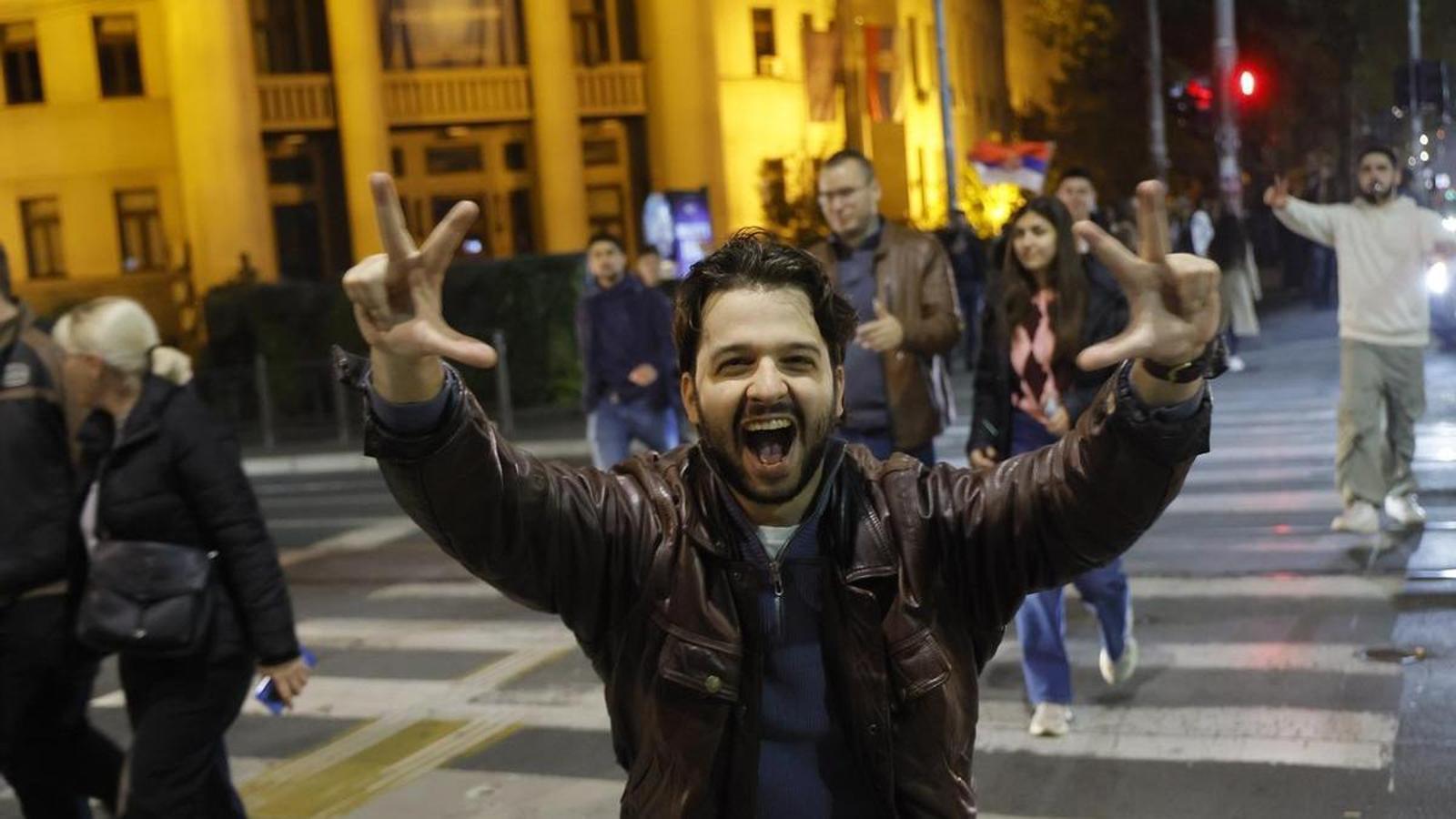
However, we must be attentive to surprises, even if they come from afar. And in this context, a very unique one has emerged: the overwhelming victory of the student party in Serbia, which has toppled the authoritarianism inherited from the old regime. An unprecedented event. How far will these empowered young people go? They have provided the strategy, the mobilization, and the campaign agitation, and have sought out more or less recognized personalities to occupy positions of responsibility. Will this experience last? It is curious that it is from an authoritarian regime of the heirs of communism that this gesture of democratic rupture has emerged. It is a topic to follow.
All this to say, perhaps with an excess of volunteerism, that who knows if cracks are beginning to open in the regressive cycle that Europe is experiencing. And, if that were the case, the right will have to demonstrate which side it is on. In any case, the PP, in its authoritarian line, has given a charter of legitimacy to the far right by taking for granted that it will govern with it. And they are convinced that the AVE tragedy guarantees them victory. Right now, what is certain is that the PSOE has run out of steam. From the Sánchez of La revuelta to today's, there is a shift from audacity to impotence.
