We and the others, the journalistic decision-making sphere

-
CAT -
CAST
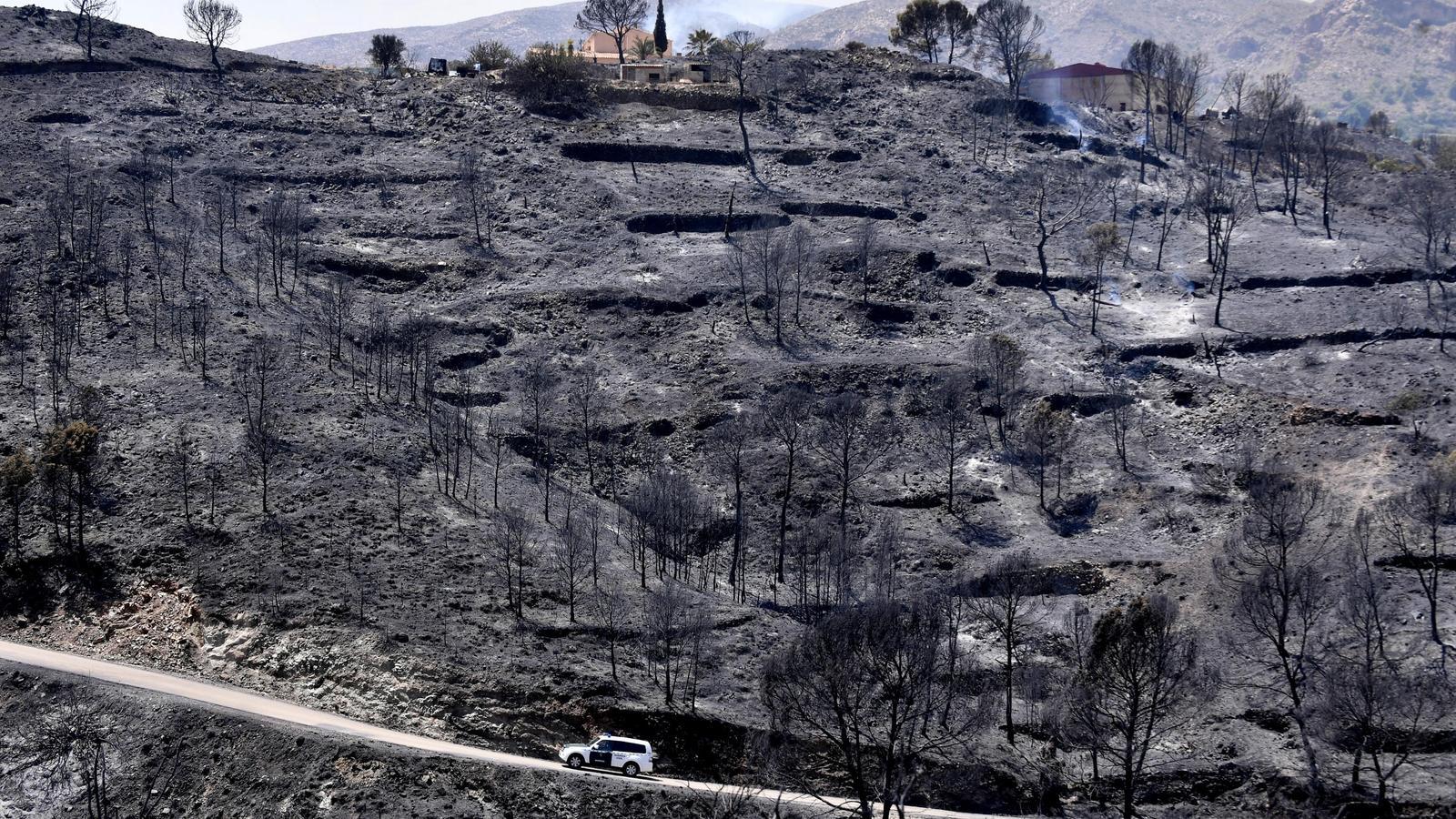
Premium subscriber Xavier Quer i Riera calls my attention to a secular debate in the journalism of stateless nations: valuing more or less the news that happens beyond their borders, and specifically those that happen in Spain or in the rest of the State, according to perceptions. He writes:“My first time complaining to you is about the handling of the Almeria fire. Why have you sent two reporters more than 800 km away and, on the other hand, have you not sent any to the fire in Northern Catalonia which has burned 5,000 hectares for a week?I know you'll tell me that in one there have been deaths and in the other there haven't, but I think in this case the border line has weighed more.Thank you very much for your dedication”.I have forwarded the complaint to the deputy director, Ignasi Aragay, who explains the newspaper's version:“As the reader implies, the essential element in the case of the Almeria forest fires is the tragic and high number of fatalities. It is, in effect, what made the difference. Neither in the fires in Catalonia, nor in Northern Catalonia, nor in Bordeaux have there been any deaths. Regarding Bordeaux, we have also reported extensively on it due to its size (100,000 hectares burned) and its proximity to a large metropolis, but we have not sent a journalist from the house.Undoubtedly, in the coverage of Almeria, an added factor is the media landscape in which we work: our first circle of proximity is Catalan, the second circle already includes the Islands and the Valencian Country (in both areas ARA has a professional presence), and the third circle is the Spanish state (we have an editorial office in Madrid, where many political and economic issues affecting Catalan reality are decided; also in Brussels, where we have a permanent correspondent).In the case of the recent fires in Vall d’Uixó, we covered them with our correspondent in the Valencian Country (Daniel Martín) and with a piece by our Valencian deputy director, David Miró, a native of the area. As for the fires in Madrid, Ávila, and Toledo, we covered them from the Madrid newsroom.When we send journalists outside of Catalonia –he concludes–, they always look for their own perspective, which in this case brings the tragedy closer to local readers, as in the report «The story of the Australian firefighter and the grandmother from Granollers who tried to stop the Almeria fire», by Cesc Maideu and Pere Tordera”.In the Ombudsman's opinion, a first consideration, in general terms, is that a major news event, in this case fourteen deaths and more than five thousand hectares burned, blurs boundaries, and that news outlets with aspirations of the highest professional level use correspondents or special envoys to cover these events. Not doing so, beyond the media actor itself, would verge on confusing national journalism with provincial journalism or becoming local press – very respectable, that's another matter.There is, then, beyond administrative divisions and legitimate political considerations, the “media framework” that defines Aragay. The idea of rewriting spaces according to established systems, and also controversial nomenclatures, was implemented by lehendakari Ibarretxe in his proposal for a new confederal statute (2004), rejected by Congress, by postulating a “Basque area of decision”. Without leaving the Basque ecosystem – like the Catalan one, very well equipped in reflection on the national question – Martxelo Otamendi, a great journalist, in the newspapers he directed, Egunkaria, closed by the National Court, and Berria, was clear that the news had to be given from wherever it was – he himself travelled half the world – and that the differential fact was not the origin but the perspective, which the deputy director also emphasizes: the world, from six hundred to six thousand kilometers, seen and explained from the Basque point of view, with the grammar of its language and the semantics of its culture, which are what certify the character of an “identity publication”, not the neglect of information from outside Euskal Herria.The “media framework” or “journalistic sphere” thus allows for a transversality that politics certainly does not hesitate to limit, a panoramic view, which is seen in the informative patterns of ARA and clearly manifests itself in the Opinion section, which shows the palette of ideologies that make up our democratic society. Catalanism, on the other hand, has always had a cosmopolitan potential that begins with the most kilometer-close but is long-sighted; the theory is prolix over time and can go from Joan Maragall to La pell de brau by Salvador Espriu, national poet of Catalonia par excellence, which can be considered his poetic treatise. Before he died, Espriu planned to retrace the route of Don Quixote, I attest to this in the first person because I had accompanied him to various travel agencies... Which, in current terms, was mind-boggling. If we add affective proximity to territorial proximity, we will find many Spanish roots in current Catalan-speaking generations, many of them from the places of the wildfire, given that half of the population of Spanish autonomous communities living in Catalonia is of Andalusian origin, according to various statistical sources.Journalistic pragmatics complements syntax and semantics with a universal discourse seen from different focuses, and the call for diversity that Tzvetan Todorov proclaimed in his book – for me essential – Nous et les autres [Us and the others]. Todorov, in a conclusion with clear inspiration from Bach (“A Well-Tempered Humanism”), says that one's own nation should not be impermeable to other nations, that exclusion usually ends badly and that, without renouncing who one is – final phrase –, learning to live with others is part of wisdom.In conclusion, all things considered, the coverage of the Almeria fire was journalistically correct, and at the same time I thank subscriber Quer for allowing us to think aloud about our model of journalism in the foreign field: the same, among many others, as that of The New York Times, The Economist and the content platform Project Syndicate, with which we have a reciprocal article relationship. In the depths of the archive, among notable contributions from newspaper mastheads and journalists, the immense chronicles in La Veu de Catalunya by Eugeni Xammar in interwar Germany, which was hatching Nazism, those of Josep Pla in the Spanish Cortes of the Republic, or the literary journalism of Montserrat Roig about the siege of Leningrad – today Saint Petersburg – which culminates in the book L’agulla daurada, National Prize for Catalan Literature.The Reader's Advocate takes note of doubts, suggestions, criticisms, and complaints about the newspaper's content in its digital and paper editions, and ensures that the handling of information is in accordance with deontological codes.To contact the Reader's Ombudsman you can send an email to eldefensor@ara.cat or record a message of no more than one minute to WhatsApp number 653784787. In all cases, identification with name, surnames, and DNI number is required.
