The 'modus operandi' of the Sports section

-
CAT -
CAST
Subscriber Eduard Carrera denounces “a very pronounced degradation in the information provided by the sports newspaper”. I reproduce the four examples of what he considers deficiencies:
“1) Do not publish the match results or the standings for each round of the men's football league. You used to do it before. But Mr. Hernández says they have cut the available space and do not have the resources to keep track! This forces me to consult the competition's media if I want to stay informed about how it is going. Do you think that's okay?
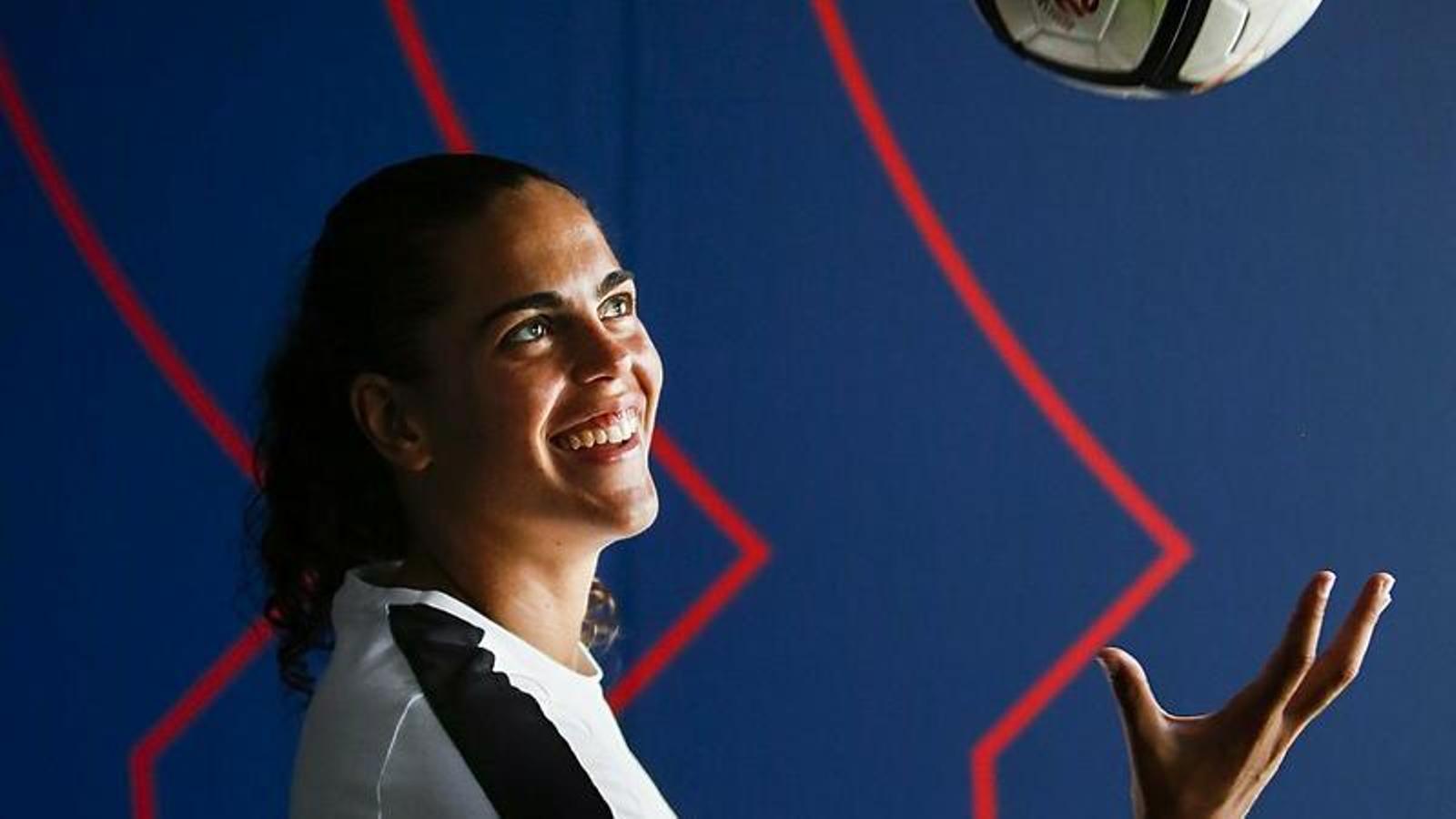
2) The scarce and precious space is often wasted with long articles that occupy a whole page with topics, in my opinion, quite redundant. Like the one from a few days ago about a female Barça football player who is retiring, absolutely unknown even to those who follow women's football.
3) Very long, deep, and with all kinds of details are the articles about Barça's economy, the construction of the new Camp Nou, the levers, the Espai Barça, etc., always biased towards Laporta's board, and which must be of little interest, I imagine, to the majority of the newspaper's readers.
4) Motorsport: minimal and ridiculous information. Just a little about Marc Márquez, and Toni Bou from trial with his countless titles, but it totally ignores Catalan riders who are triumphing around the world: Àlex Palou, Josep García (who has 8 or 9 enduro world titles), and Guillem Farrés (motocross). F1, four lines, like the Dakar, and of the famous 24 Hours of Le Mans, nothing at all”.
I have forwarded the grievances to the head of the Sports section, Xavi Hernández Navarro, to whom the subscriber refers directly. This is his turn to reply:
“1) Regarding the classification and results of Primera, in the paper edition we always include the updated version of both when League matches are played on Saturday and Sunday. Team, position, and points. We consider these three pieces of information to be essential. We cannot dedicate more time and resources to including statistics such as games played, games won, games drawn, and games lost, as well as updating one by one the goals conceded and scored by each of the teams participating in the League.
2) I regret that you consider some articles long and unnecessary. I understand you are referring to an interview with Andrea Falcón in which she explains her retirement from football due to injuries, and you criticize it because she is unknown. Precisely part of our job is to explain different things, to share stories that go off the beaten track. We do not always have to explain what people already know. In that specific case, we considered the testimony of a professional footballer who has to stop playing at just 29 years old because her knee said enough to be interesting. We always look for our own voice in our pieces. We follow the sports agenda, but our added value is these stories.
3) We greatly appreciate you valuing the hours of work we dedicate to researching and studying Barça's economic and institutional issues. These are, in line with the previous point, another example of the added value of our section. Sports newspapers and most general ones do not cover these topics with such depth, and ARA, since its founding, has specialized in them. As to whether they are biased or not, I can only disagree. The thing is that now the person governing the club is Joan Laporta (as it was before with Josep Maria Bartomeu or Sandro Rosell), and when something has not gone well, it must be said, just as it was said with previous boards of directors. From honesty, respect, and rigor, but with the commitment that one must have to journalism and especially to its oversight function.
4) Regarding motorsport coverage, two considerations. The first, about audience: the data we have shows that these are sports in which the competition itself does not generate enough interest. Our barometer for choosing to write about motorsport is that there is a unique angle (interview, report, personal story...) or major news (Antonelli, for example, has reached F1 at 20 years old and this has been duly covered). The second, about the nature of the medium: we are a generalist outlet and unfortunately we do not have space to cover all sports”.
I thank Eduard Carrera from the start for his loyalty to our newspaper from the beginning, even if he does not like some things. But also that, attentive as he shows me to all sporting expressions, he details a precise critique that allows us to provide an open description of the modus operandi of such a widely read section. In the Sports section, a lot of inputs arrive daily and they must apply selective criteria: their head, Xavi Hernández Navarro, receives hundreds of emails in a week, and has fourteen thousand to open. Obviously, those discarded are infinitely superior to those chosen, and therefore they are exposed to a margin of error and an exponential debate. Inferring malpractice I discard as much as I consider that some of the reader's perceptions can contribute to the very healthy exercise of questioning routines and protocols and improving the product.
Beliefs, sensitivity and vulgarity
The subscriptions department forwards me a complaint they received regarding the headline “The blow we needed to face what’s coming”, from the column Hot Takes, which the Sports section publishes about important football matches, in this case between Paris Saint-Germain and Barça. Subscriptions forwards it to me and I process it. The subscriber says exactly: “The word blow hurts the sensitivity of believers. Even though it has been greatly trivialized, we must in no way forget its original meaning. The Catalan vocabulary, fortunately, is very rich”. Josep M. Puig sends me a voice message to the same effect, but in a more critical tone, and points out that, indeed, six comments at the bottom of the digital article express the same grievance.
Xavi Hernández Navarro, to whom I am grateful for his diligence in addressing the criticisms that monopolize this page today, gives his version:
“Regarding the hostia, two things. On one hand, the third meaning of the word hostia collects a meaning of punch, slap and similar, according to the DIEC. It is a vulgarism, but the meaning is accepted. And, on the other hand, the Hot Takes section is, as its name indicates, the hot reaction after the final whistle of a football match. Many times, the choice of the headline is a matter of seconds, which does not happen with most of the content we write and edit in the section. By this I mean that sometimes things that are more heated, with less filter than usual, can slip through. I regret any inconvenience I may have caused”.
I have requested the opinion of Doctor Jaume Angelats, professor at the Faculty of Theology of Catalonia, expert and disseminator of the work of Raimon Panikkar, promoter of interreligious meetings and rector of Cadaqués, la Selva de Mar and el Port de la Selva:
“The Latin and Catalan word hostia primarily contains a religious significance, deserving of respect: a sacrificial offering to the divinity. For many Christians, it is the consecrated Eucharistic bread, broken and shared: Jesus offering himself as nourishment for all.
The IEC dictionary includes other uses of the term. Etymologically, they do not seem to come from the same root, nor would they initially have had offensive connotations. Thus, hostia is vulgarly used as an interjection to express admiration, surprise, or annoyance, and it is also often used to refer to a slap or a punch, going too fast, being the ultimate, or being in a bad mood... In these senses, the word hostia is uttered with repeated vulgarity in many audiovisual media outlets, ignoring or disregarding its previous semantic weight and thus wounding some sensibilities.
Regarding the questioned football headline –concludes Angelats–, it is worth remembering that, in Catholic liturgy, there is the service of ostiary, that is, a doorkeeper in charge of opening and closing doors, called ostia in Latin. Hence why the port or great access gate to Rome is called Ostia. Given this, what was perhaps needed to face what was coming was a good host without an h”.
Following Salvador Espriu, who ironically and without straying from religion wrote that one must not confuse the normative dictionary with the Quran, the Ombudsman considers that the inclusion of a word or definition in the dictionary should not necessarily endorse its journalistic use if it is crude and/or may hurt sensitivities, and even more so on the frontispiece of a headline. It is what is expected of a newspaper that, in its founding manifesto, proclaims that it wants to address itself “very particularly to educators (teachers, fathers, mothers, and leisure educators)”.
The Reader's Ombudsman takes note of doubts, suggestions, criticisms, and complaints regarding the newspaper's content in its digital and print editions, and ensures that the treatment of information is in accordance with deontological codes.
To contact the Reader's Ombudsman you can send an email to eldefensor@ara.cat or record a message of no more than one minute to the WhatsApp number 653784787. In all cases, identification with full name and ID number is required.
