Lídia Caba: “Everything that is invested in the electricity system in Spain ends up, sooner or later, in the bill”
Director of strategy and business development at Estabanell
-
CAT -
CAST
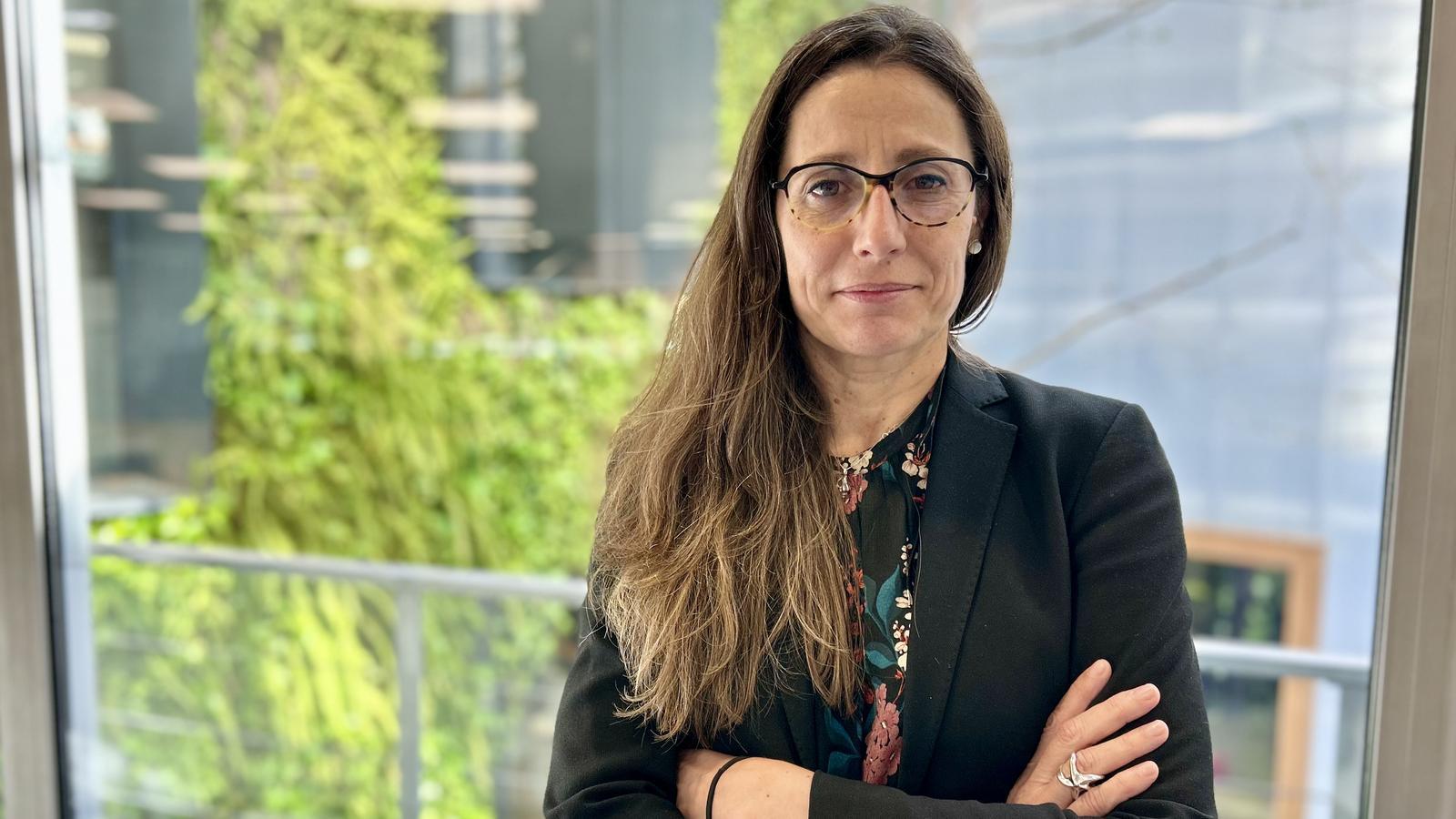
Lídia Caba, director of strategy and business development at Estabanell and the group's marketing subsidiary, analyzes the major challenges facing the electricity system in the midst of an "energy revolution": why hours with very low wholesale prices are not automatically passed on to the bill, how adjustment services and the need to reinforce grids are impacting the sector, and why the financing model needs to be rethought to accelerate electrification and advance the decarbonization of the economy.
There are more and more hours with zero or negative wholesale prices. Why is this not reflected in the electricity bill?
— Because on the electricity bill we pay for many more things than the purchase of this electricity in the wholesale markets. And right now this sends a contradictory message to people. On one hand, they tell us “thanks to renewables, electricity is very cheap”. And that is true. But, since many other costs come on the bill, there is no way for it to go down. With the electricity bill, charges and tolls are collected, which serve to finance energy policy and electrical grids. And none of what is paid on the bill has anything to do with the service offered by a retailer, which is the sale of energy. The charges and tolls are regulated costs and do not vary if the price of energy goes down or up. And, then, we have the cost of adjustment services.
What are these adjustment services?
— Let's use an example. Red Eléctrica de España must ensure that there is the necessary energy. But, if one day there is no sun or the wind does not blow, the same Red Eléctrica must activate a combined cycle gas plant to guarantee grid stability or cover demand higher than forecast. That is when the amount to be paid per cycle ends up increasing in price, and lately this happens a lot. Adjustment services have more than doubled their impact on the final price of electricity in just three years, and we do not know what will happen in the future.
It is understood that previously they had a residual cost...
— Yes. Previously it could be one or two euros per megawatt hour and it went unnoticed. Now it has grown a lot. In February of this year, it almost reached the wholesale cost of energy. To begin with, it is a very worrying situation for free market retailers, who are assuming a cost linked to the physical management of the system, which is totally unpredictable because it has nothing to do with our work. And, consequently, it should also worry the consumer.
How did we get here?
— Because we have an increasingly complex electrical system. Previously, generation could be activated and adjusted based on consumption needs. Now, however, we rely on a growing presence of renewable energies, which are essential for reducing emissions and advancing decarbonization, but which depend on whether it is sunny or windy. This implies that the system operator must have a plan B. And, after the blackout on April 28th of last year, this plan B is activated often and has increased in price. This new reality demands more management capacity, more flexibility, and more grid. We must have the necessary infrastructures to integrate renewables and deliver them to where they are needed.
There has been a lot of talk about the fact that there is a lack of capacity in the network. What needs to be done?
— We must remember that if the grid does not have capacity where it is requested, new industrial projects or power expansions for those already connected are halted. This is already happening. The recipe, a priori, is known to all: expand, modernize, and digitize the networks. But it is necessary to invest in them with a vision for the future, because they not only have to transport and distribute electricity, they must also allow for the management, almost in real time, of generators and consumers that enter or leave the system: what is known as flexibility. In Catalonia, and in Spain, the homework has not been done. We still depend on fossil fuels. We must place resources at the disposal of consumers.
And these resources are...
— Financing of all kinds: grants, soft loans, lower taxes. Let's think about an industry that uses gas ovens. In their case, replacing equipment that runs on gas with electric technology requires a lot of capital. And if it competes with imported products that do not bear the same decarbonization obligations, it will manage to decarbonize, but it will be less competitive. The numbers must add up!
What can companies like Estabanell do to make things easy for the industry?
— We accompany clients in prioritizing measures and identifying funding, both in credit and grant format. The key is to turn decarbonization into a viable plan, not an unattainable list of challenges and figures that do not add up.
All of this makes one wonder how the energy transition is being financed...
— It is something to think about! Everyone must be very aware that the electricity system in Spain is a zero-sum system: everything that is invested in it ends up, sooner or later, in the bill. It is as if a hospital were financed only by the patients who walk through the door, or as if all roads operated with a toll. If the energy transition continues to be loaded onto the bill –because we are revolutionizing the way we generate, distribute, and consume energy–, we will precisely disincentivize the electrification we need. Let us not forget that one of the main causes of CO₂ emissions that drive climate change is the burning of fossil fuels such as coal, oil, and natural gas to obtain energy.
A good alternative to put on the discussion table would be...?
— That a portion of the investments be financed like the rest of the country's critical infrastructure, also with public budgets or equivalent mechanisms, and not exclusively against the electricity bill of the people and the productive fabric.
