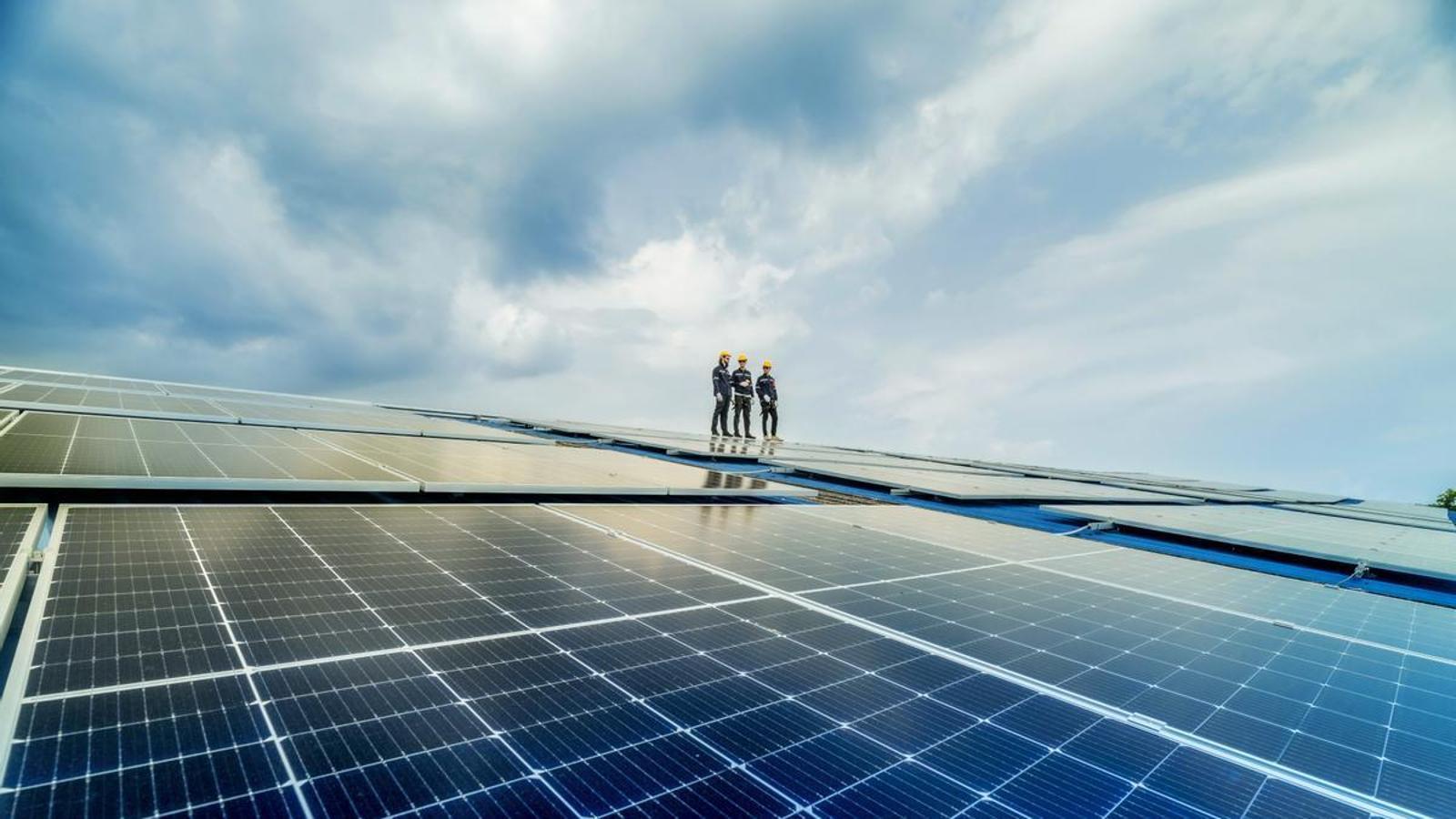
The energy transition in Catalonia is entering a phase where the challenge is no longer just environmental, but also industrial and business-related. Renewables account for 11.7% of final energy consumption in Catalonia and cover 21.6% of electricity demand, according to the Energy Transition Radiography by the Sabadell Chamber of Commerce. At the same time, the ICAEN roadmap for industry places energy efficiency and the progressive electrification of demand among the main levers to move towards a decarbonized and competitive industrial model.
For companies, however, accelerating the transition does not mean electrifying at any price. It means deciding where to act, which investment to prioritize, what return to expect, what conditions the project might have, and how to structure it financially. These are the five business decisions to take into account.
1.
Understanding the starting point / Where am I consuming energy and where is the opportunity?
The first step before starting any energy transition project is to understand how, when, and where energy is consumed within the company. There is often a temptation to start directly by thinking about installing solar panels or replacing equipment, but a good preliminary diagnosis allows for more informed decisions.
The reality is that every company has a different energy profile. A food company may concentrate a large part of its consumption in refrigeration; a ceramic industry, in thermal processes; and a logistics company, in mobility and operational centers. Therefore, before deciding which technology to implement, it is necessary to identify which energy uses have the most impact on costs and where there is the most potential for improvement.
An adequate analysis allows for detecting inefficiencies, prioritizing actions, and understanding which technologies can add more value to the business. In this sense, the energy transition does not start with an investment, but with the knowledge of one's own consumption.
2.
Prioritize before investing / Which action should I prioritize?
Once the main sources of consumption have been identified, the next question is which action should be addressed first. The answer is not universal, because it depends on the characteristics of each company, its processes, and its objectives. In many projects, improving efficiency first allows for the reduction of unnecessary consumption, the optimization of existing equipment, and better dimensioning of subsequent investments.
From here, each sector presents different opportunities. An industry can move forward through the progressive electrification of processes that still depend on fossil fuels, while in a hotel, the potential for improvement may be found in air conditioning or photovoltaic self-consumption. In a logistics company, on the other hand, the focus may be placed on the gradual renewal of the fleet or the implementation of charging infrastructure.
The best decision is not necessarily the most innovative one, but the one that has the most impact on energy consumption and is aligned with the business strategy.
3.
Crunching numbers with a broad perspective / What investment is required and what return do I expect?
Not all energy investments are justified for the same reasons. In some cases, the main objective is to reduce costs; in others, it is to secure supply, improve competitiveness, or respond to the demands of clients and the value chain.
The cost of an energy transition project can vary significantly depending on the technology chosen, the size of the company, and the scope of the action. For this reason, rather than asking how much a technology costs, it is advisable to analyze what value it will bring to the business over time. The economic evaluation must take into account both the initial investment and future savings, maintenance costs, the useful life of the equipment, and the expected evolution of energy prices.
The way to generate value also varies depending on the activity. An industrial company may prioritize reducing its dependence on natural gas and improving the predictability of energy costs, while a logistics company may especially value the operational savings associated with fleet electrification. In other cases, especially in exporting companies, the impulse may come from the demands of clients and supply chains that are increasingly oriented towards decarbonization.
4.
Anticipate real constraints / What risks and constraints does the project have?
The first risk is economic. Beyond the estimated return, some of the variables that support the calculations may evolve during the life of the project. The price of electricity, the cost of the fuels to be replaced, or operation and maintenance costs can end up conditioning the projected profitability. For this reason, it is necessary to incorporate these variables when evaluating the economic soundness of the project.
The second conditioning factor is operational. Electrifying an industrial process is not always a simple technological substitution. It may involve modifying production methods, maintenance needs, internal capabilities, or even the organization of the plants. It is necessary to assess whether the technology is mature enough for the specific application, whether there are proven references in the sector, and what impact a service interruption or a longer-than-expected learning curve could have.
Infrastructure is another determining factor. The availability of electric power, the lead times for connection expansions, or the need to adapt internal networks can condition the project. In some cases, these elements can affect both the execution schedule and the final profitability of the investment.
Finally, the risk of inaction must also be considered. Energy volatility, customer demands, the evolution of climate regulation, or sustainability criteria in supply chains can modify the competitive environment.
5.
Structuring the financing / How do we finance it and what complementary instruments exist?
The viability of a project also depends on how it is financially structured. It is necessary to evaluate the amount of the investment, the execution deadlines, the future business cash flows, and the repayment capacity to define a structure coherent with the project's characteristics. In this sense, medium and long-term financing can allow for adjusting the repayment terms to the investment horizon and the savings expected to be generated, preventing the investment effort from being concentrated in the short term. Depending on the project, formulas such as leasing or other modalities linked to the acquisition of equipment can also be assessed, as well as sustainable financing solutions when the established criteria are met.
Financing, however, is not the only piece of the equation. When crunching the numbers, it is also advisable to analyze public support programs, subsidies, and incentives that may be applicable, as they can affect the investment the company must assume and the return on the project. In certain operations, guarantees and other risk-sharing or security mechanisms can facilitate access to financing, especially when the project requires a high investment.
The key is to integrate the technical, economic, and financial analysis from the beginning. If the technology responds to the company's needs, the risks are identified, and the financial structure adapts to the expected business cash flows, it is possible to assess under what conditions the energy investment is viable and how it can contribute to the company's competitiveness.
Electrifying is not about applying a technological recipe, but about making a business decision. Understanding consumption, prioritizing actions, crunching the numbers, and anticipating the constraints allows for deciding in which projects it makes sense to invest and under what conditions the investment can contribute to the business's competitiveness.
How can I make it possible?
From investment to financing
When a company considers an energy investment, it must decide not only what it wants to do, but also under what economic and financial conditions the project makes sense. Banc Sabadell can accompany the company in this process with specialized advice, both sectoral and financial, and different financing alternatives, including sustainable financing solutions when the project meets the established criteria. This support is part of the Sabadell Sustainable Commitment 2030, which plans to mobilize 90 billion euros in sustainable finance solutions between 2026 and 2030.