'The House of Paper', the Antena 3 series that only Netflix knew how to transform into a global phenomenon
Fiction had acceptable results on linear television, but it was streaming that catapulted it to worldwide fame

-
CAT -
CAST
Barcelona(As every summer, L'ARA dedicates a series of Sunday Media articles to reviewing television history. This year we rescue some of the most notable channel changes that historical fictions underwent).
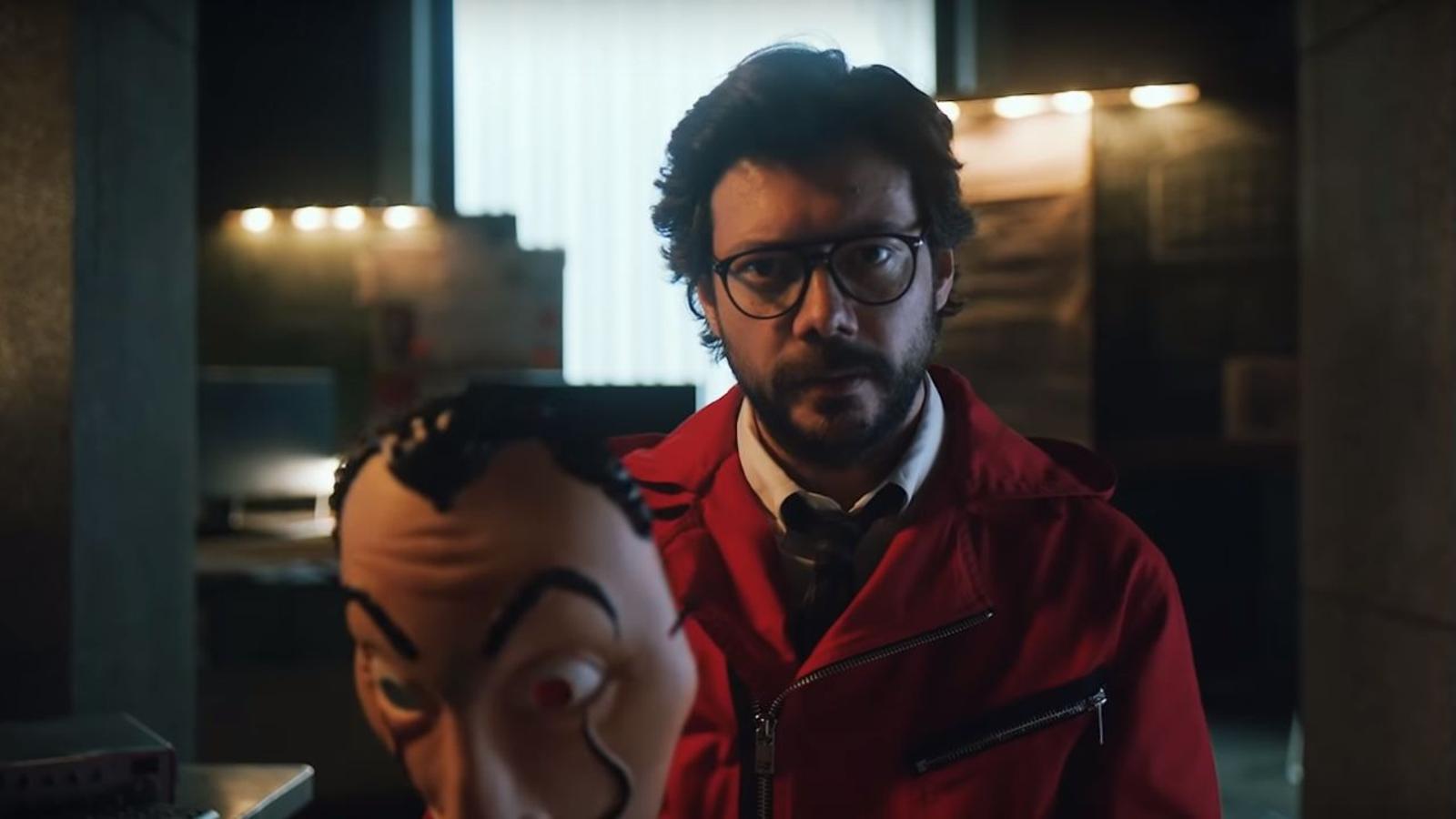
It's not a theft, in the strict sense of the word, but Antena 3 was left with a sour taste in its mouth, much like Russia when it sold Alaska to the United States for a pittance and, shortly after, the gold rush began... and, a little later, the oil rush. Here, the kind American buyer was Netflix, which acquired a series that showed signs of decline with its second season and turned it into an international phenomenon: it's hard to go to any low-cost tourist destination and not find the Dalí-esque masks of the protagonist robbers adorning, so to speak, the shop windows of souvenir stores.
Antena 3 premiered it in 2007 with a first run of 9 episodes. The premiere was watched by one in four viewers (25.1%), but viewership gradually declined, and the finale was already at 14.7%. These were still good numbers, but no longer spectacular. And the great following it had among young people did not extend to the older audience, which is the majority on the channel. With the second part, of six episodes and with the summer break in between, it continued to drop. The finale broadcast in November, which had the appeal of resolving all the intrigues that had been built up, did not exceed 12.1%. That was already a discreet share for the invested budget, which did not invite further expansion of that fictional universe.
That was the moment when Netflix decided to buy the rights, with a view to sharing that series with its international audience. It is not recorded that they intended at that time to extend the plots, which ended with the resolution of the robbery at the Royal Mint of Spain. However, before uploading the series to its platform, it made a decision in which it proved to be the great game-changer: it remade the entire thing. The initial 15 episodes became 22, shorter, more compact, more intense. It wasn't just a matter of chopping it into smaller units. Some scenes were moved up or down chapters, to ensure that each episode ended with the ultimate goal of any streaming service: that the viewer clicks the coveted button of “Continue Watching”.
Although platforms do not communicate their audience data, Netflix did reveal that La casa de papel, released that same December, had become the most-watched non-English language series in its history. And that it had performed very well in Latin America, France, Italy... and Spain. In fact, social networks are a good spy: in its local market, the series did not begin to dominate conversations and be a source of memes and content until the end of 2017 and the beginning of 2018, coinciding with its leap to the platform.
This proved one of the creators, Álex Pina, right, who in an interview with the Argentine newspaper La Nación attributed this decline in viewers on linear television – while on Netflix the trend was the opposite – to the fact that Antena 3 changed the series' slot on the schedule, to the interruption during the summer months and to the commercials that interrupted the narrative of a series that was narrated as if it were almost in real-time, to convey precisely tension and the desire to continue watching it. The screenwriter, however, admitted that at least they had been able to write knowing where the commercial breaks would go.
Netflix was clear that that golden goose could still lay a few more episodes, so it released an 8-episode third season in 2019, an 8-episode fourth season released in April 2020, at the beginning of the lockdown, and a final fifth season, divided into two volumes, which concluded the story between September and December 2021. Those episodes were produced exclusively by Netflix, so Antena 3 has never been able to broadcast them, not even as a second or third run, despite having promoted the characters and iconography that made the series instantly recognizable.
Once the story starring the character of El Profesor and his acolytes with city names (Nairobi, Tokyo, Rio, Helsinki...), was exhausted, the platform believed there was still room to grow the series somewhere. It did so in the form of a spin-off. The character of Berlin, played by Pedro Alonso, appeared terminally ill in the original episodes and fascinating elements of his past as a gentleman thief (but short fuse and occasional outbursts of violence) were often suggested. It was time to make him the center of the plots and to go back a few years in fiction. The result was Berlin, of which two seasons have been made: one released in December 2023 and another, which closes the branch, that arrived this May. There are no plans for new seasons, but as long as the Dalí masks still linger, it can never be ruled out.
