The most economical holidays of the summer: the countries where prices have not yet skyrocketed
In a year of inflation and economic uncertainty, not everything is about scratching your pocket. Some destinations maintain prices despite the generalized increase in costs

-
CAT -
CAST
Everything has gone up a lot. It is a mantra that we keep repeating to ourselves with any purchase we make: food, petrol, clothes, and leisure. Like a damned magic wand, inflation has once again multiplied prices and endangered holidays in many Catalan homes, many of them paralyzed by these increases. Precisely because of this, an unprecedented move in the industry took place in the last weeks of spring, when hotels, travel agencies, and tour operators began to adjust rates in the main destinations due to the slowdown in bookings for the high season, with decreases in places like Mojácar, Mallorca, Tenerife, Menorca, and Gran Canaria. Now, on the eve of the month with the highest spending of the year, it is worth considering that not everything is exactly prohibitive: there are destinations that are careful enough not to make a killing with travelers, either for competitiveness or conviction. This year, according to Juan Ignacio Pulido, director of the Tourism Analysis and Innovation Laboratory, there is a moderation of prices by type of destination. "Inland destinations, medium-sized cities, well-connected rural areas, and some less internationalized coastal holiday destinations are containing prices better," he explains. According to Pulido, this is due to demand being more price-sensitive, greater competition among accommodations, and less occupancy pressure. Indeed, many entrepreneurs have understood that continuing to pass costs on to the final price "could slow down bookings, especially in national and family tourism," while in other cases the decrease simply occurs because "when occupancy does not accompany, the price adjusts." And here is a remarkable and significant fact, and that is that not all the market accepts automatic increases as in the years immediately after the pandemic. "We are facing a normalization after several years of very intense increases," he clarifies, given that the forecast this year is to receive more international tourists and more spending. Thus, to look for cheap destinations, one must look for places with some common traits: less saturation, a more diversified offer, and demand that depends less on high-spending international tourists. At the other extreme, destinations with limited supply, high occupancy, and a very consolidated brand continue to have the capacity to raise prices, as is the case with some island locations, major capitals, and premium coastal destinations. For his part, the expert in the tourism field and founding partner of ReiniziaT and ObservaTUR, Marcos Franco, points out that the underlying idea is that this summer is a year of readjustment regarding prices and destinations, in which spending and the desire to travel are maintained. "Financing for holidays is another of the items that has also increased in 2026," he assures.
In Spain: the interior and medium-sized cities
As examples of destinations that will not be more expensive this summer, without being able to generalize to all accommodations, Pulido places the coast of Almeria, with Mojácar at its heart; some packages in the Canary Islands and inland destinations such as Jaén, inland Cordoba, Extremadura and Castilla-La Mancha. Pulido also adds that the best value for money will probably be found in inland destinations, rural areas with good cultural offerings and medium-sized cities. Also in less crowded stretches of coast and outside the traditional icons. He also adds as an example Castilla y León, inland Aragon or non-coastal Galicia, enclaves that can offer "very complete experiences at more reasonable prices". Along the same lines, forecasts point to an increase in spending in traditionally less touristy communities. On the other hand, according to ObservaTUR's estimates, Franco assures that demand this year is unequivocally focused on the coast, and by a large margin. The beaches of the Mediterranean, the coast of Andalusia and the Cantabrian and the north coast concentrate 41% of the choices as a "refuge from the heat", far ahead of cultural and rural trips.

Most attractive international destinations
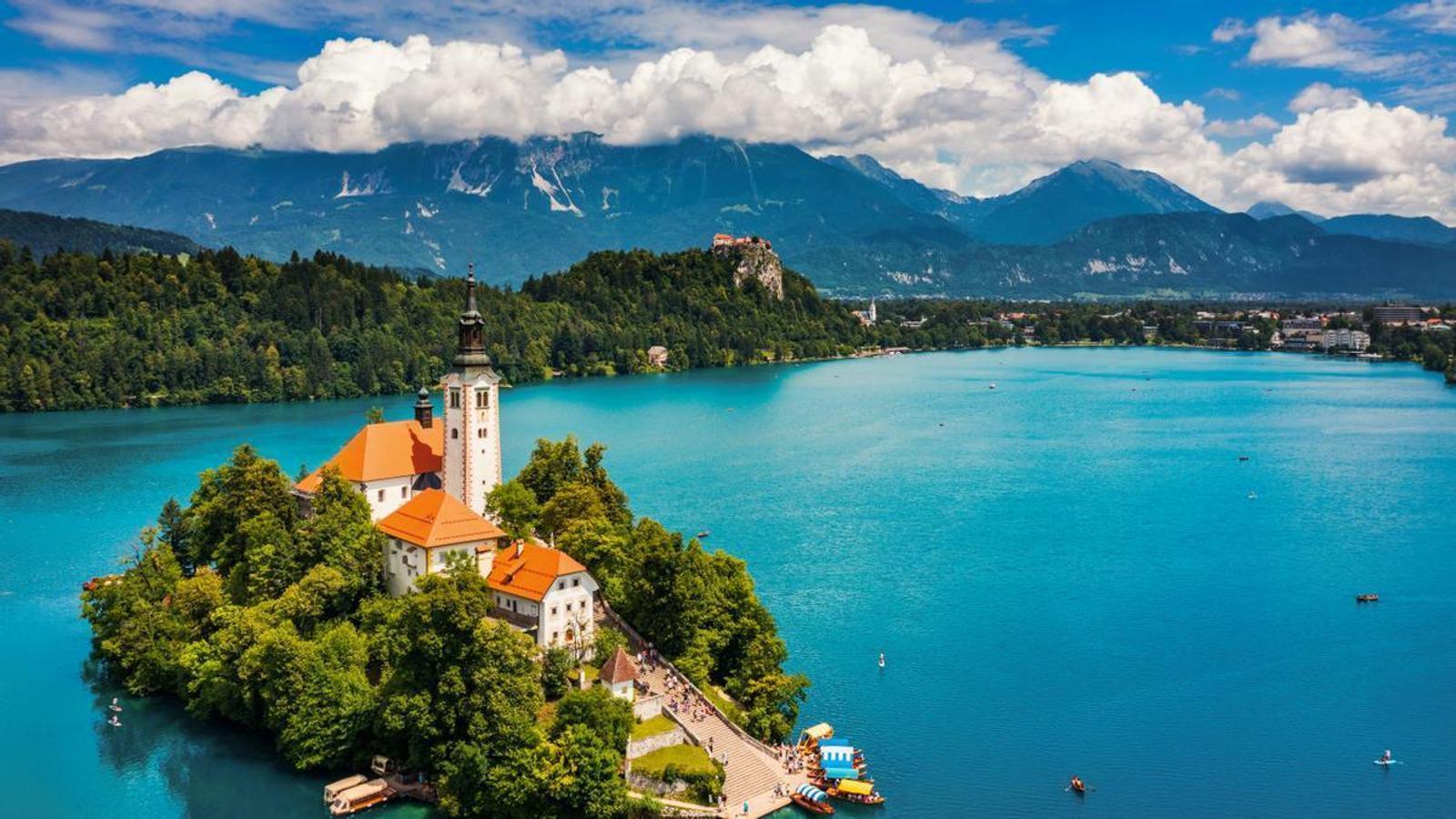
For their part, the most economical international destinations this year are largely Mediterranean, also with a good dose of beaches. According to Franco, Spain's major Mediterranean competitors and its surroundings "are containing prices so as not to lose competitiveness against Spain, which this summer clearly functions as a refuge destination". In this regard, Franco primarily places the eastern Mediterranean, the Balkans, and North Africa. That is, countries like Turkey, Greece, Cyprus, Croatia, Montenegro, Albania, Slovenia, and Bosnia and Herzegovina. It also includes North Africa, with countries like Morocco, Algeria, Tunisia, Libya, and Egypt. However, many travelers this year will choose to stay in the country: the ObservaTUR Summer 2025 report indicates that the domestic market reaches a share of 65% of Spaniards' trips, four points more than last year, a fact that also pressures Spain's competitors to moderate prices. This forecast coincides with destinations widely pointed out by various tourism experts on social media, who also include Bulgaria, Moldova, Macedonia, Estonia, Latvia, and Lithuania in their checklist of good value places.

Places in Catalonia that are not increasing prices
However, it is not the destinations that raise or lower prices, but the hotel establishments. Although in our country, many establishments have already raised prices to pass on inflation and costs derived from the geopolitical situation, not all have updated their rates. For example, the manager of the restaurant Bèstia Girona, Martin Sabbatini, says they have opted to maintain prices this summer. While he points out that costs have risen in all respects, such as raw materials, personnel, or supplies, he notes that they have preferred to absorb it by working better: "Adjusting the menu to seasonal products, carefully controlling calculations and waste, and being more efficient in the kitchen." Sabbatini believes that raising prices is the easy way out in the short term. "We are not naive either; if costs continue to rise steadily, at some point something will have to be adjusted," he assumes. The co-owner of the Mataró restaurant Casa Parera, recommended in the Guia Repsol and Guia Macarfi, Anna Carbonell, has opted to maintain prices despite being very aware that costs have increased. "We have preferred to adjust internally, better control purchases, reduce waste, and work with great precision rather than automatically passing on every cost increase to the final customer," she says, and details that precisely for this reason they have hired a program, called Tspoonlab, which helps them detect all real product increases every day from delivery notes. However, she assures that this commitment is only sustainable if it is accompanied by very fine management, as "a restaurant cannot indefinitely absorb all cost increases without reviewing anything," and what they are now trying to do is not to react impulsively.

Likewise, the co-owner of the hotel-restaurant in Cabrils, l'Hostal de la Plaça, Vicenç Batista, where they also maintain prices, argues that maintaining prices helps to build customer loyalty, "but it is at the expense of the margin, which in restoration is already very low," and this "is not sustainable in the long term." Along the same lines, the chef and co-owner of the restaurant in Palamós, Dvisi, Jordi Simón, explains that they maintain prices, but emphasizes that it is a significant effort on their part, as they are increasingly faced with higher costs, such as an increase in taxes, constant rises in the price of products, and great difficulty in maintaining cost stability. "The same ingredient can have one price one day and a different one the next, which makes it very difficult to set menu prices," highlights Simón, who believes that the tax pressure on the sector should be reconsidered and adjusted. In any case, maintaining rates is a juggling act that not everyone is willing to do, especially when there is a widespread mantra that everything is more expensive today than yesterday.
- To avoid spending all your money on this year's holidays for those who haven't booked them yet, Pulido recommends flexibility: avoid August if possible; book mid-week; look at medium-sized cities and combine inland with nature or heritage getaways. In this regard, he argues that Spain has an extraordinary offering (beyond saturated destinations) that has good gastronomy, heritage, landscape and more contained prices. For his part, Franco recommends booking holidays in advance, something that more than half of people who go on holiday in Spain do, especially young people. "Those who leave their choice until the last moment usually pay more and choose worse, while booking with plenty of time and having date flexibility is the most effective saving lever," he says.
