The 'zerothree' in rural schools
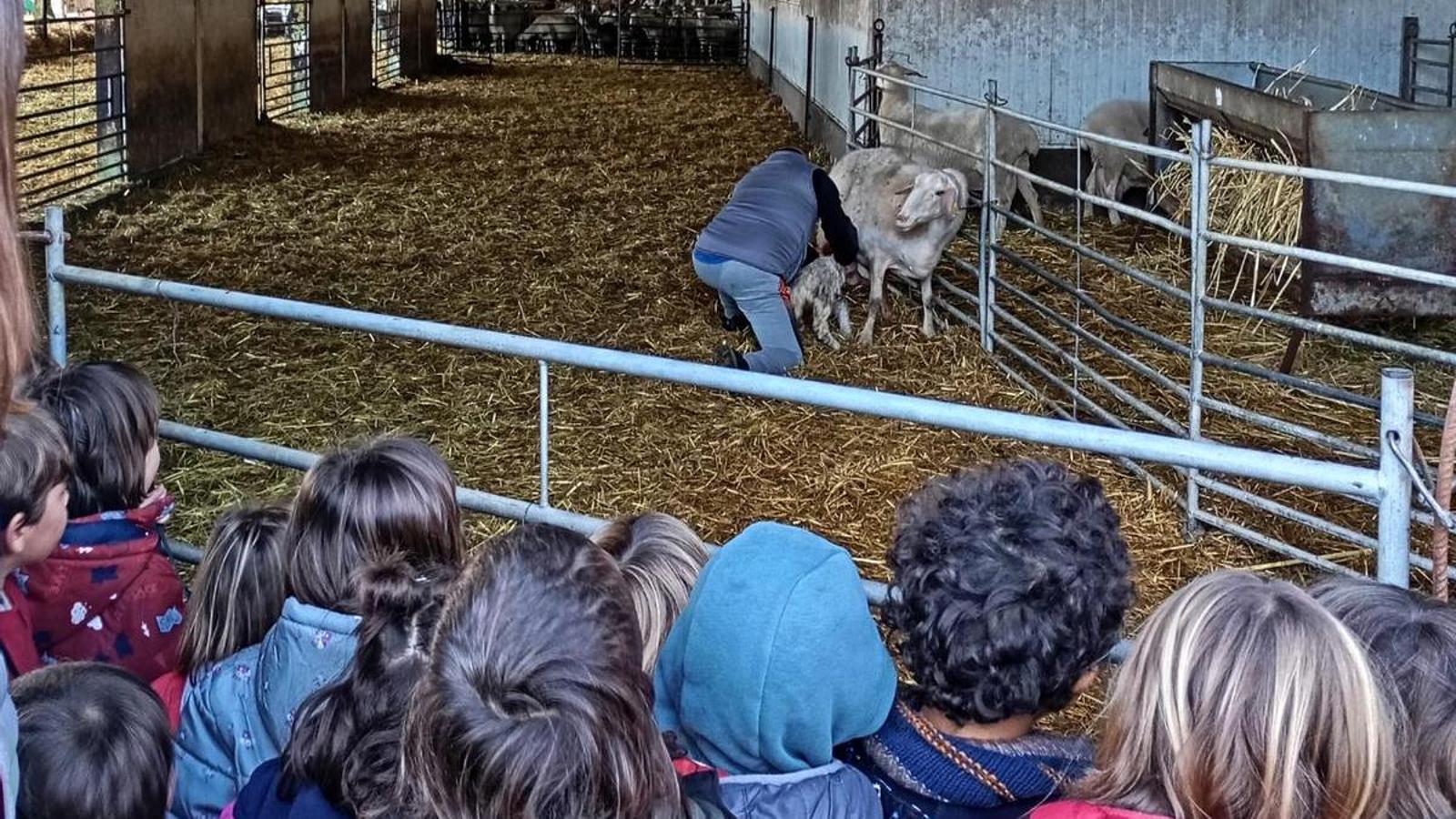

Those of us who work with children from zero to six years old celebrated greatly that the new education decree considered in a clear and transparent way that the zerosis (I borrow this beautiful neologism from my colleague and teacher Maite Pujol) is a single stage, with its own identity.
It is also true that, despite this consideration, the reality is that the identities of the two cycles, the zero-to-three on one hand and the three-to-six on the other, end up hindering the construction of a true global identity.
But in 2015, a gap opened up that could represent an extraordinary opportunity to build a real and authentic zerosis identity. I am talking about the experimental plan that, since that date, has allowed rural schools to integrate children from the first cycle of early childhood education under the same school project. This was a major demand made by the rural world to avoid the depopulation of rural schools when families did not have the possibility of schooling their children without having to leave the village to look for the nearest nursery school in the surrounding towns.
It is a crack that presents many opportunities but also has a lot of room for improvement when it comes to converting documents and intentions into realities with the quality that children deserve. In these moments of tension in which the educational world finds itself today, what would be easiest right now would be to delve into the shortcomings of this plan: incomprehensibly, it does not incorporate children from zero to one years old; the salaries of the people who work in the first cycle are not equated with the rest of the teachers; the midday time is fragmented from the rest of the day...
The people from SERC, the Secretariat for Rural Schools of Catalonia, a movement of teachers with a long trajectory, already reflected on this within the framework of a conference in La Fatarella last May, but alongside these challenges, they also tried to identify the potentialities.
This is the ground upon which, with whatever limits there may be, real and quality experiences can be built because that indeed depends on us, the teams of teachers who work there.
The potential of the contexts of our rural schools is as great as it is unknown: the ease of dialoguing with the natural, social, and cultural environment; the smaller and more humanized dimension of the schools, avoiding large groups of children; the natural dialogue between children of different ages who meet and recognize each other inside and outside the school; an open and diverse pedagogical organization to respond to what each child and each group needs; the proximity to families…
If to all this potential we add the specificity of what must be taken into account to welcome children from zero to three, the result that can emerge is truly extraordinary.
The encounter between rural identity and early childhood identity generates a harmony that is well explained by the name of the SERC conference I referred to earlier: "The zero-to-three in rural schools, an opportunity for the school and for childhood".
We must follow this laboratory very closely to extract elements that allow us to build a zerosis of quality and extend it to the entirety of our country.
