Retiring in the political center of the world
Carmen and Ralph emigrated to the capital of the United States fleeing from the strong economic and social crisis in Venezuela
-
CAT -
CAST
The afternoon is very hot in Washington DC, but that is not the reason why you do not see children or elderly people. The city is usually like this. As the seat of the federal government, Congress, and so many companies and institutions around it, the American capital is a magnet for recent graduates and young professionals who lower the city's average age and turn its landscape into almost that of a TV series. Retiring here is not the most common thing, but Carmen and Ralph Van Roy wouldn't change it for anything.
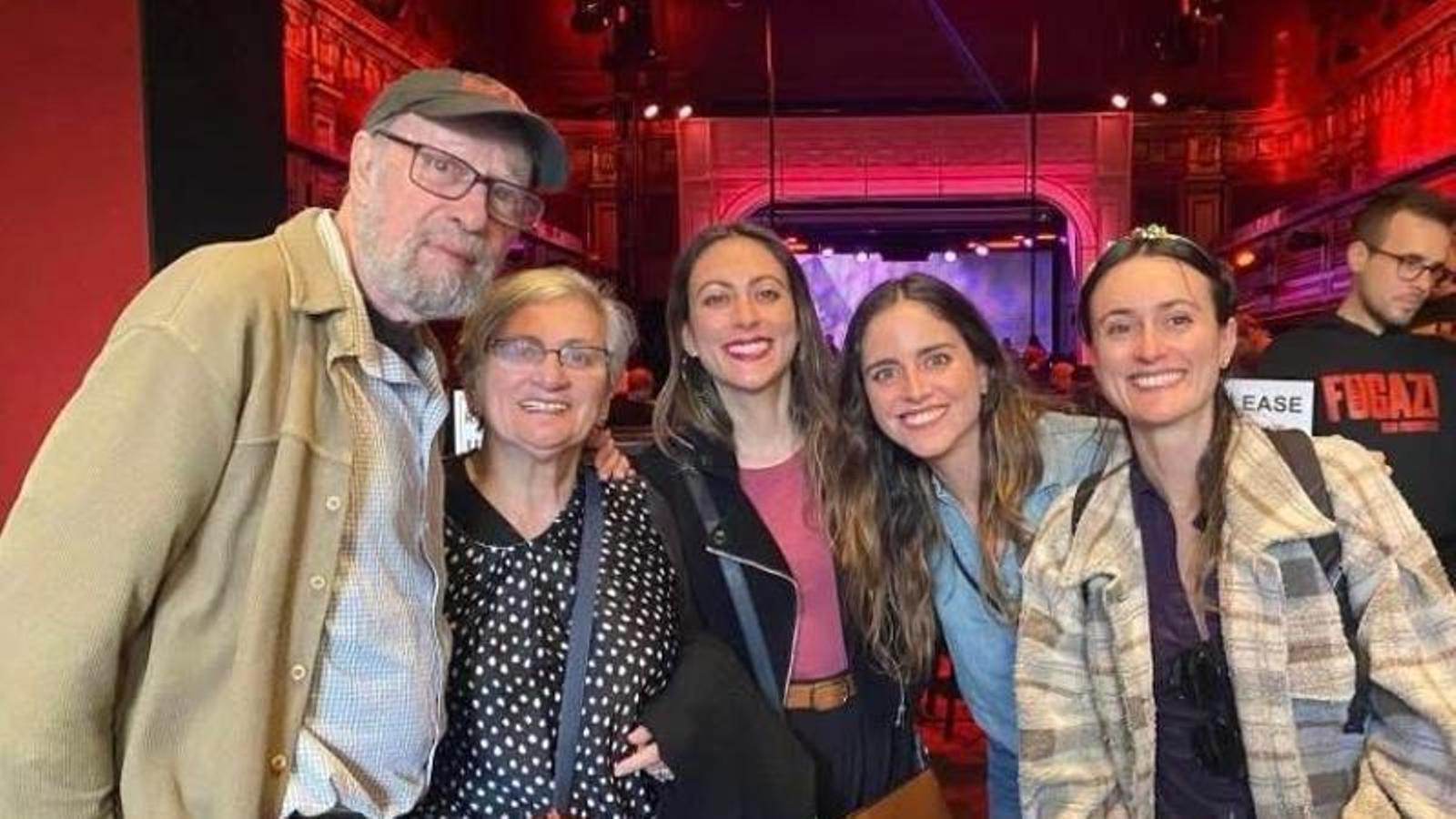
The family receives us at their home, in the Adams Morgan neighborhood, where they have lived since 2016. She is Spanish, from the Canary Islands, but as a child, her family emigrated to Venezuela. That was where she met Ralph, who at that time was a doctoral student spending some time in Caracas, as part of his thesis at Indiana University. He came from White Plains, the residential neighborhood of New York City to which his parents, Dutch Jews who had been in a concentration camp, had moved when he was just a baby.
Both remember clearly how Carmen and a friend of hers, both sociology students, identified a “gringo” in a university library; how a look led to asking for a cigarette, and then to a coffee. They got married three years later. “The funniest thing is that neither of us smoked, it was like in a movie,” laughs Ralph in his living room. The couple happily dives into memories of their life in Venezuela. They seem delighted to have the opportunity to look back, to spend a few hours reviewing the creation of their family and overcoming their fears to make the leap to the United States, a life that at first inspired respect in them and which they now enjoy like small children, something they had never imagined.
“In Venezuela things got bad, the insecurity was terrible, they broke into our house several times,” explains Carmen. As parents, they had always been interested in their three daughters going to university outside the country, but they did not think about moving themselves. In Venezuela they had their own business, a recruitment and personnel selection company, and they had become accustomed to the daily inconveniences. They were happy. “Our intention was always to stay in the country, we saw the United States as very good, but it didn't convince us to go and live there,” explains Ralph. In the end, he admits, “to these things of insecurity and public services… one adapts to them.” “It is disgusting, but it comes to be part of daily life,” he assures.
But two of their daughters found jobs in Washington and they liked the city a lot, and when one of them had the opportunity to study temporarily in the United Kingdom, she convinced them to travel to the USA and spend some time at her house, since it would be empty. And they did not return to Venezuela. Neither of them forgets that year in which all three lived together in a one-bedroom apartment, with their daughter sleeping in the living room. They had fallen in love with Washington.

"I remember exactly the feeling I had when I arrived here. The smell, seeing the house, climbing the stairs carrying the two suitcases...", says Carmen, traveling mentally back to 2016. They arrived in the autumn of the presidential elections that Trump won and they remember well how the country was immersed in politics. "I loved the autumn and I loved the safety, because in Venezuela you couldn't walk down the street, but here we did activities at all hours, we went out on the street... for us this was paradise. It was a marvel, for us this was a dream", she recalls emotionally.
At that time, Ralph was afraid that his wife wouldn't adapt to the United States, to a city and an environment completely different. Carmen didn't know English, so he signed her up for a school to learn the language, and thanks to that they made many friends. Nowadays, she continues studying English, because she repeats each course over and over again, simply for the pleasure of going to school. "Ralph also found me a Spanish book club that I am still part of, I have the meeting tonight", she explains delighted.
In the end, the fear of not adapting led to a search for plans that has filled their schedule until today, ten years later. Whether it is winter, spring, summer, or autumn, it is common to see the couple at all kinds of cultural events offered by the city's embassies and museums, which they both schedule on a calendar in the living room, so that they don't forget them. "Look at them", says Carmen, grabbing the calendar full of handwritten events and showing it with pride. "That's why this city is fascinating", they both agree. As if that weren't enough, he also plays pickleball practically every day, a racket sport that is between tennis, badminton, and ping-pong. And both are members of the city's Penya Barcelonista, where they also often go to watch Barça play.
Looking ahead to this summer, the couple plans to spend a few days near White Plains at a college reunion for Ralph's classmates, and in September they will go for some time to San Francisco, where the whole family will go because one of the three sisters lives there. This is, for both of them, another of the advantages of living in DC, being able to be closer to their daughters, who nowadays consider themselves more American than Venezuelan despite having grown up in Venezuela. Could this be the famous “American dream”? What I am clear about after visiting them is that the true dream, American or not, is to retire this happily, surrounded by friends and with so much to do in a beautiful and walkable place. If only one could do it!
