Myopia: the pandemic that could affect half of the population by 2050
This vision alteration almost triples between 8 and 12 years of age, according to a study by the Faculty of Optics and Optometry of Terrassa of the UPC
-
CAT -
CAST
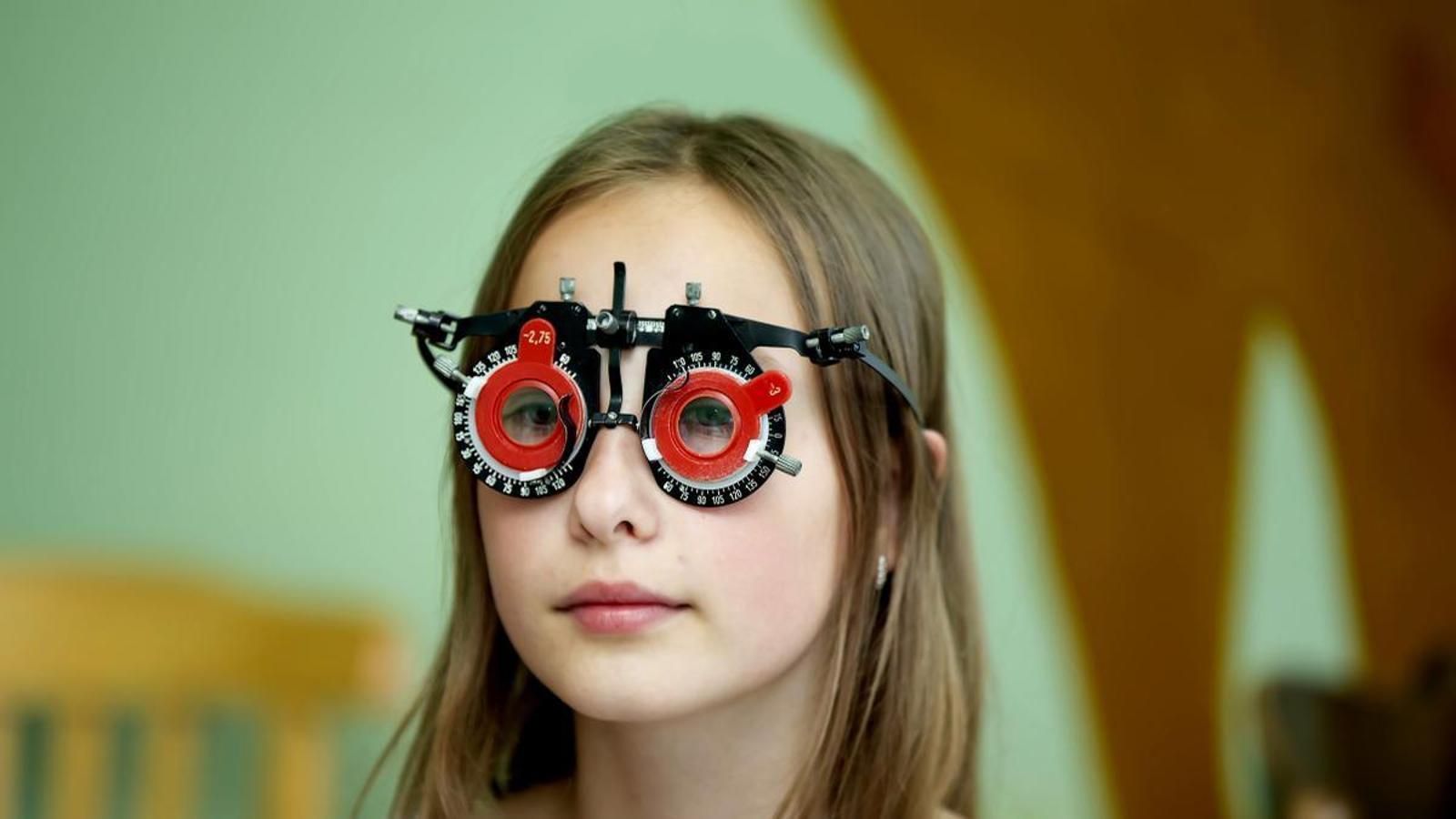
Excessive screen use and few hours of sleep and outdoor time, along with other factors such as hereditary ones, are turning myopia into one of the refractive defects that most frequently affect adolescents and young people. In fact, a study by the Faculty of Optics and Optometry of Terrassa at the Polytechnic University of Catalonia (UPC) points out that childhood myopia almost triples between the ages of 8 and 12. The Childhood Visual Health Cohort of Terrassa (CISViT) research project, developed by the Vision, Optometry and Health (VOS) research group of the Polytechnic University of Catalonia - BarcelonaTech (UPC), linked to the Faculty of Optics and Optometry of Terrassa (FOOT), reveals unprecedented longitudinal data on the child population of southern Europe. Initiated in 2021, the project currently has more than 2,500 participants.
The collected data indicate that the prevalence of this vision impairment increases with age, with an average annual worsening of refraction of 0.29 diopters towards myopia and a clear tendency to worsen during the school stage: at 8-9 years old it affects 12.3% of the child population; after one year of follow-up, the figure rises to 17.1%, and after three years of follow-up, the prevalence increases to 28.7%. "The World Health Organization (WHO), alarmed by this enormous prevalence of myopia, has categorized it as a pandemic and all vision professionals in the world are working on it, because the figures are very scandalous," explains Laura Guisasola, doctor and researcher of the aforementioned research group. And it is that according to WHO data, by the year 2050 myopia may reach almost 50% of the world's population.
Guisasola explains that this study was carried out among students between 8 and 12 years old because it is in this age group when myopia begins to become manifest. As children grow, the size of the axial length of their eye also develops in a process called emmetropization. When this process is normal, children who are born hyperopic become emmetropic children, that is, they have no vision problems. "But, sometimes, this growth of the eye is disproportionate to what it should be, and that is when we find axial lengths longer than would be expected, with eyes that form images in front of the retina instead of on the retina. This is what causes the child to be myopic and not see well."
The research has also served to identify significant differences based on gender. In the first case, it shows that girls with myopia at early ages constitute a risk group due to a faster progression of ocular growth compared to boys. “We advise closer and more frequent monitoring in girls who already have myopia,” points out Guisasola. On the other hand, the fact that schools in Terrassa with a significant Maghrebi and Latino population were worked with to carry out this study has allowed the detection that non-Caucasian children have a larger starting axial length of the eye. “We have seen that these children have a slightly higher prevalence of myopia, but after monitoring them, we have detected that as they grow, the development of myopia is not more notable than that of Caucasian children: although it might have seemed so at first, the subsequent evolution shows that there are no differences between these ethnicities,” points out Guisasola. In another area, the researcher also indicates that it has been found that children from more vulnerable families, with lower socioeconomic levels, have higher prevalences of myopia. The study relates this to the fact that these families have less capacity to identify health problems, to know how to address them and which professionals to turn to, as well as to recognize risk factors and protective factors to face this anomaly.
Anticipation and prevention
Usually, myopia is addressed when it emerges, when the child can no longer see well and needs glasses, but it is possible to anticipate its onset. At this point, Guisasola explains that if visual health professionals, instead of only working on refraction, measure axial lengths throughout childhood, they can obtain data that allows for two years of anticipation before myopia becomes manifest. "For this, periodic visits to professionals are needed for check-ups, especially for those children who already have myopic parents or who have a high propensity for near-vision work," he adds.
The age of the children studied coincides with the most active moment of learning, especially through reading, but there are also other habits that can favor or curb the development of myopia. "Excessive use of electronic devices when they leave school or on weekends constitutes a risk factor, but, on the other hand, spending many hours outdoors and in contact with the sun is a protective factor, just as sleeping eight hours or more is, which favors having healthy vision," explains Guisasola.
Despite the importance of prevention and the fact that glasses or different types of contact lenses usually correct this refractive error, it must be taken into account that when myopia progresses and exceeds 6 diopters, it can lead to other problems. "At this point, it must be monitored very closely at a pathological level, because the retina can be susceptible to suffering serious ocular pathologies," warns Guisasola.
This study conducted by the UPC is a longitudinal study –it tracks the evolution of children throughout different academic years– unprecedented in southern Europe. And as Guisasola points out, despite the data obtained, it differs from what is currently happening in Asia, where the prevalence of myopia is much higher. Therefore, prevention, anticipation, and periodic eye exams can be the main ingredients to curb this new pandemic.
