Trump rejects Iran's latest offer to reopen Hormuz
Tehran planned to reopen the strait in a period of seven days once Washington accepted the plan, which is similar to the one agreed in June

-
CAT -
CAST
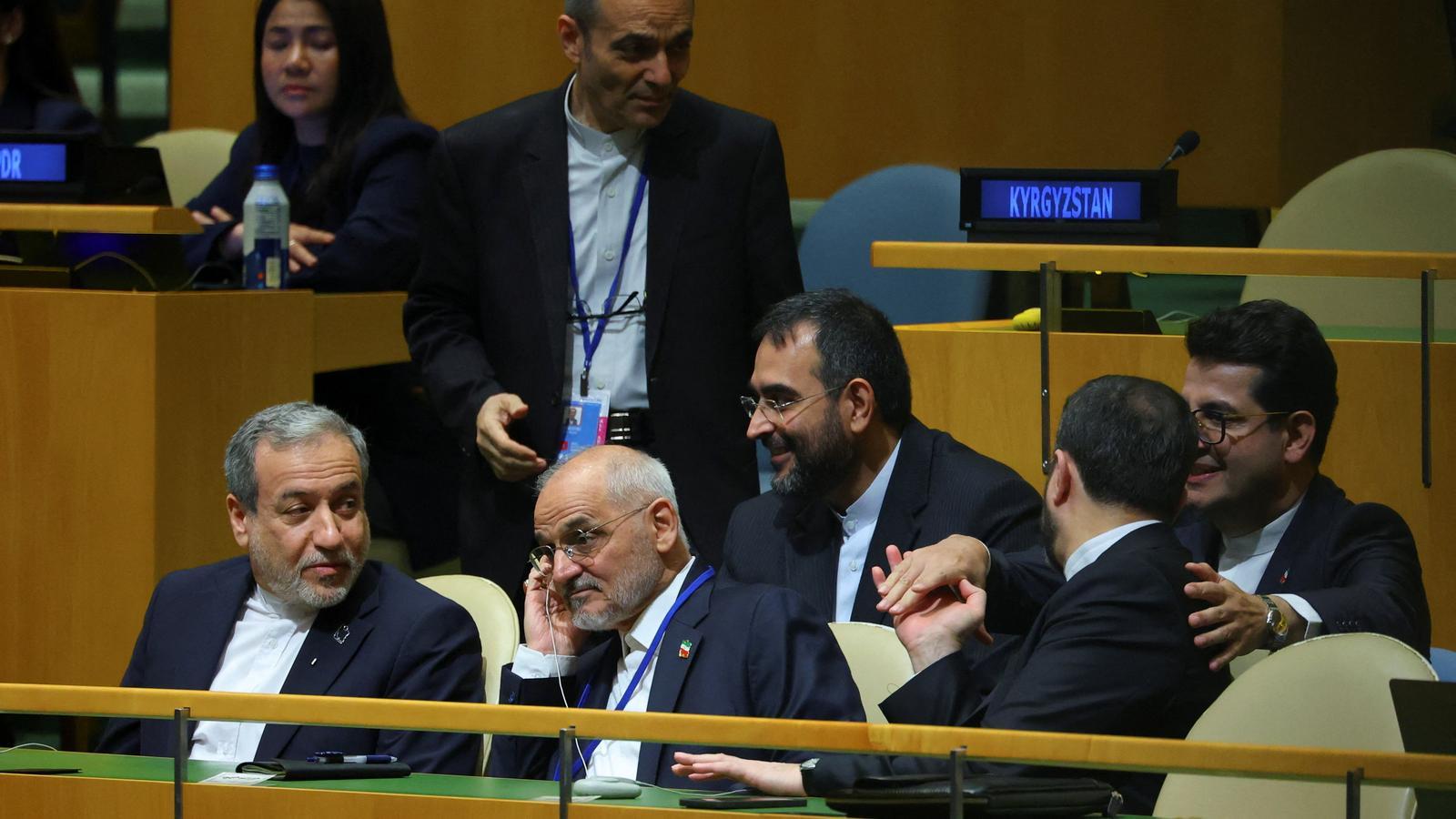
WashingtonBehind the warmongering rhetoric at the UN podium, Tehran seems to be moving in another direction. In the corridors of the United Nations General Assembly, the Iranian delegation, which had arrived in New York without showing any interest in dialogue, presented the US with a new proposal for an agreement to reopen the strait. The information was first leaked to the press by people familiar with the talks, and now the Iranian Foreign Minister, Abbas Araghchi, has confirmed it.
"We have presented to the United States, through intermediaries, a plan according to which, if certain conditions are met, the Strait of Hormuz would be open at the end of the seventh day and talks would resume," said Araghchi. And he insisted that it "would be better" to reach an agreement before the midterm elections. But the US president did not take long to turn his back on the Iranian offer: "They made a proposal, but I rejected it," he confirmed this Saturday in statements to the press.
The contact between the delegations was mediated by Qatar, and it is a significant step forward amidst the ice that prevails between the two sides. But it is still too early to start talking about a peace agreement. In part, due to the very nature of the offer presented by the ayatollahs.
The Iranian plan provides for reopening the Strait of Hormuz within a period of seven days just after Washington accepts their proposal. Araghchi did not give further details, but stated that the new offer resembles the memorandum that both countries already signed in June and which was broken a few weeks later.
The agreement signed in Versailles established that Iran committed to allowing the passage of ships through the strait without paying any toll for sixty days, while peace talks were resumed to end the war. Now the Iranians would be accelerating the schedule. During this period, the bombings would have to cease, the US would lift the naval blockade and all oil sanctions. Seven days after that happened, the strait would be reopened and talks on the Iranian program would begin.
However, if the new offer resembles the previous one, it would also include the trigger that blew up the previous pact: the ownership of Hormuz. The way it was formulated in the Versailles text was ambiguous enough for the Iranians to be able to claim for themselves control of the part of the waters that bathe their coast. A red line that has at no time been accepted by the USA. Beyond threatening the Islamic Republic to "annihilate it", Trump also stated in his speech at the UN General Assembly that US forces control the strait. An aspiration that has at no time been translated on the ground.
The pressure of the calendar
Iran has made the proposal public with a clear intention of pressuring Washington to accept it. A month before the elections, the rising cost of oil is becoming increasingly unsustainable for Americans who see the congressional elections as a referendum on Trump. The ayatollahs know that this is a very tempting decision for the American president, who needs a major breakthrough before November 3rd. If there is one thing that characterizes Trump, moreover, it is his impulsivity.
The proposal, moreover, arrives at a moment when the scenario in the region is becoming even more complicated: the entry of the Yemeni Houthis has destabilized the Bab el-Mandeb strait, putting a squeeze on Saudi Arabia. Until now, the petrostate friendly to Trump had used this second strait as an alternative to Hormuz. The Saudis have asked the White House for help to combat the Houthis, a request that Washington has not yet responded to. The more time that passes, the greater the risk that the relationship with Arab allies will deteriorate.
Iran also has an interest in closing the deal as soon as possible. The Persian economy is under heavy pressure and Iranians are suffering from growing inflation in basic food items. In addition, they also face a lack of medicine and trade interruptions. Wanting to return to the negotiating table, rather than being a gesture of diplomatic good faith, is an attempt to catch its breath again. During his speech at the UN, the Iranian president, Masoud Pezeshkian, reiterated the same position that the regime has maintained from the beginning: Tehran has no intention of making a nuclear bomb, but it is also not willing to renounce the rest of its nuclear technological applications.
Although a good part of the Iranian delegation has already returned home, Araghchi will remain in New York until next Monday. Esmaeil Baghaei, spokesperson for the Iranian Foreign Ministry, who is also in the city, said that it was possible that new contacts would be held in the coming days.
On Tuesday, the American and Iranian delegations met for three hours. Among the US negotiating team were the special envoy, Steve Witkoff, and Trump's son-in-law Jared Kushner. The meeting was viewed positively by both Trump and Araghchi.

