"They tell us that everything is under control, but it is not true": anxiety in Saudi Arabia over the Houthi attacks
The bombings against Riyadh, the victims at the airport and the doubts about the defense system put the citizens' trust in the authorities to the test

-
CAT -
CAST
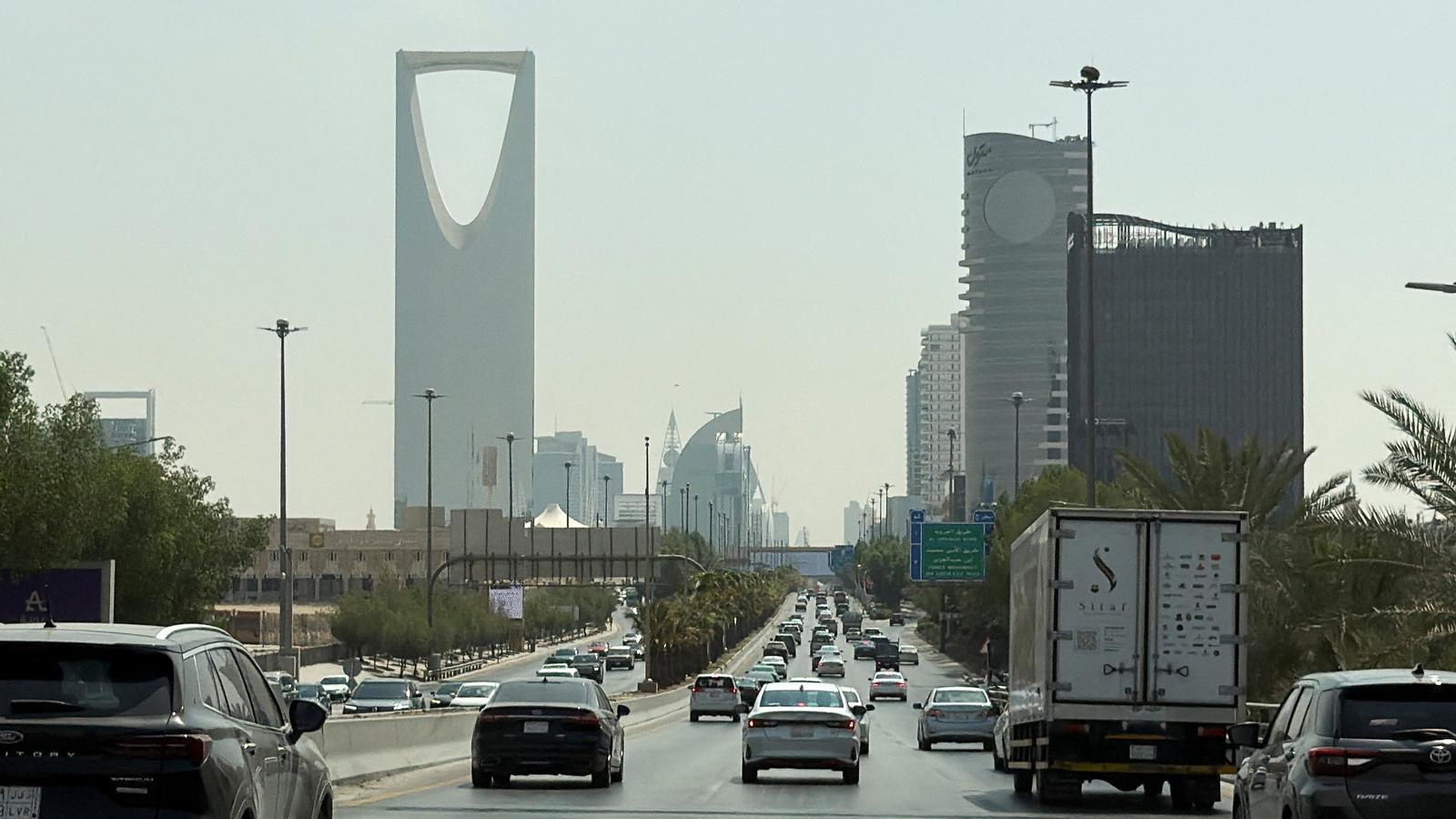
JerusalemIn Riyadh, cars fill the roads, restaurants receive customers and football matches are played. But, under this appearance of normality, an uneasiness that is difficult to erase has settled in: not knowing when the next alert will sound or where the next projectile might fall. The wave of attacks by the Houthis from Yemen has hit strategic infrastructures and has exposed the limits of a country that has invested enormous resources in defense.
“We see missiles pass by every day,” laments a resident of Riyadh who has been living in the country for two years. “The authorities tell us to stay calm, that everything is under control. But it is not true: we cannot act as if nothing is happening,” she says. Another resident emphasizes the uncertainty caused by the lack of warnings: “I am not entirely calm, because we do not receive all the alerts that we should be receiving.”
Their concern coincides with the findings of a Reuters investigation according to which Saudi Arabia had stopped issuing warnings in the days leading up to the deadly impacts at the King Khalid International Airport in Riyadh. Although the authorities have not publicly explained why the alerts were interrupted, which resumed on October 12, sources cited by the agency claim that the government had received complaints because the warnings were waking citizens up during the night, and that it wanted to preserve a sense of normalcy in the country.
The absence of warnings, far from dispelling doubts, has fueled concern about the state's capacity to protect the population. For Kristian Alexander, a geopolitical analyst based in Dubai and a researcher at the Middle East Institute Switzerland analysis center, how authorities communicate danger is as important as the military response. “Public communication must be fast, coherent, and honest about what is not yet known,” he explains to ARA. “Generic statements that everything is under control erode trust if they contradict what citizens are experiencing,” he adds. According to the expert, the population needs to know what has been confirmed, which services are affected, and when new information will be provided.
Meanwhile, the country is trying to maintain its activity. Some companies have offered remote work and a good part of the public agenda, including the Saudi Pro League matches, remains scheduled. But the attacks against airports in cities like Riyadh, Dammam, Abha, Najran, and Jazan and the impacts against Saudi Aramco facilities—the country's main oil company—project an uncomfortable image for a kingdom that aspires to be a tourist destination and a global business hub. The postponement of the summit between the European Union and the Gulf Cooperation Council, scheduled in Riyadh on October 24th, is another example of this.
Helplessness despite the military arsenal
All this is happening in a country that has built over the years one of the most expensive military arsenals in the world, with fighter jets and anti-missile systems, a good part of them of American origin. But defense spending of about 71.5 billion euros in 2026 does not guarantee that the kingdom can protect all the vulnerable points of its territory. “Saudi Arabia's difficulty illustrates the difference between having powerful armed forces and being able to protect daily life in the face of repeated attacks,” the expert describes. Each new offensive tests the entire defensive chain, from detection to the activation of interception systems.
In September, Riyadh had already warned of the reduction in interceptor reserves and requested help from France, the United Kingdom, Pakistan, and Egypt. Since then, London has agreed to provide in-flight refueling support, and Paris has announced the deployment of personnel to protect Yanbu, a strategic port for oil exports. “In this scenario, the Houthis do not need to defeat the Saudi army. A few successful attacks are enough to cause fatalities, disrupt air traffic, and leave the population wondering where the next attack will occur. The uncertainty they generate becomes, in itself, a form of pressure,” concludes the expert.
In recent days, Yemeni rebels have insisted that Saudi airports are not safe. At the same time, investigations by Conflict Armament Research (CAR), an organization specialized in documenting the origin of weapons in conflict zones, suggest that they may be attempting to develop medium-range ballistic missiles with Chinese components, based on a design inspired by the Iranian Kheibar Shekan missile, with an approximate range of 2,000 kilometers. If these capabilities are confirmed, they could further complicate Saudi defense.

