Low-intensity cross-attacks between the US and Iran call the ceasefire into question
Trump insists the truce holds and Tehran accuses Washington of using the bombings as a "pressure tactic"

-
CAT -
CAST
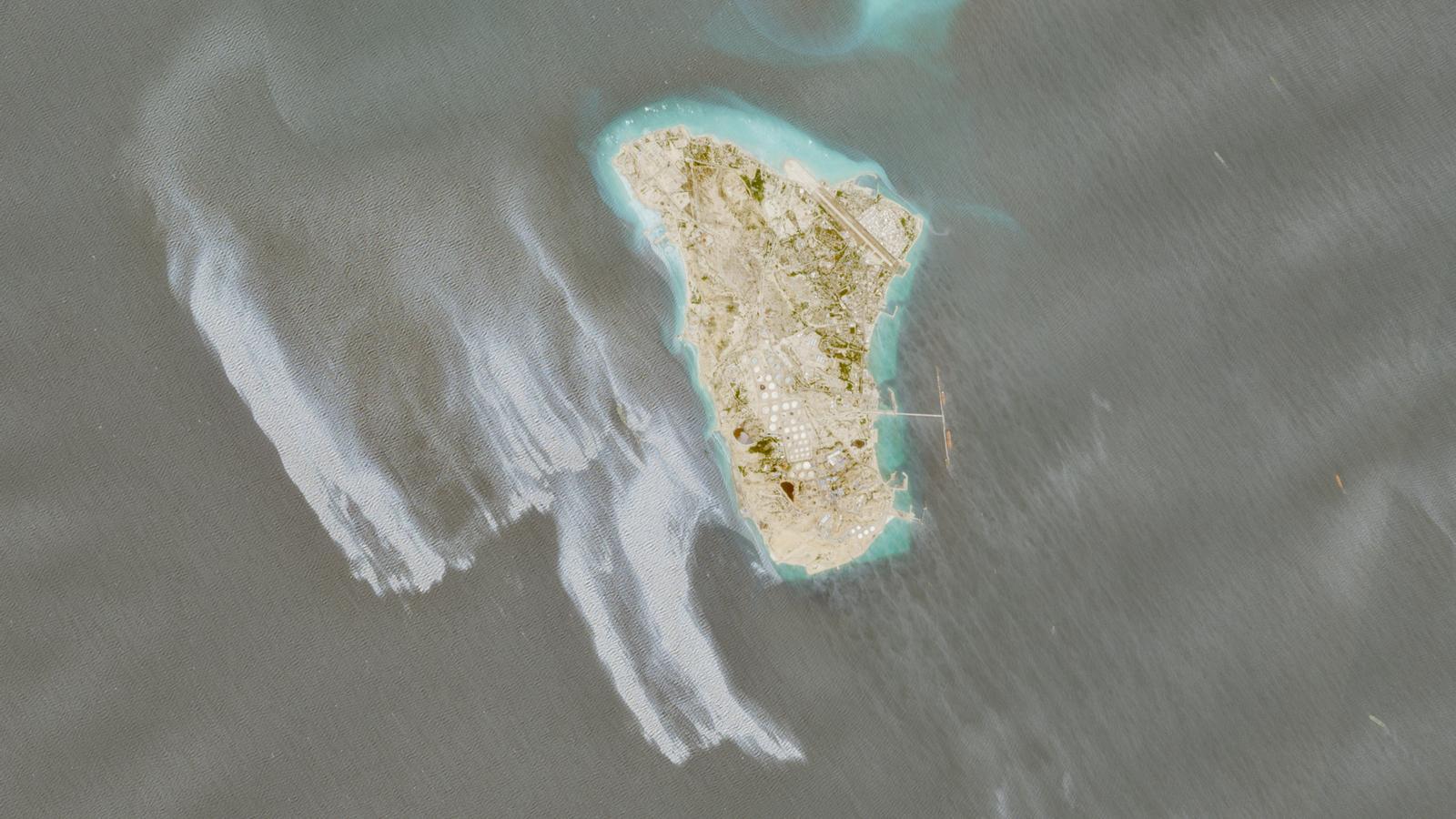
WashingtonThe ceasefire between Iran and the United States has become a kind of war buffer in which bombings are no longer done in uppercase but in lowercase. Since Monday, crossed attacks between the two countries have been reactivated, but at low intensity. The most serious episode occurred this Thursday night, after the US Army's Central Command (Centcom) confirmed it had opened fire "against Iranian facilities." The statement came after Iranian state media reported explosions in Bandar Abbas and on Qeshm Island, near the Strait of Hormuz. It was the first attack against Iranian territory since the truce began. Donald Trump dismissed it as a "love tap," the ayatollahs showed their teeth. This Friday, everything remained the same. Centcom has reported that it has intercepted two more Iranian oil tankers.
In a new message shared on X, the US military explained that this Friday the aircraft carrier USS George H.W. Bush
had opened fire on two Iranian ships that were trying to evade the US blockade in the strait. Despite the fact that Trump suspended the Libertad Project on Tuesday –the plan to escort ships through the Iranian blockade– the US counter-blockade remains. Since Monday, the US says it has sunk at least six Iranian vessels and has immobilized three more, including these last two.
Yesterday, Trump downplayed the attacks and described them as a mere "triviality." In a post on Truth Social, he again threatened the Iranians if an agreement is not reached "quickly." Likewise, Iranian Foreign Minister Abbas Araghchi considered the attacks on the Bandar Abbas and Qeshm facilities to be a "crude pressure tactic" by the Americans. "Every time there is a diplomatic solution on the table, the US opts for a reckless military adventure," he wrote.
Thursday's escalation once again called into question the credibility of the ceasefire. The Americans, despite acknowledging having attacked Iranian territory, sheltered under the adjective "defensive". In the statement, Centcom emphasized that the action was a response to an "unprovoked attack" by Tehran. Centcom asserted that Iran first "launched multiple missiles, drones, and small boats while the USS Truxtun (DDG 103), the USS Rafael Peralta (DDG 115), and the USS Mason (DDG 87) were transiting the international maritime strait." And it stressed: "Centcom does not seek escalation, but remains positioned and prepared to protect American forces.
Stalled negotiations
The new attacks have become the backdrop for negotiations that seem to remain stalled. In recent days, the two sides have been exchanging their positions on how to end the war through Pakistan, the mediating country. On Tuesday, Trump announced that he was about to sign an agreement with the Iranians, and as an act of good faith, he suspended Project Liberty at the request of Islamabad. On Friday, talks continued, and Secretary of State Marco Rubio said that the U.S. expects a "response" from Iran in the coming hours.
On the other hand, the Iranians have reported that Washington and Tehran are debating the U.S. proposal to at least re-open the Strait of Hormuz and stop the attacks for 30 days while working on an agreement to end the war. A U.S. intelligence report leaked to the Washington Post indicates that the ayatollah regime can still withstand the U.S. blockade for three to four weeks before beginning to suffer economic damage.
It is also noteworthy that this Friday, Trump spoke at an event in the Rose Garden of the White House and made no mention of the war in Iran. It is probably one of the first times the U.S. president has addressed the press and not spoken about the conflict.
indicates that the ayatollahs' regime can still withstand the US blockade for another three to four weeks before they begin to suffer economic damage.

