"I got botox for the same reason I've tried most of the drugs on the market"
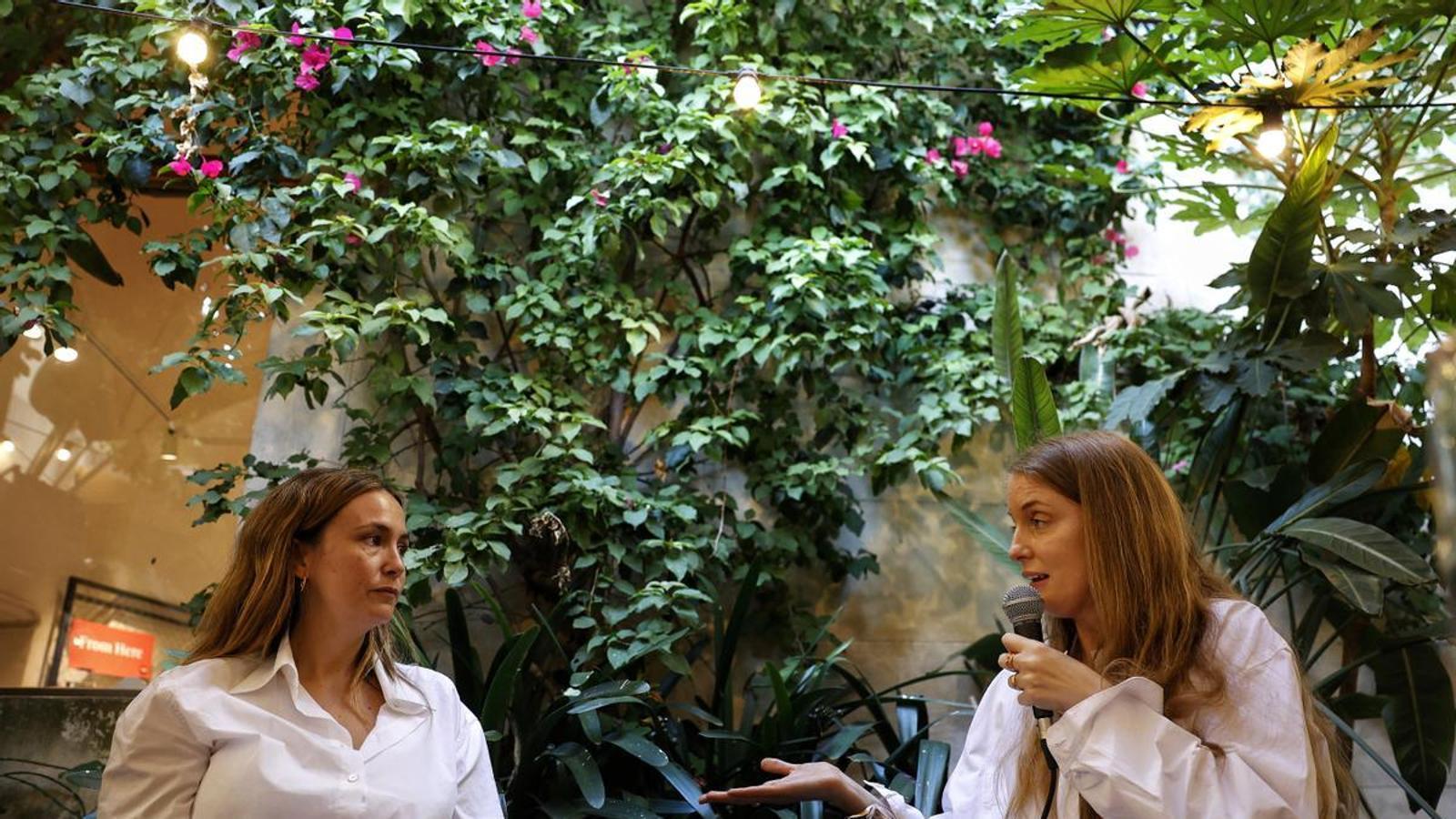
Leticia Sala presents with Rigoberta Bandini the essay 'Dame veneno que quiero vivir' at La Central

-
CAT -
CAST
— You think you’ll look prettier in the mirror and therefore you’ll feel better. Afterwards the problems are the same, of course.
— My sister got it six months ago and now she's back –I see she points to her forehead–. Me, for now, no.
I overhear a conversation between two young women who, like me, are waiting in the garden of La Central del Raval for the start of the presentation of Dame veneno que quiero vivir (Anagrama), by the Barcelona-based writer Leticia Sala (Barcelona, 1989), who previously published Los cisnes de Macy's (Reservoir Books, 2023) and is the author of the successful newsletter Magical thinking. It happens that the two girls who inject themselves do so with a friend of a friend "who knows how to inject". Apparently, the cheaper version of the dose costs 300 euros. They are under 30, for sure.
—It’s not just the wrinkles, it’s that you look better.
— Yes, it lights up your eyes. And it doesn’t have to be a loop. You can do it once and then not do it again, or do it once a year.
— Yes, when you need it! – says the other, laughing, because obviously by necessity she means a boost of self-esteem when you're feeling down.
It seems like the girls have been put in front of me to write the chronicle, because this reality is precisely what Leticia Sala's essay addresses: why is the use of cosmetics, medications, and aesthetic treatments that can be harmful to health being generalized under the pretext of health, self-care, and a promise of waxy longevity?
Paula Ribó –Rigoberta Bandini for music– accompanies the author at the presentation and throws the first stone right away. "I got Botox for the same reason I've tried most drugs on the market: out of curiosity and to see what everyone is talking about," says the singer. Following her first Goya nomination, she was showered with gifts from aesthetic clinics and discovered that "little injections were a daily occurrence around her: "Have you had injections too? Am I the only one who hasn't?" she marveled. In the end, she chose a clinic, underwent what she now sees as bullying –"We've normalized lying on a stretcher and feeling bad just for aging!" – and excitedly told everyone about the treatment: "I was very happy. And I didn't get addicted, I've only done it once. But reading about it now makes me angry that I fell into the monster's clutches with such enthusiasm. I don't know if I'll be able to get injections again after reading the book," admits the singer.
Sala insists that the book does not criticize the treatments, "because women already carry enough guilt and judgment," but it does try to provide data and a critical perspective on why skin and silhouette are once again a battlefield. Who sets the aesthetic pressure? The patriarchy? Pharmaceutical companies? The cosmetics industry and advertising? "An act so apparently innocuous and frivolous can even connect with who you vote for. People in DC around Trump go to surgeons asking for maximalist treatments because they want the retouching to be noticeable," says the author. A matter of class. Hyperfeminization, Ozempic, and tradwives
coexist with natural underarms and empowered women in a moment of feminist advance and, at the same time, reactionary advance.
'Anti-aging', anti-life
The essay warns of the lowering age of treatments for young people in their twenties. "They undergo preventive touch-ups for wrinkles they don't have yet. It philosophically worries me to paralyze something that hasn't happened. I don't know what their relationship might be with death, with the end of love, or with finishing a job. Everything in life is destined to end – reflects Sala–. And, on the other hand, we have normalized buying a product that says anti-aging, which is like saying anti-life, that is, pro-death". At the end of the book, Sala offers individual and collective ideas to transform reality. Paula Ribó also has a proposal: "We should all unite and be Gremlins. Most cis-hetero men are Gremlins and we still love them, how cheeky!" And she continues her theory about exercising freedom starting with intimacy: "I've had many ex-boyfriends who were disgusted by my hairy armpit. You shave yourself! Why can only they live relaxed? There are women who don't fart at home! I fart. I think it's natural and beautiful that we are equal. Equality begins with a fart!", says Ribó playfully.
In the end, faced with aesthetic and digital pressure, the two friends find the antidote in the classics: references, friends, and the inner self. The women of all ages who fill the garden will corroborate this later: this is a safe space. "If after our fertile years nothing is promised to us, it is legitimate for people to want to stay longer with the same face and lifestyle. I like the idea of thinking that when you have gone through complicated stages, the promise of wisdom arrives", affirms the author. "As an adult, I imagine myself rich in words and friends, a literary figure, a humanist, a path that goes hand in hand with spirituality –adds the singer–. If I am spiritually connected, I feel confident in life, and confidence is not about stopping life, it's about throwing yourself into it." The two girls in front of me have left before the end of the act.

