The Ebola outbreak overwhelms the WHO and remains out of control in the northeast of Congo
The two suspected cases detected in Italy give negative in the tests to detect the virus
-
CAT -
CAST
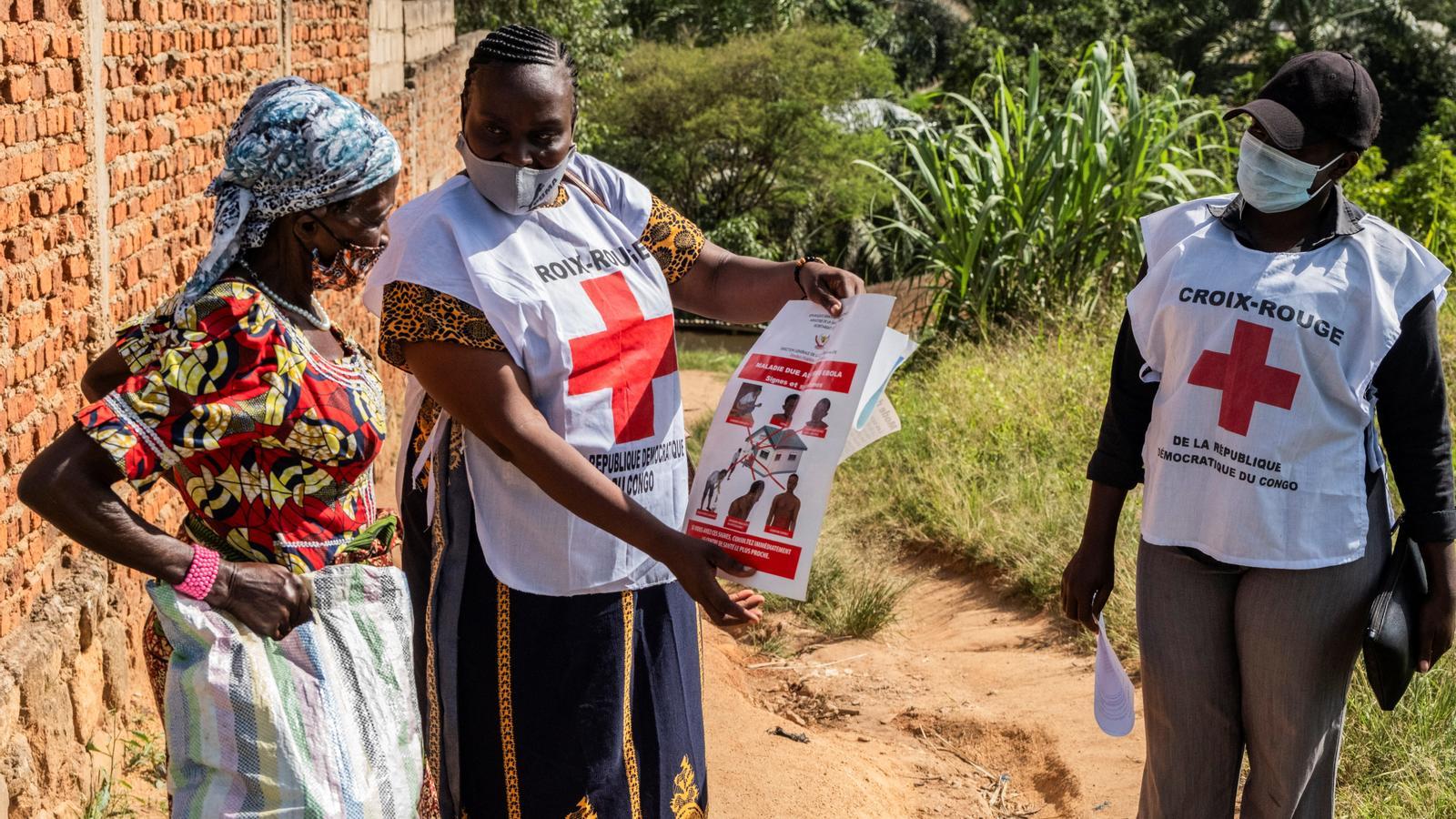
BarcelonaSince it was detected, the Ebola outbreak in the Democratic Republic of Congo is of particular concern to experts and health authorities. The number of suspected cases has already climbed to 900, and deaths under scrutiny exceed 200. Beyond the logical increase in figures once the virus was detected and medical attention and resources were allocated to contain the epidemic, the speed at which it is spreading keeps the WHO on alert. In a region with high levels of public insecurity and a considerable number of people living in shacks and tents in displacement camps, the health task becomes complicated, and the virus remains out of control for now. "Hunger and disease go hand in hand. People weakened by hunger are much more vulnerable to infections," stressed the WHO Secretary-General, Tedros Adhanom, this Monday.
the two suspected cases reported this Monday by Italythe two suspected cases reported this Monday by Italy – two people who went to a hospital in Milan presenting symptoms after traveling to Uganda – have tested negative.
Proof of the concern generated by the outbreak is that the same Tedros is scheduled to travel to Congo this Tuesday to closely follow the evolution of the outbreak and the response being given. The highest global health official is scheduled to land in Kinshasa, the country's capital, where he will meet with authorities, and will later travel to Bunia, the capital of Ituri province, the epicenter of the epidemic.
There, medical centers are overwhelmedwith the Spanish government advising against travelThe situation is especially serious in northeastern Congo. However, the doctor and co-discoverer of Ebola, Jean-Jacques Muyembe, who currently heads the National Institute of Biomedical Research in Kinshasa, launched a message of calm this Tuesday. In an interview with Swiss public television, RTS, he assured that "in two or three months" it is "possible" for the current epidemic to be "totally contained". Although there is no vaccine or antivirals for the Bundibugyo variant, responsible for the current outbreak, Muyembe recalled that in the past outbreaks of other variants for which there were also no vaccines at the time have been controlled.
While in the region the risk is "very high" according to the WHO, the danger in the rest of the world remains controlled with a very low risk of transmission outside Central Africa, where the Spanish government advises against traveling. Globally, authorities in some countries have taken measures, especially in cases where high mobility is foreseen, such as for the Football World Cup, an event for which the government of Mexico City is already preparing – as is normal in a situation like the present one – an action protocol for suspected cases.

