"Only idiots or traitors can rejoice in it": the triumph of Alternative for Germany makes Europe tremble
The results of Saxony-Anhalt have been read as an omen of the penetration of the extreme right into the political frontline

-
CAT -
CAST
BrusselsThe most feared forecasts for Brussels have come to pass. For the first time since the fall of Nazism, the German far-right has real options to govern a state. The results in Saxony-Anhalt have fallen like a bucket of cold water on the community capital, where the victory of Alternative for Germany (AfD) is read as a harbinger of the penetration of this intolerant ideology no longer into the hemicycle – where it has had a few reserved seats for some time – but into the front line of executive power. A reading contrary to that made by the most populist leaders, who see the results as a political springboard.
"A very worrying sign". With this expression, the first two European capitals to assess the results of the German regional elections, Paris and Warsaw, have reacted. "We are facing an important challenge in the face of a populist wave that is spreading across the world today and which we must resist," said the French Minister of Finance, Roland Lescure, this morning. Hours earlier, the French Minister for European Affairs, Benjamin Haddad, said that the elections in Saxony-Anhalt mark "a very serious moment for Europe" and called for listening "with humility" to "the anger, the fears and the concerns" of the citizenry in order to provide a response. The Prime Minister of Poland, Donald Tusk, expressed himself more forcefully, asserting that "only idiots or traitors can rejoice at the triumph of the AfD in Germany".
In contrast to Tusk's clarity, the silence of the President of the European Commission, Ursula von der Leyen, stands out, as she has avoided making any statement on the matter, hiding behind her policy of not commenting on regional elections. In contrast, the head of community diplomacy, Kaja Kallas, has broken this rule and highlighted the danger posed by parties that are "blind" to the Russian threat. "We have seen an increasing number of acts of sabotage and threats in Europe. At the same time, parties that are blind to the threats are gaining ground, saying that we should do nothing about it because it is not our business," lamented Kallas during a visit to Lithuania. The country's Prime Minister, Mindaugas Sinkevicius, also showed concern over the growth of the far-right in Europe and warned that it is a "wake-up call" for traditional right-wing and left-wing parties.
The Spanish Prime Minister, Pedro Sánchez, agreed that the results in Saxony are "a warning that the ultra-right threat is gaining ground in Europe and the world, especially due to the surrender of the traditional right." Bringing the point home, the leader positioned himself as the antithesis of Alternative for Germany and defended his executive as "the vanguard against reactionaries" and "the spearhead of progressive policies" on the continent. "What has happened in Germany shows that a progressive government like Spain's is more necessary than ever. The world is watching us," he stated.
The alarm in the capitals does not arise only from the possibility that AfD ends up governing the state –where the rest of the forces are weighing the possibilities of creating a fragile cordon sanitaire–, but also from the underlying diagnosis they share: the victory of the ultra-right formation is symptomatic of a malaise transversal across all of Europe. And this, with the 2027 presidential elections in France on the horizon, raises fears of an accelerated erosion of traditional parties and a European Council shifted further to the right than ever before.
"This is just the beginning"
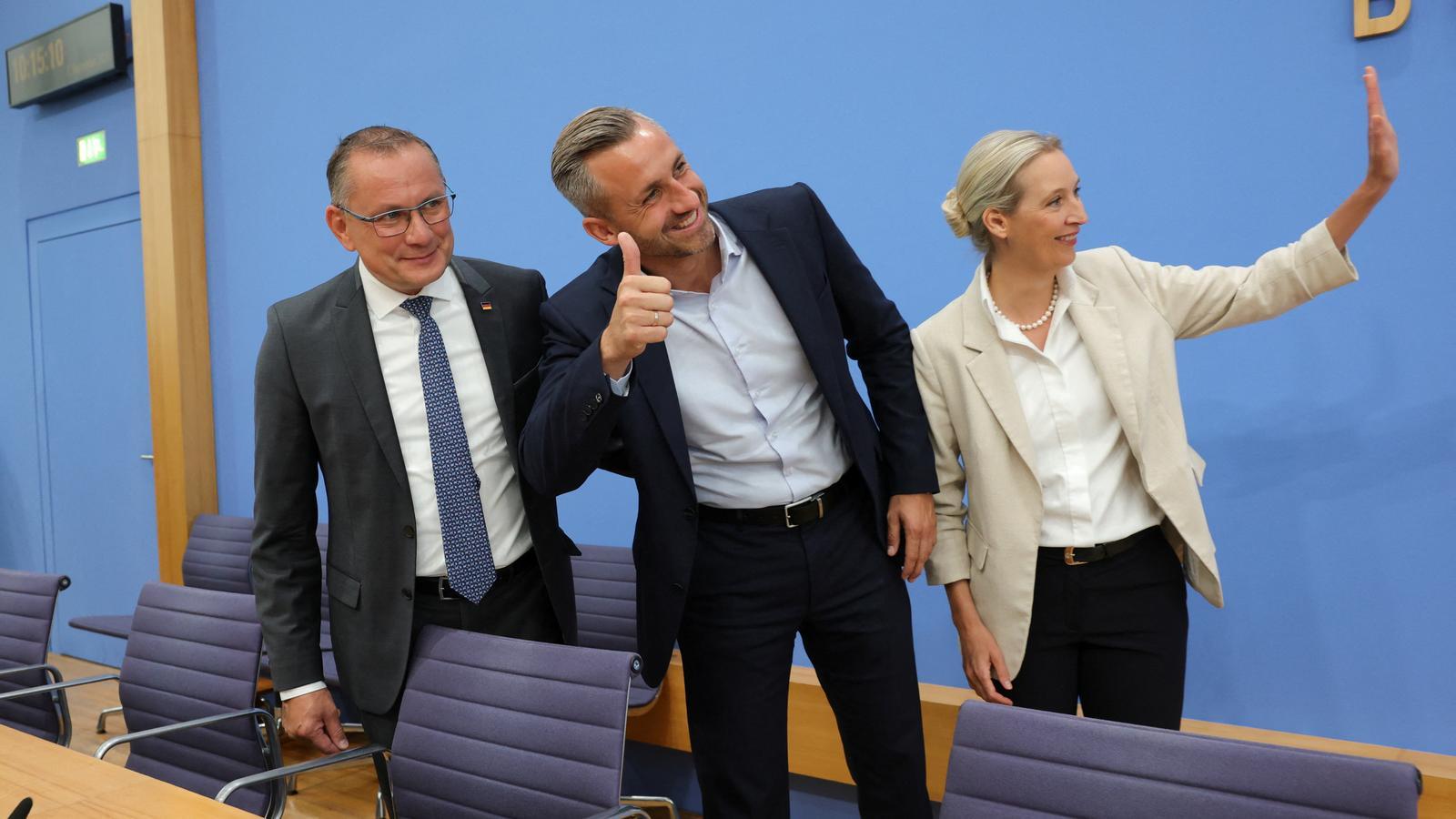
In contrast, more populist and far-right forces have seen the Saxony-Anhalt election results as validation of their political project. "Another Europe is possible," said Italian Deputy Prime Minister Matteo Salvini on Sunday night. The "overwhelming success" of Alice Weidel's party, Salvini asserted, "highlights the strong demand for change, security, and jobs." "Get ready. This is just the beginning!" declared former Hungarian Prime Minister Viktor Orbán in a congratulatory message addressed to AfD leaders Alice Weidel and Ulrich Siegmund.
Vox leader Santiago Abascal and Portuguese extremist André Ventura have also weighed in. Abascal described the results as a "great hope for Germany and for Europe," and the president of the far-right Chega party celebrated that Germans are "opening their eyes against illegal and uncontrolled immigration."
