Serbia buries the Vučić era and leaves Putin without his great ally in the Balkans
The triumph of the students' list gives an opportunity to the European Union to recover the trust of Belgrade
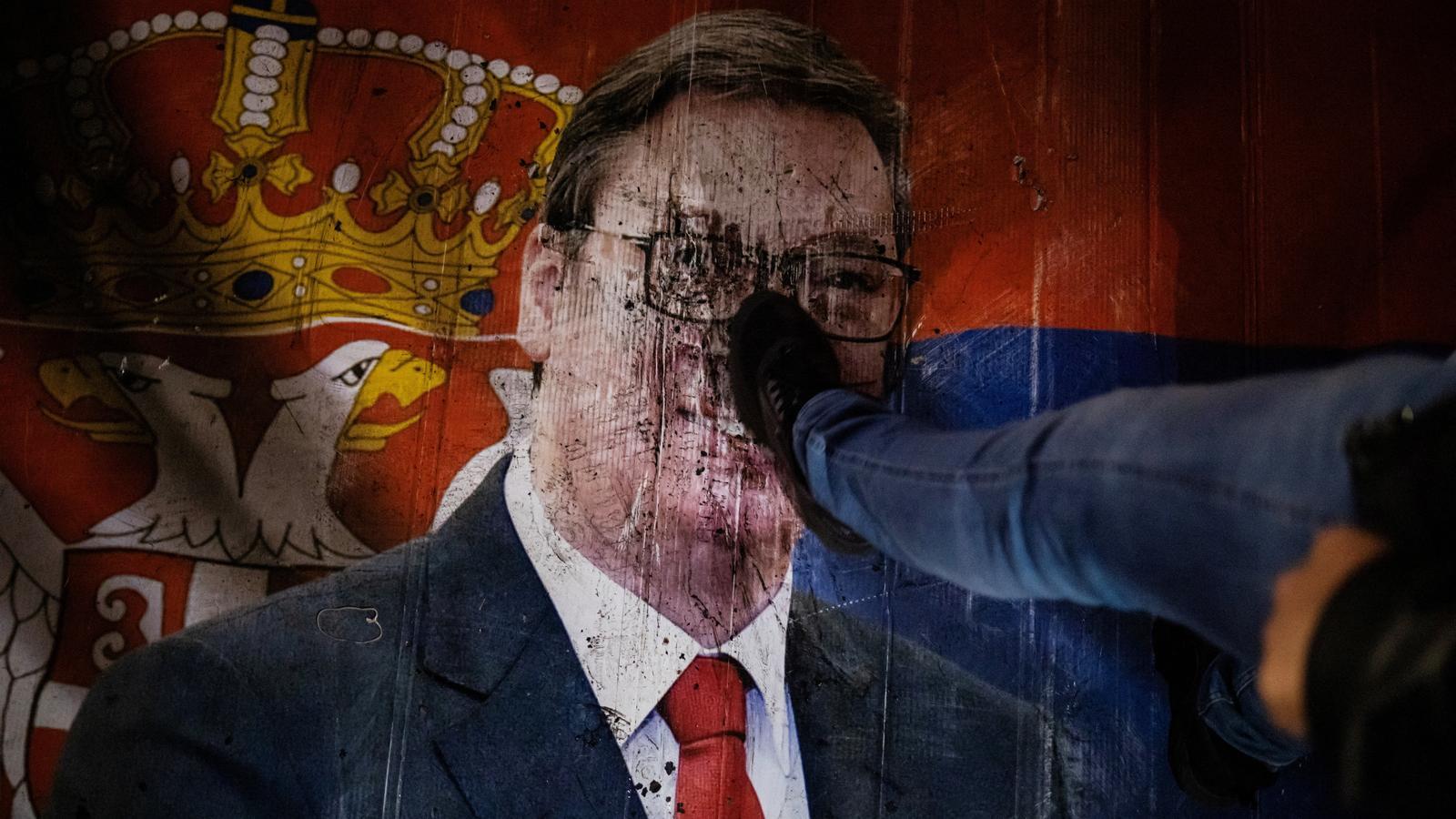

BrusselsAleksandar Vučić, the man who had been at the helm of power in Serbia for more than twelve years, has acknowledged defeat. The overwhelming triumph of the Students' List in this Sunday's parliamentary elections, which has obtained 52% of the votes and won by an absolute majority, puts an end to a period marked by highly personalistic power, a lack of freedom of the press, and good rapport with Vladimir Putin, Donald Trump, and Xi Jinping. The elections, which had become a referendum on the continuity of the Serbian former president, saw participation levels not seen since the disintegration of Yugoslavia and a very high mobilization among electors residing outside the country.
The results alter the balance of power on the European continent and represent a geopolitical setback for Moscow comparable to the fall of Viktor Orbán in Hungary just a few months ago. With Vučić's defeat, Moscow loses the last allied government it had in the Balkans, and will have to rely on regional leaders, such as the pro-Russian Milorad Dodik, if it wants to continue destabilizing the region from within.
The clearest sign of this alliance with Putin is that, during his tenure, Vučić avoided imposing any sanctions on Russia for the invasion of Ukraine and continued to buy natural gas from it despite pressure from European partners not to do so. Likewise, he met several times with the Russian president; the last one in May 2025, when he traveled to Moscow to attend the Victory Day events. All in all, Vučić had bet on a multi-faceted foreign policy. While Moscow guaranteed him energy ties, he also received investments and infrastructure projects from Beijing and remained in the race to join the European Union, which is also his main economic partner.
The President of the European Commission, Ursula von der Leyen, has celebrated the triumph of the opposition candidacy and has assured that she will support the democratic reforms they wish to carry out to "advance the future of Serbia in the European Union". This political shift gives Brussels an opportunity to recover its credibility with the Serbian citizenry and give a new boost to the accession process.
Serbia has been queuing to join the European club for seventeen years. During these two decades in the waiting room –where it has remained blocked due to a lack of democratic reforms– it has seen other, less advanced students, such as Montenegro or Albania, pass it by. The stagnation has fueled the disillusionment of a part of the population, which sees European promises as a receding horizon.
Opposition to sanctions against Russia
It is not at all strange, therefore, that the Student List has avoided committing itself on this issue. During the campaign, it did not make explicit proclamations in favor of European integration. The candidacy focused its discourse on the opposition to Vučić and dodged the aspects that could have been thornier and generated divisions. With the results in hand, it has managed to capitalize on the discontented vote, but now it faces the challenge of resolving these dissidences from within the government.
"His electoral program focused on eleven proposals regarding domestic policy," asserts Bojana Zorić, an analyst of Balkan policies at the EU Institute for Security Studies, to ARA, adding that there was no mention of either the European Union or foreign policy. According to Zorić, the candidacy's priorities are aligned with the democratic reforms that the EU demands of Serbia for entry into the bloc, such as favoring freedom of the press, an independent judicial system, and anti-corruption measures. "But if we are talking about foreign policy, it does not necessarily have to translate into direct support for the EU," she warns.
The candidacy, in fact, has given two clues about its direction that do not align with the community's position. In a message on social media, they explained that they oppose imposing sanctions on Russia for the invasion of Ukraine, a gesture that carries significant weight in Brussels. The other issue is their stance on Kosovo, which, as they expressed in a memorandum, they consider an integral and inseparable part of Serbia.
However, Zorić recalls that the majority of voters who have opted for the opposition candidacy are pro-European: 75% want better relations with the EU, compared to 10% who advocate favoring ties with Russia. "I think they will be more constructive with European aspirations," argues the analyst, who predicts a "positive change," and sees the victory as an opportunity to "make a reset" in the relations between Serbia and the EU. "We will see a new beginning of the negotiation process", he concludes.
The same doubts hover over the ideological plane of the new political formation, which has refused to identify itself under any umbrella and, furthermore, has refused to include on the lists anyone who had been a member of a political party over the last five years. The candidacy headed by the cardiologist and university professor Ilija Srdanović will now have to choose a government, which, as Zorić points out, will likely be an executive of experts. The purpose they have announced is to "clean up the institutions", that is to say, to renew the body of the administration, with the goal of being able to hold new elections.
