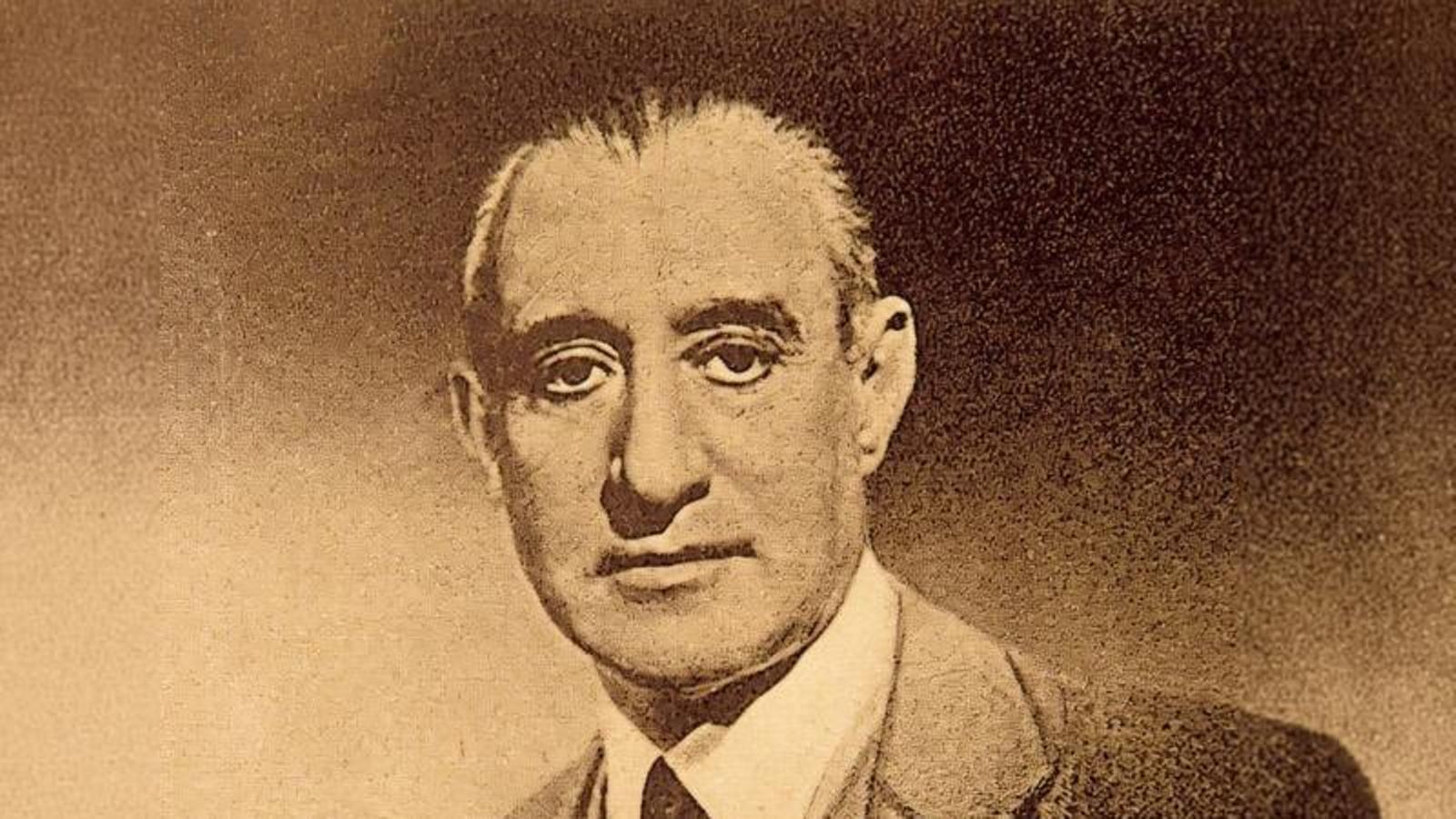
The Catalan banker who gifted the lands of the officers' residence in Barcelona
Josep Garí sat on more than twenty boards of directors
-
CAT -
CAST
When the Catalan Process was in full swing, it was said that all international intelligence services of some standing had set foot in Barcelona to try to understand what was happening. Of those most affected by the situation, the Spanish ones, it was said that they had set up camp at the officers' residence on Avinguda Diagonal, located at none other than number 666 of that major thoroughfare, which caused hilarity due to the relationship often established between this number and absolute evil (the reason is to be found in the New Testament, Revelation 13:18). The building was constructed just after the Civil War thanks to the donation of the plot by its owner, the businessman and banker Josep Garí Gimeno. One might think that after a donation of this calibre, the relationship between Garí and the Franco regime would be a bed of roses, but reality tends to be more complicated than the plans that are made, as we will see later on.
- 1886-1965
When the great banker Evarist Arnús died in 1890, his nephew Manuel and a partner named Josep Garí Cañas inherited the bank he had founded. This Garí also had a nephew, named Josep Garí Gimeno, who started working at the entity at only nineteen years old and who is the protagonist of today. In 1910, due to disagreements between partners, and with the advice of Francesc Cambó, the bank was divided into two different firms: Banca Arnús-Garí and Banca Arnús. Josep Garí stayed with the former, while Cambó chose to work for the latter. When the lawyer from Empordà was appointed minister (1918), he left Banca Arnús and later approached the bank that the Garís were already controlling (in 1916 the heir Manuel Arnús had died and the entity remained in the hands of the Garí family, with the uncle as chief executive and his son and his nephew as directors).
One of Cambó's first proposals to the family was the establishment of the Hispano-Italian Trust, a structure that intended to make the many foreign currencies that Spanish banks had accumulated during the First World War profitable, and where the CEO was Josep Garí Gimeno. The project did not quite crystallize, but the creation of CHADE (Compañía Hispano-Americana de Electricidad) did, an entity formed by German capital at risk of seizure under the Treaty of Versailles. In this company, Josep Garí held a seat on the board of directors. In parallel to this, the bankruptcy of the Bank of Barcelona occurred, a fact that contributed to his uncle abandoning business and handing over the baton to the Arnús-Garí bank.
Thanks to the bank's investments, the twenties marked Garí's entry into the industrial world. In this sense, in 1920 he led a pool of banks to take control of the Société Générale des Eaux de Barcelone (now Agbar), which until then belonged to the French company Lyonnaise des Eaux. Five years later, the firm he incorporated was Les Tramways de Barcelone, of Belgian capital (it was a subsidiary of Barcelona Traction) and, finally, in 1927 he acquired the Sociedad Española de Carburos Metálicos, which was in Swiss hands. Also during this period, he became a member of the board of directors of the powerful Sidro (Société Internationale d’Energie Hydro-Électrique) which had been founded by the banker Alfred Loewenstein and which was the main shareholder of Barcelona Traction. Likewise, he was a director of the real estate firm that urbanized the slopes of Sant Pere Màrtir (including the opening of Avinguda Pearson) and also of the Companyia d’Indústries Agrícoles, the sugar company of the Suñol and Carner families.
During the Republic, the life of Josep Garí did not change much, while he continued to accumulate seats on boards of directors, such as that of the Compañía General del Corcho, a firm that Cambó had founded in 1929 with the participation of the State. As we mentioned before, his generosity towards the winners of the war did not save him from problems, because in 1939 he was sanctioned for vouching for a friend who was disaffected to the Regime and, even more seriously, in 1953 he had to spend ten days in prison due to a dispute with the civil governor regarding water tariffs when Garí was the head of Aigües de Barcelona. In between, in 1942, he was forced to sell the family bank to Banesto. At the time of his death, the number of boards of directors he had been a part of far exceeded twenty.
