10 footballers who have made Spanish nationalism jump
The cases of the players who have generated controversy due to their relationship with the Spanish national team
-
CAT -
CAST
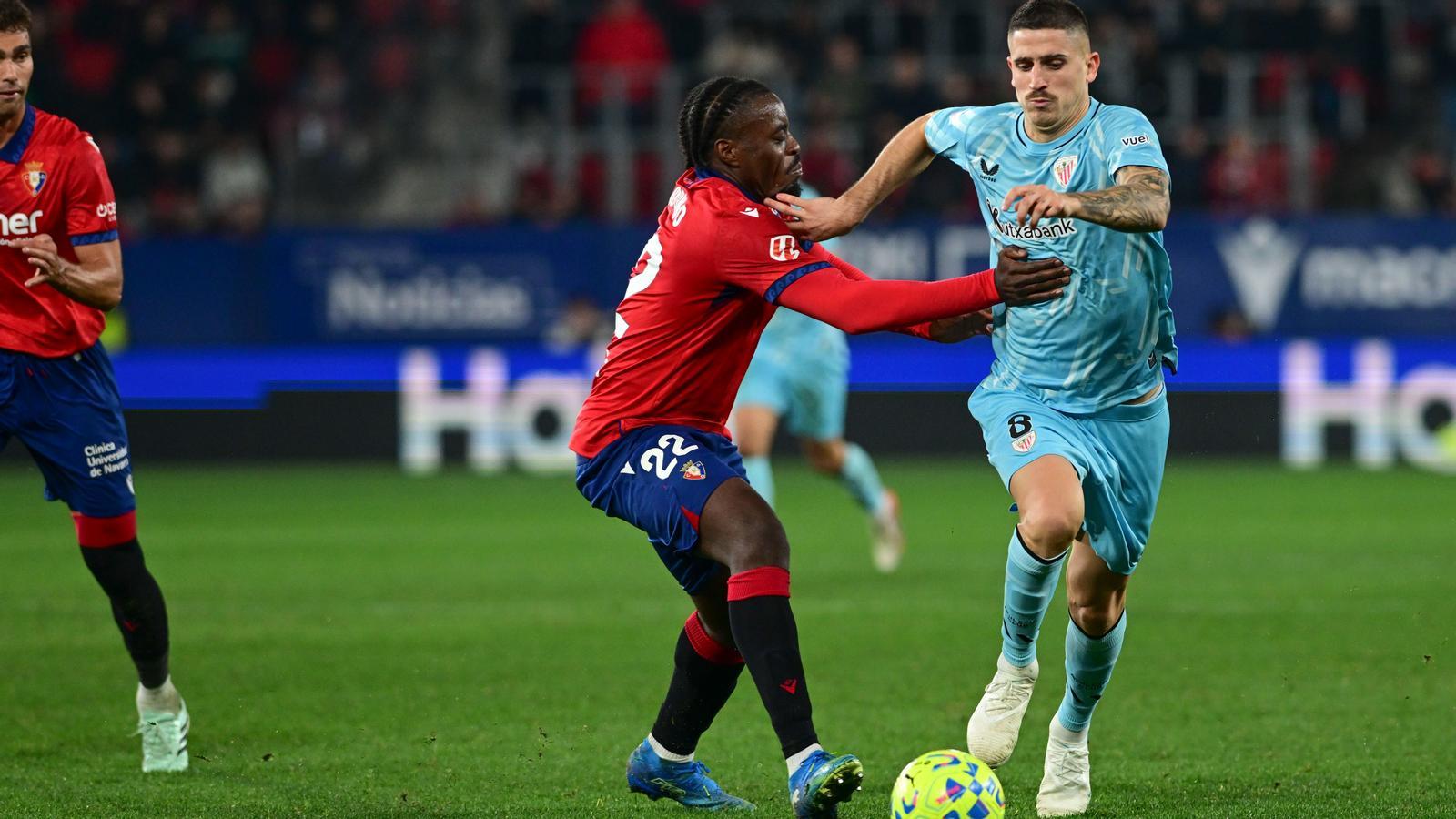
BarcelonaOihan Sancet's statements regarding the Basque national team have once again brought to the table a debate that has accompanied Spanish football for decades. The Athletic Club player, who debuted with Spain in 2023 and has already played four matches with the senior team, has just been called up for the first time by the Basque Country. And his discourse has been very different from the one he used when he joined the Spanish national team.
After that first call-up, Sancet stated that being with Spain was "a dream" and showed himself to be "very happy" to be able to be there. Now, however, after receiving the call-up from the Basque Country, he has reclaimed the desire to play in a World Cup one day with this team. "It is a source of pride and it is what you dream of since you were little, to play with the team you love," he explained. And he added: "I hope that one day we can play in a World Cup with the national team of our country."
The Basque Country defeated Venezuela on Saturday at San Mamés with a goal by Mikel Jauregizar in front of 40,000 spectators. During the celebration on the pitch, the stands began to chant “whoever doesn't jump is Spanish” and a good number of the Basque national team players, among them Sancet, jumped to the rhythm of the stands.
Sancet has not, however, announced that he is renouncing Spain nor has he said that he does not want to return. What he has done is claim that the national team he identifies with and with which he dreams of competing in a World Cup is that of the Basque Country. A stance that has precedents among footballers who have defended, with varying degrees of intensity, an identity far from the Spanish national team.
Oleguer Presas
Oleguer Presas is one of the best-known cases. The former Barça player always defended his pro-independence stance and also directly questioned his link to the Spanish national team. In 2005, he was called up by Luis Aragonés and attended the training camp, but years later he explained that he had done so because he had no alternative.
“It is an aberration that they impose a sanction on you for not going with the national team. I went to that training camp because they forced me to. They were clear that I did not want to be there,” the Sabadell native stated some time later. Some time later, Oleguer elaborated on the reasons for his refusal: “I did not feel that commitment to go with a national team that does not represent me in any way. On the contrary, it generates rejection and aversion in me for what it represents”.
Gerard Piqué
For years, Gerard Piqué lived a conflicted relationship with a part of the Spanish fanbase. His way of experiencing Spanish symbols generated controversy. He was accused of bowing his head during the anthem and, subsequently, of making a rude gesture during the ceremony before a European Championship match. The conflict reached its peak when, after criticism for having cut the sleeves off his shirt against Albania, he announced that he would leave the national team after the World Cup in Russia.
Piqué, however, always defended that his Catalan identity was one thing and his commitment to Spain was another. "I am and I feel Catalan," he once stated, but he also made it clear that playing for the Spanish national team was not incompatible with that identity.
Pep Guardiola
Pep Guardiola has explained on several occasions that his relationship with the Spanish national team was marked more by professional obligation than by a sentiment of national identification. In 2005, when he was still a player, he defined Catalonia as “my country” and argued that he could not renounce what he felt. “One cannot deny what one feels, what one loves. And I feel very linked to my country, to Catalonia,” he explained.
Guardiola also spoke directly about his relationship with Spain: “I went because I had to go. The laws told us that we had to play for the Spanish national team. They summoned me and I had to attend, but I could not deny what one feels.” Years later, already as coach of Barça, he returned to reclaim Catalonia as his own country. “We are from a place, from a country called Catalonia. We are up there and we count for little,” he stated after a match in Pamplona.
Iñigo Martínez
The case of Iñigo Martínez is complex because the Basque defender has never wanted to present the two things as incompatible. The current Al-Nassr center-back, who waved an 'estelada' during the 2025 League celebration, has said that he supports independence, but that this does not prevent him from playing for Spain. “If I hadn’t wanted to go, I would have been the first to say so. It is another matter that I think, believe, or am in favor of a people feeling they can be free to manage their own territory,” he declared.
Kortabarria and Iribar
The conflict between Basque identity and the Spanish national team also has much earlier precedents. One of the most symbolic episodes was led by the captains of Athletic Club and Real Sociedad, José Ángel Iribar and Inaxio Kortabarria. On December 5, 1976, both stepped onto the Atotxa pitch with an ikurriña. The Basque flag was still clandestine and illegal during the final years of Francoism.
The trajectory of the two footballers with Spain, however, was different. Iribar was an international on 49 occasions and champion of the 1964 European Championship. Kortabarria, on the other hand, only played one match for the Spanish national team and in 1977 renounced continuing to play for it due to his links to Basque independentism. Fifty years after that gesture, both former footballers have been honored again at San Mamés.
Nacho Fernández
The case of Nacho Fernández is one of the clearest examples outside of Catalonia and the Basque Country. The Galician full-back, who played for Compostela, appeared on Javier Clemente's radar in the mid-nineties. The coach had announced that he would call him up for a friendly match and the footballer responded with a firm refusal. “It neither interests me nor do I feel like it. I believe there are people in this Spanish state who can do it very well and who identify with the Spanish national team. That is not my ambition,” he declared.
Borja Iglesias
Borja Iglesias has also had a unique relationship with the Spanish national team, but for a different reason than the previous cases. In 2023, after Luis Rubiales' kiss to Jenni Hermoso and the subsequent controversy, the forward announced that he would not return to play for Spain until things changed. “I will not return to the national team until things change and these types of acts do not go unpunished,” he wrote. The resignation, therefore, did not respond to a question of national identity, but rather to his opposition to the Federation's management following the Rubiales case.

