Serbia buries the 'butcher of Bosnia' with military honors
Thousands of people attend the funeral of General Ratko Mladic, convicted of genocide and crimes against humanity

-
CAT -
CAST
BrusselsWhen Bosnian Serb general Ratko Mladic died two weeks ago while serving a life sentence for genocide, war crimes and crimes against humanity, the Serbian government announced that it would hold a state funeral for him. But faced with criticism from the European Union – such as enlargement commissioner Marta Kos, who cancelled her official visit to Belgrade in protest – President Aleksandar Vucic nuanced his official position: it would be a ceremony organized by the family.
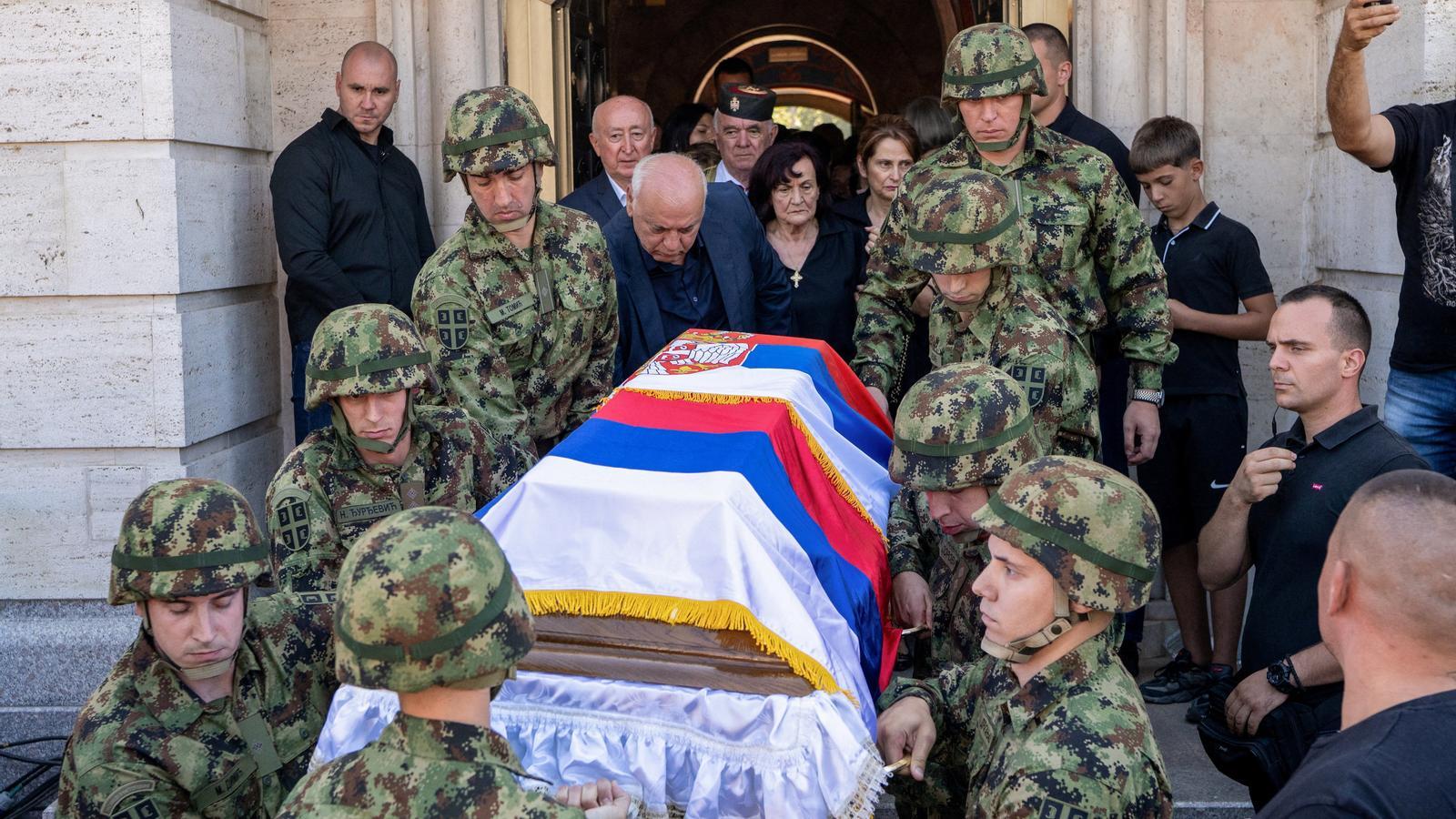
Nothing could be further from the truth. This Monday, the so-called butcher of Bosnia was buried with a military escort and state officials in a ceremony presided over by none other than the head of the country's Orthodox Church, the Serbian Patriarch Porfirije. Thousands of people gathered on the outskirts of Belgrade to bid him farewell, waving Serbian flags and carrying pictures of his face. Mladic's coffin, surrounded by armed soldiers in uniform, paraded through streets packed with people chanting his name. Finally, he was buried in a cemetery next to his daughter, who died during the Bosnian War.

The funeral, one of the most widely attended in Serbia since the fall of communism, highlights a bitter reality: Mladic is still considered a war hero by many people in Serbia, despite the convictions for the bloodiest crimes to have taken place in Europe since the Second World War: the siege of Sarajevo –in which 10,000 people died– and the Srebrenica massacre –in which 8,000 died–. Although the Serbian president did not attend the ceremony, his son Danilo Vucic did go, along with the Minister of Defense, Bratislav Gasic, and the Minister of Justice, Nenad Vujic.
International reaction
Statements glorifying Mladic or other war criminals have earned Serbia some rebukes from the European Union. Without going any further, the European Commissioner in charge of enlargement, Marta Kos, cancelled on Friday a visit scheduled to Serbia for September 9th. She explained that "the glorification surrounding the death" of Mladic was "incompatible with the values upon which the EU has been built".
In Bosnia, where the wounds of war are still very fresh, the Serbian government's consideration for the convicted general has been experienced as an offense. The main telecommunications companies cut the television signal while the funeral was being broadcast, and the Minister of Foreign Affairs of Bosnia, Elmedin Konakovic, has assured that he will withdraw all personnel from his embassy in Belgrade –except for the ambassador and the consul– as a sign of protest.

