Nvidia seeks to appease the market with the first results without Huang
The microchip giant will present the quarterly accounts after a sharp fall on the stock market

-
CAT -
CAST
- The market expects substantial growth after the CEO's resignation
- The company is experiencing an unprecedented stock market crash in recent weeks
- Investment in AI infrastructure may exceed investor expectations
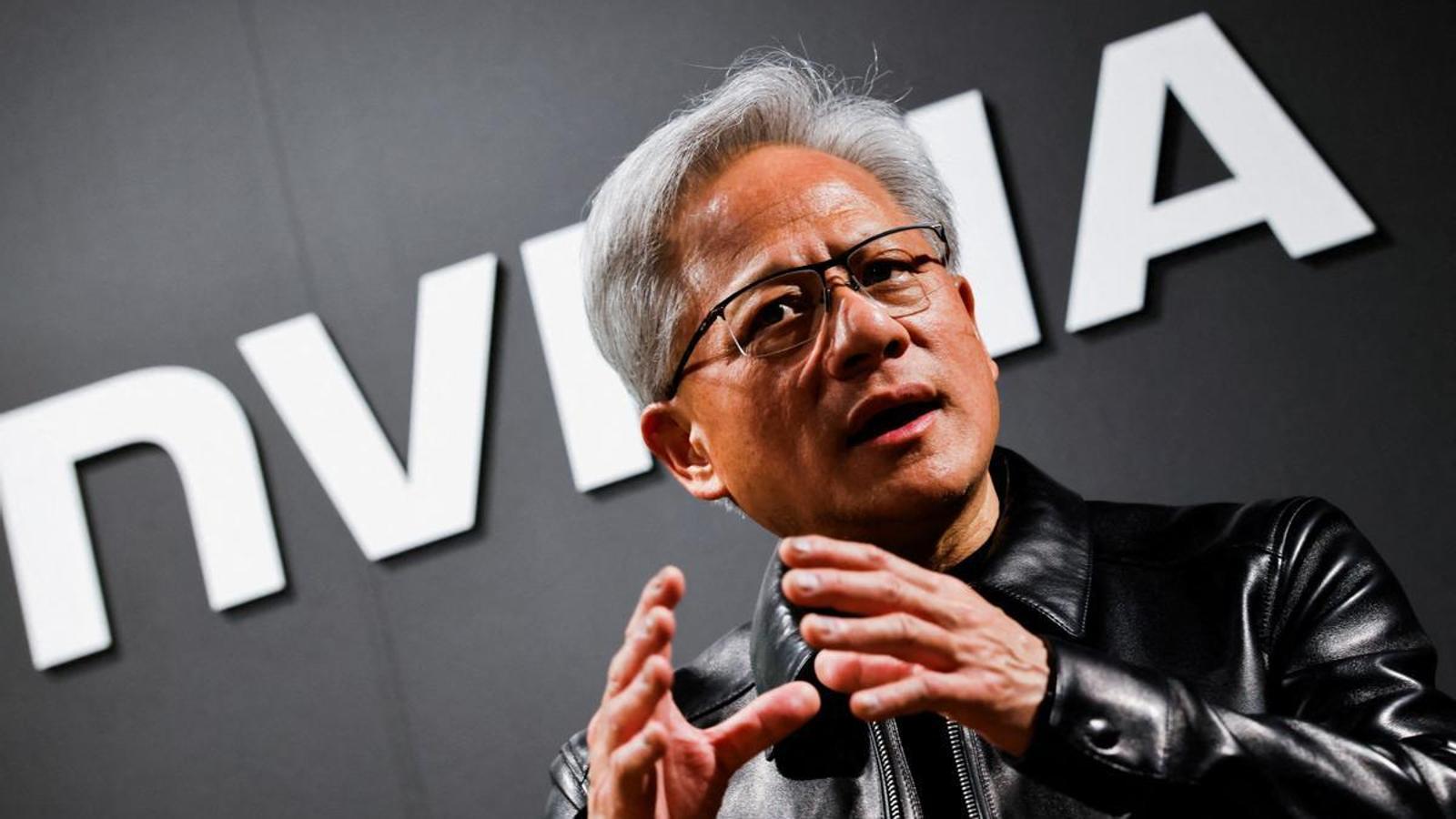
The big North American tech companies are in one of the most critical weeks of their recent history. Thursday, November 19, was already marked in red on the calendar following the presentation of the documents for the stock market launch of Anthropic, one of the largest in history –the largest, if one accounts for the private placement operation associated with it, with more than 90 billion dollars– and the litmus test for the artificial intelligence market. The crisis at Nvidia, caused by the extramarital affairs of its now former CEO Jensen Huang, one with an alleged Chinese spy, has added another red mark: the microchip giant for AI will present its quarterly results this Tuesday at market close; the first since the resignation of its co-founder, finalized last Thursday.
Nvidia's third-quarter accounts were already set to be a potential earthquake for the market. It must be remembered that at the end of October the technology sector suffered a major shake-up: the balance sheets of some of the key companies, such as Alphabet (Google's parent company), Amazon, or Meta, showed signs of excess investment in data centers and infrastructure for AI, with negative free cash flows for the period. The spending alert caused a pullback in the share price of these companies, with significant drops like that of Google, which lost nearly 13% of its share price in just one day. The responsibility of returning good feelings to tech investors who had begun to lose confidence was, therefore, already weighing on Nvidia.
Growing accounts
It is worth mentioning that the market continues to expect good figures from Nvidia: analysts at the financial data platform Visible Alpha, part of S&P Global, place the consensus at around $109 billion in revenue; with the majority of the activity, nearly $102 billion, concentrated in data centers. Should these figures be confirmed, the year-on-year jump would be spectacular, more than 90% compared to the same period of the previous year, when the company recorded a turnover slightly above $57 billion; and brought in just over $51 billion from the computing segment. It is, it must be said, a lower evolution than what they reported in the second quarter, which soared to nearly 106% year-on-year; but it would fall within the company's own expectations, with $108 billion as the target between July and September.
Nvidia itself will also have to pass the test that the major hyperscalers have already failed: that of investment commitments. In its latest earnings presentation, the company revealed it had some $530 billion in off-balance-sheet obligations tied to these types of computing projects, a substantial increase from the $155 billion recorded between January and March, as recalled by the financial firm XTB. Analyst Javier Cabrera assures that “it is likely that Nvidia will publish an even larger figure than the previous quarter” in the accounts it will present tonight. In this sense, he warns that management, now without Huang, will have “to assume, whether it wants to or not, commitments that will pose difficulties for its cash generation”.
The fall of the co-founder
Beyond the results, however, the market will be attentive to the person communicating them: the interim CEO, current CFO Colette Kress, will have to answer to the market for Huang's affairs. Aside from the investigations regarding the scandal caused by the co-founder, Kress will have to answer for the intense stock market decline that Nvidia has recorded in recent weeks; and which began even before the relationships of the former CEO were made public.
The company has linked multiple consecutive cuts, and closed Monday's session with a market capitalization of 3.77 trillion dollars, according to data from the Companies Market Cap portal. Nvidia, therefore, has already wiped out nearly two trillion dollars in market valuation, and remains light years away from the ceiling it had reached at the beginning of October, when it surpassed 5.6 trillion, and was comfortably situated as the most valuable company on the planet. As of now, it has fallen to third position, surpassed by Apple (5.12 trillion) and Microsoft (3.86 trillion).
