A pro-Russian ex-serviceman wins elections in Bulgaria
Rumen Radev is against the euro and military aid to Ukraine, and declares himself an admirer of Viktor Orbán
-
CAT -
CAST
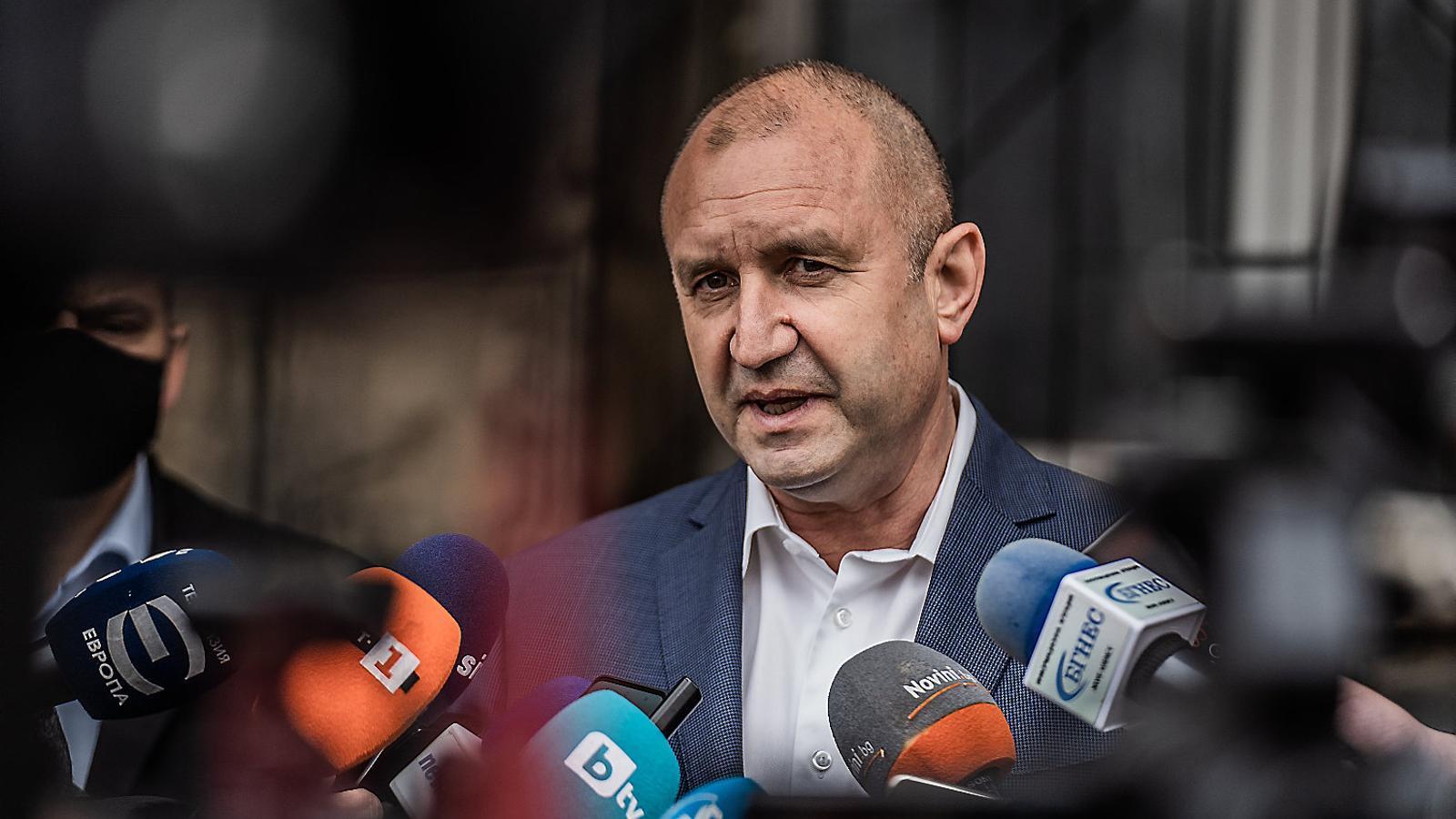
Plovdiv (Bulgaria)The pro-Russian and Eurosceptic Rumen Radev has clearly won the legislative elections in Bulgaria, a victory that could even allow him to govern alone, according to exit polls. Radev, who left the presidency in January to run in the legislative elections, is a former general and ex-pilot critical of political elites, with an anti-corruption discourse and who does not hide his sympathies for the Hungarian ultranationalist, Viktor Orbán. His party, We Continue the Change, would have obtained 38% of the votes, more than 20 points ahead of the second formation, the conservative party Citizens for European Development of Bulgaria (GERB), led by former prime minister Boyko Borissov.
the wave of anti-government protests last DecemberBulgaria celebrated its eighth election since 2021 this Sunday, amidst a climate of citizen discontent that the former military man has capitalized on, favored by the rejection of a political class perceived as corrupt and by the frustration over the lack of improvements in the standard of living in the poorest country in the European Union (EU). The elections were precipitated after the wave of anti-government protests last December, where youth played a leading role. One of the keys to the result has been the increase in participation, in a country where high abstentionism is usually the norm. After repeated elections, protest votes have prevailed, also with a strong youth component.
Radev, 62, a former commander-in-chief of the air force, had begun his military career in 1987, still under the communist regime, had trained in the United States – he was the best foreign student at the Air Command and Staff College – and had become one of the country's most prominent military figures before making the leap into politics. In 2016, he was elected president as an independent candidate with the support of the Socialist Party (the former Communist Party) and in 2021 he had revalidated the position, which he left a year before the end of his term. He has focused his campaign on the fight against corruption and inflation, which has soared due to the wars in Iran and Ukraine and Bulgaria's recent entry into the euro. The former pilot has also advocated for reopening dialogue with Russia to take advantage of its energy resources. This Sunday, after voting, he stated that he will seek "practical and mutually respectful" relations with Moscow in power and reiterated that cooperation between the EU and Russia is necessary.
Against traditional politicians
As president, Radev maintained a tense relationship with the conservative populist leader Boyko Borissov, the country's most prominent politician in the last fifteen years, whom he held responsible for tolerating corruption. It is this confrontation with traditional politicians that gave him popularity, especially by supporting citizen protests. Now, with a nationalist message focused on state regeneration, national security, and accountability, Radev has managed to capitalize on citizen discontent. His discourse has combined Eurosceptic elements with frontal criticism of political and economic elites, whom he has accused of benefiting from the system to the detriment of the citizenry.
His declared objective is to "transform Bulgaria," and his style is very personalistic. Radev, an admirer of the then Hungarian prime minister, Viktor Orbán, who lost the elections on Sunday after 16 years in power in Budapest, sees himself as a more pragmatic figure and has never questioned Bulgaria's membership in the EU or NATO. He has questioned the European Green Deal and LGBTI rights. And he opposes sending military aid to Ukraine. In 2025, he promoted, unsuccessfully, a referendum on the adoption of the euro, which Bulgaria joined last January, emphasizing that a decision of this magnitude should have broad social consensus, especially in a country where a third of the population lives at risk of poverty.
When the first results were known, Radev showed himself open to coalitions: "We want a stable and solid government." It is not clear whether We Continue the Change and Democratic Bulgaria will be able to govern alone or if they will need partners. Borissov has already declared that he will not enter into any coalition. He could make a deal with the third force, the liberal coalition We Continue the Change and Democratic Bulgaria (PP-DB), with whom he shares the fight against corruption and the defense of judicial reform, or also with Revival, with whom he shares the pro-Russian vision.

