The poorest country in the EU faces its eighth election in five years with a pro-Russian as the favorite
Bulgaria suffers from high inflation months after entering the euro
-
CAT -
CAST
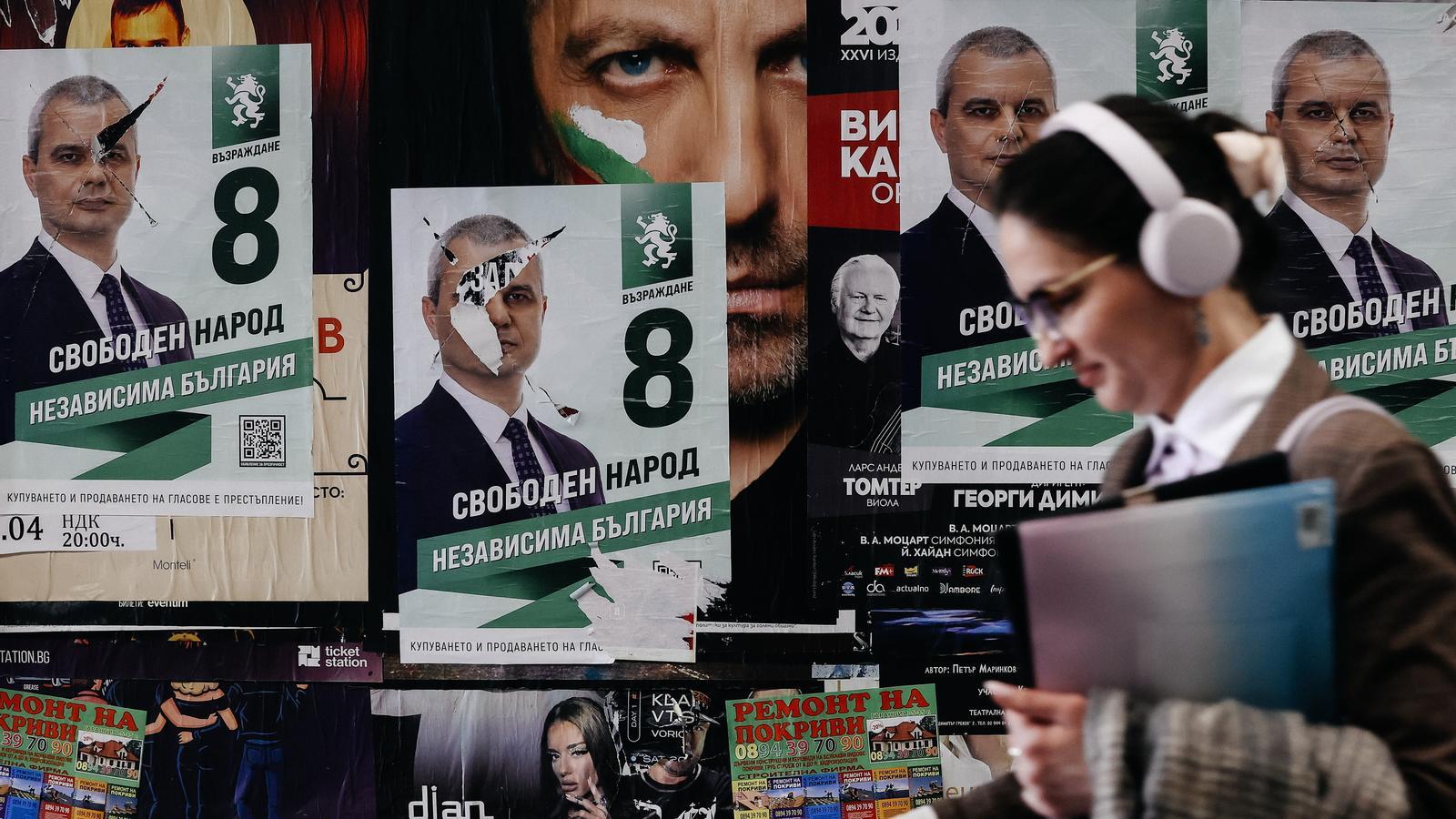
SofiaBulgaria, the poorest country in the European Union, will hold its eighth parliamentary elections in five years this Sunday. The instability is not just political: inflation continues to soar, just a few months after the adoption of the euro. The favorite is former pro-Russian general Rumen Radev, who surprisingly resigned from the presidency to run in the elections at the head of the new Progressive Bulgaria (PB) coalition. His program combines social promises with a commitment to dismantle a system that many citizens consider oligarchic and clientelist.
With 6.5 million inhabitants, Bulgaria has been mired in a deep political crisis since 2021, when a wave of protests forced the fall of the populist Boyko Borissov, leader of the GERB party (Citizens for European Development of Bulgaria), who had dominated national politics for much of the previous decade. Since then, the country has lived in almost permanent instability.
The last government, a tripartite coalition formed by GERB, the Bulgarian Socialist Party (BSP), and the anti-system formation ITN, took power in January 2025, but collapsed in December. It governed in minority thanks to the support of DPS–New Beginning, a party linked to the Turkish minority and controlled by the controversial oligarch Delyan Peevski, sanctioned by the United States and the United Kingdom for corruption.
The anti-corruption protests last December, in a context of soaring prices, led to the resignation of the pro-European government headed by the conservative Rosen Zhelyazkov. In this way, the country was plunged into new snap elections.
On this occasion, participation could be higher than usual, driven by the expectations Radev generates. The situation is partly reminiscent of 2001, when the return of King Simeon of Saxe-Coburg and Gotha from Spain mobilized the electorate and led him to become prime minister.
The protesters, disappointed
But many of the demonstrators who took to the streets in December look at the former general with skepticism. They accuse Radev of having instrumentalized the protests. “We wanted to end the corruption of the Borissov government, but the president took advantage of the mobilization to make the leap to the executive power”, laments musician Rado Stanchev. “He will simply replace one oligarchy with another, with a geopolitical shift that will distance us from Europe and bring us closer to Russia”, he warns.
Support for Radev comes from two different blocs. On the one hand, pro-Russian voters, who favor closer relations with Moscow and are critical of European integration. On the other, pro-European citizens disillusioned with the current system, who see in him a figure capable of regenerating politics.
“It is surprising to see that, once again, the majority is willing to hand over power to a new savior”, points out Atanas Kolev, an organic farmer living near Plovdiv, who had also participated in the protests.
Meanwhile, the interim government led by Andrei Gyurov, along with the Minister of the Interior, Emil Dechev, assures that they are working to ensure clean elections. In recent weeks, the police have intensified operations against vote-buying and influence peddling, with more than one million euros confiscated and several arrests.
Among those primarily affected by these investigations are Borissov's inner circle and Peevski's DPS–New Beginning party, which maintains a loyal electorate among the Turkish and Romani minority of Turkish origin. His detractors point to him as a symbol of the power networks that dominate the country.
The clearly pro-European vote is concentrated in the We Continue the Change (PP) and Democratic Bulgaria (DB) coalition, which mobilizes mainly young and urban voters with a higher level of education. However, its influence remains limited outside the major cities.
“I trust that these elections will confirm that Bulgaria wants to become a modern European country, which respects rights and offers opportunities to future generations”, states Yolanda Zografova, a social psychologist who also participated in the protests.
End of instability?
Even if Radev's coalition wins the elections, the aftermath remains uncertain. Parliamentary fragmentation could force complex negotiations and does not guarantee the formation of a stable government.
If the new Parliament is divided among four, five, or even six political forces, the pressure to compromise will be high. However, profound differences – especially in foreign policy – could once again block the system and push the country towards new elections in the fall.
