Pakistan, a key piece in the difficult diplomatic equation between the United States and Iran
The difficulty of reaching an agreement highlights Islamabad's negotiating limits

-
CAT -
CAST
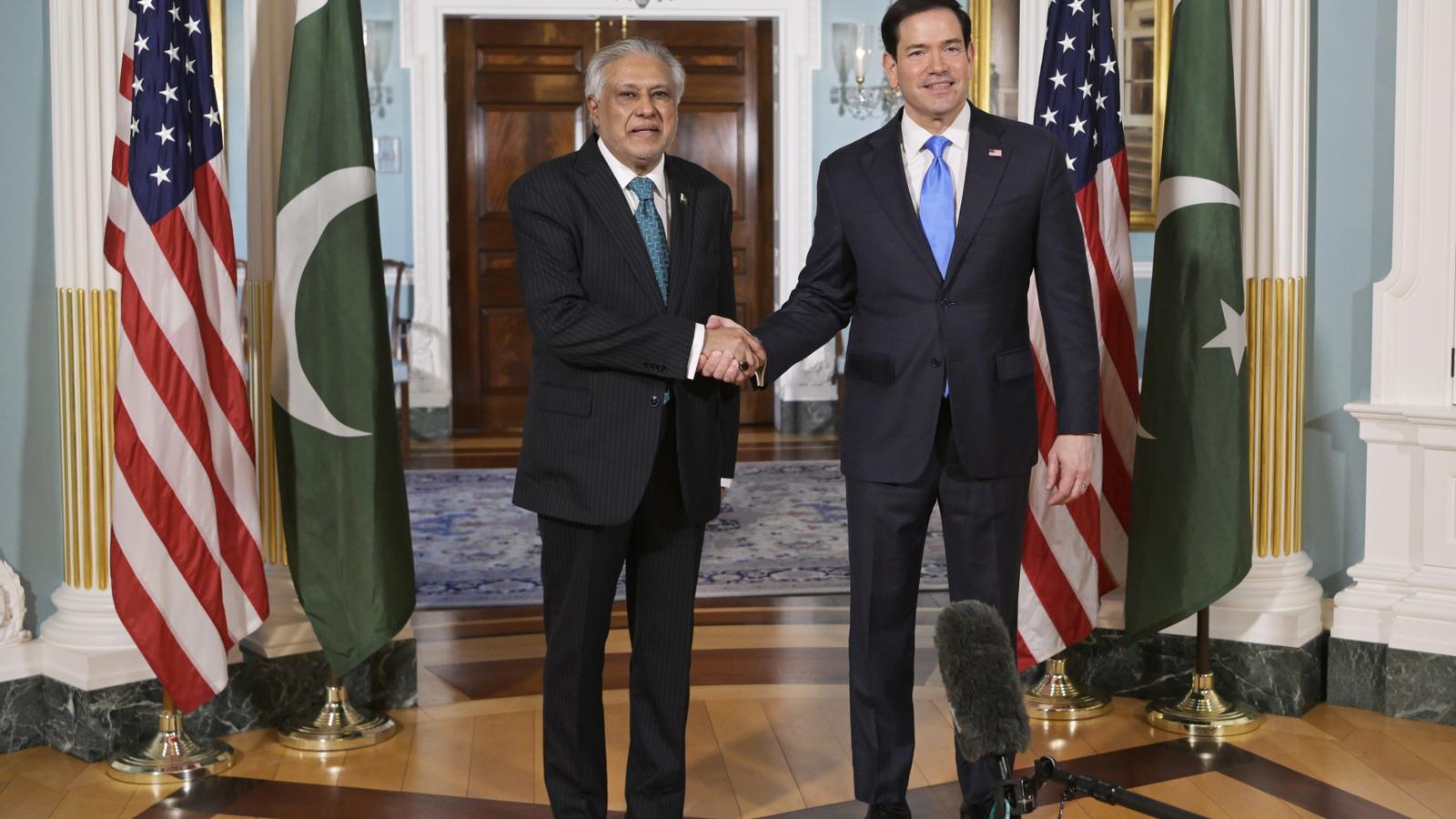
BeirutThe arrival of the head of Pakistani diplomacy, Ishaq Dar, in Washington last week once again fueled the feeling that an understanding between the United States and Iran was possible. For hours, diplomatic leaks and headlines in international media hinted at the possibility of an already advanced draft, discreetly prepared with Pakistan's mediation. But the reality, cautiously confirmed by both sides, is simpler: no final agreement exists yet, and positions are still far from coinciding.
All this raises a fundamental question: to what extent can Pakistan become a major player in one of the Middle East's most sensitive negotiations? Islamabad is trying to present itself as an indispensable bridge between Washington and Tehran, but the more visible its mediation becomes, the more evident its limitations also appear. It lacks Oman's historical neutrality, Qatar's financial and media capacity, or the direct influence that China today exerts over Iran. And yet, it has managed to keep contacts open between Americans and Iranians, despite months of cross-threats and military escalation.
Ishaq Dar's visit to the American capital is part of this effort to keep talks open. Although the Pakistani minister arrived with a new draft understanding, the content of this document has not translated into concrete progress, and both Washington and Tehran publicly maintain very cautious positions.
Islamabad gains weight
To understand how Pakistan has been gaining more weight in this process, we must look at the regional context. Talks between the United States and Iran have been trapped for years in a cycle of breakdown and resumption, marked by Iran's nuclear program, sanctions, and the constant fear of a wider war in the Middle East. In this scenario, traditional mediation actors, such as Oman, have lost part of their prominence, while others are trying to occupy this space without fully succeeding in replacing them.
In this context, Pakistan has been gaining presence. Its value lies not in neutrality, but in its position between different worlds. It shares a border with Iran, maintains historical relations with the United States, and depends deeply on regional stability to protect its own economy and security. But this position also forces it to move in a delicate balance between rival interests.

Behind official diplomacy, moreover, the real weight of this mediation falls elsewhere: the Pakistani army. Field Marshal Asim Munir has become the central figure in regional contacts. His recent visit to Tehran included talks with senior Iranian officials on a possible de-escalation scheme and a preliminary draft understanding. Shortly thereafter, Munir traveled to Beijing, in a succession of visits that show the extent to which China is part of the equation as a key player in the background.
China's role
Beijing is Pakistan's main strategic partner and, at the same time, an important support for Iran, which sees China as a political and economic guarantee in case talks with the United States do not progress. Its priority is to avoid a war in the Gulf that could affect trade and the energy supply on which a large part of the Chinese economy depends. The diplomatic activity of recent days in Tehran, Beijing and Washington well summarizes the complex position Pakistan is trying to occupy.
However, this ambition also exposes structural weaknesses. Unlike Qatar or Oman, Pakistan does not have a consolidated diplomatic apparatus or a reputation for strict neutrality. And unlike China, it does not have the capacity to impose decisive economic or strategic incentives. Nevertheless, its role is not irrelevant. In an increasingly fragmented regional context, its main advantage is that it maintains contact with all parties. The United States sees it as a useful channel, and Iran considers it an acceptable interlocutor.
But this balance has not been enough to unblock negotiations. The differences between Washington and Tehran remain profound. The United States insists on limiting uranium enrichment and strengthening international monitoring mechanisms, while Iran demands credible guarantees of sanctions relief and rejects any formula it perceives as unilateral imposition. Between the two positions, the distance remains considerable. Added to this are tensions over maritime security in the Gulf and the constant risk of a military escalation with Israel.
In this context, Pakistan's role is less that of a classic mediator, and more that of a country capable of preventing talks from collapsing completely. Its immediate objective does not seem to be to achieve a grand historic agreement, but rather to prevent the crisis from escalating into an open war.
