Ilan Pappé: "Netanyahu has no respect for the little that remains of democracy in Israel"
Israeli historian

-
CAT -
CAST
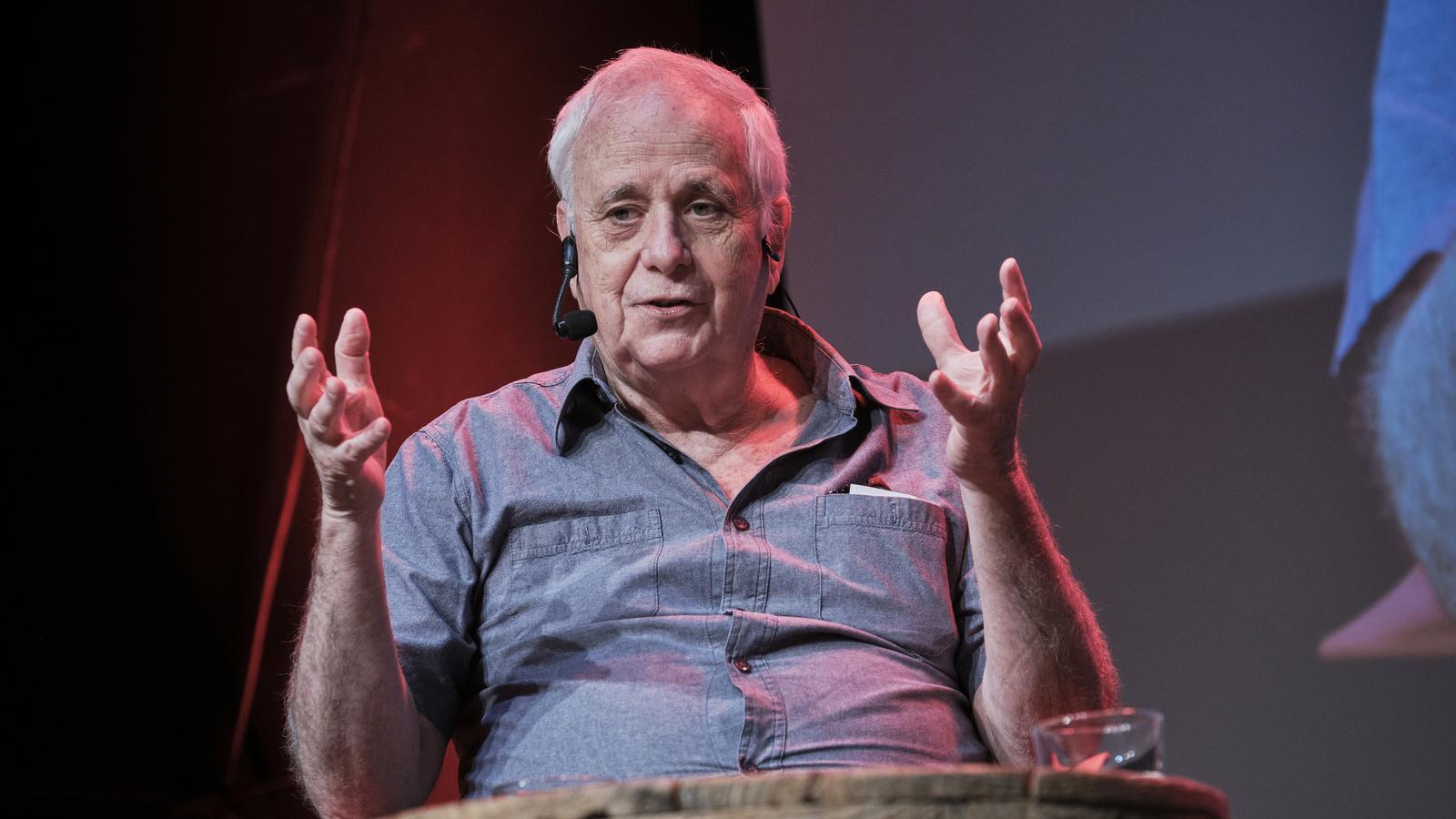
BarcelonaIlan Pappé (Haifa, 1954) is one of the critical voices of Zionism worldwide. A member of the so-called new generation of Israeli historians, who debunked the foundational narrative of the State of Israel, he has visited Barcelona to participate in the Fira Literal.
How does he see the political situation in Israel concerning this year's elections?
— It is very difficult to predict how these elections will go. On the one hand, there is what we call the electoral base: those people who would vote for Netanyahu and his allies no matter what. And apparently they are not enough to form a government. But perhaps they can generate a situation where there is no decisive result. Then there would be another vote. And this is what Netanyahu wants, because according to Israeli law, one can govern in an acting capacity for a long time. And they cannot bring you down. This is a possibility. But even if the opposition coalition – which has only united out of rejection of Netanyahu – manages to win, which is possible, it will not last long. And I think Netanyahu will return. We also do not know if he will allow the elections to be held, nor what he will do if he does not like the result. Israel has changed.
What does it mean?
— Netanyahu's party and people like him and his allies have no respect for the little that remains of democracy or legality in Israel. They don't care. What is worrying is that Netanyahu believes he needs a war to win elections. Because he believes that a war gives him more support from the Israeli electorate. And it's true. Therefore, he will do everything possible so that, if not with Iran, then with Lebanon; and if not with Lebanon, then with Iran. Between Gaza, the West Bank, Lebanon, and Iran, we already have six million displaced people in the region. And if no one stops Israel, everything will continue to worsen.
Palestinians with Israeli citizenship, who represent 20% of the population and have the right to vote, could be a decisive factor, but Zionist political formations do not seem interested in any pact.
— Arab parties continue to be divided and have difficulty uniting in a single parliamentary list. But even if they succeed, the Zionist opposition is very reluctant to work with them. In the best-case scenario, Arab parties may be tolerated from outside a coalition, but they are not considered legitimate governing partners. This shows that racism is not limited to Netanyahu's coalition. It also exists within a good part of the opposition.
The Knesset has approved the law that allows the death penalty for Palestinians involved in deadly attacks against Israelis, but not vice versa.
— In practice, Israeli forces already execute Palestinians regularly on the ground. Therefore, this legislation does not substantially change reality. What it does is expose the true nature of the state. Perhaps it will finally force some Europeans to reconsider the idea that Israel is "the only democracy in the Middle East".
The activists detained on the Flotilla have reported torture and abuse in Israeli custody.
— It is terrible the way they have been treated and it shows the sadistic and fascist side of Israel, but no one should be surprised by this behavior. What counts here is not what this tells us about Israel, but what it tells us about Europe. The EU also reacted, as did the United Kingdom, with very harsh words. But here what counts are not words but actions. Israel believes, and unfortunately is right, that international law no longer exists. And it is not just Israel: look what Trump has done in Venezuela, what he wants to do in Cuba, or what they did in Iran. The question is whether the world can afford to live without international law. Israel and the United States say yes.
Where are we in the war with Iran?
— Trump made a miscalculation. The Israeli Mossad and some of his advisors told him it would be like Venezuela, that it would be enough to bring down the Iranian Maduro for the Iranian regime to hand over its uranium. He didn't understand what he was dealing with. I don't even know if he knew where to place Iran on the map. Now he's looking for a way out, but there's no way out without admitting he has failed. He might try another military offensive, but if he does, it will be the last one. And then I think everything will end without grand declarations: everyone will say they have won. And we will return to the point where we were before the war, because this is one of those wars in history that have changed nothing. It's an absurd war, because it was politically important for Trump and Netanyahu, it was an end in itself. This has generated millions of refugees and an energy crisis that has shown both the Gulf countries and Europe that they cannot stand aside: they have to decide who they want to govern the world.
We are seeing this “engasement” of southern Lebanon. Where does the historic project of building Greater Israel stand?
— There is an ideological group within the Israeli government that believes this is an opportunity to expand Greater Israel into southern Lebanon. There is already a movement promoting settlements in that area. It is part of their idea to rebuild what they consider the biblical Israel of 3,000 years ago. We must take them seriously. It is a crazy project, but they believe in it. I don't think they will achieve it, but they will continue destabilizing Lebanon. In any case, all of this is just a symptom of the central problem, which is Palestine. Without resolving the Palestinian question, there can be no peace in the region.
The chief of the Israeli General Staff said a few weeks ago that they are short of 12,000 soldiers.
— The Israeli army has problems: it doesn't have enough personnel and doesn't know how to fight guerrillas that have no planes or tanks. Israelis think they have an invincible army because they have a very powerful air force. An air force can bomb Tehran or Beirut, but they don't even know how to deal with Hezbollah's drones. The problem is fundamental: the state of Israel was created by forcibly imposing a European project in the heart of the Arab world. Force can work for 70, 80, or 100 years, but not forever. The same happened with the Crusaders. Either you accept that you are part of the Middle East and reconcile with it, or you continue to believe that you can eternally impose your will by force. And that won't work.
In his latest book, he analyzes various rifts within Israeli society.
— There is a lack of social cohesion: secular and religious Jews have nothing in common. In fact, some secular Jews do not realize how much they are hated by religious Jews. They see them as if they were Arabs: there is no shared conversation. Progress has also been made in a war economy, where all money is allocated to the conflict and not to social services or the basic needs that society expects the state to guarantee. Furthermore, there is international isolation: for now it is mainly social, but it can easily turn into isolation by states, as happened with apartheid South Africa. And young Jewish communities around the world have also stopped being interested in Israel; in fact, they feel committed to Palestine. All this adds up to one effect: the foundations of the state of Israel are cracking. And it will also depend on the Palestinian national movement and whether it is capable of building a clear alternative.
