More than 250 dead in Lebanon in one day: "In a few seconds, everything has changed"
The Israeli army launches more than a hundred attacks in less than ten minutes on the day of most violence since the start of the war
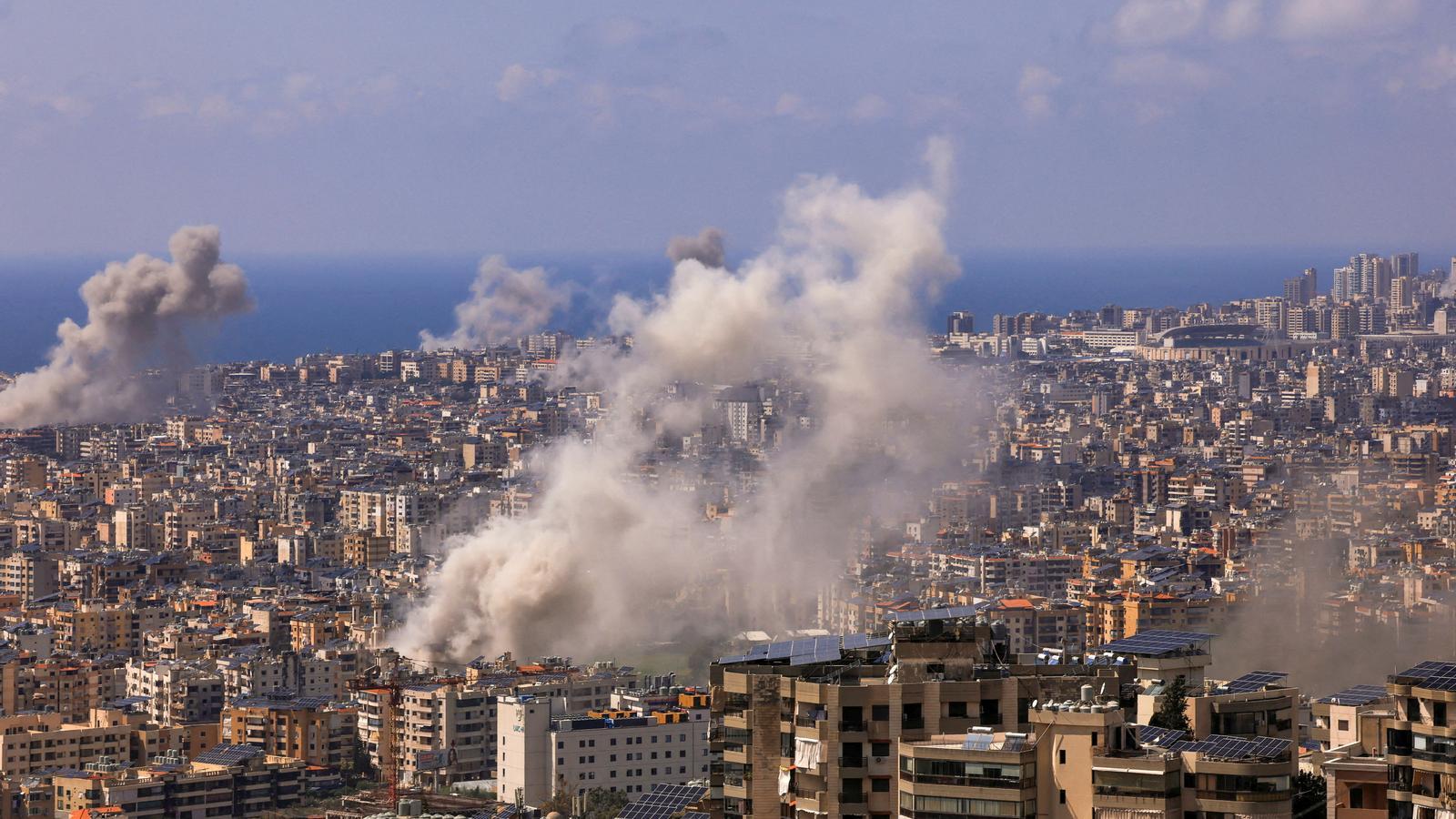

BeirutAround two in the afternoon, while a warm sun illuminated the Corniche, Beirut's seaside promenade, and hundreds of Beirutis were strolling by the sea after days of tension, the sky broke with a roar. In a few minutes, a series of explosions and the flyover of fighter jets turned an afternoon that many hoped to enjoy into an afternoon of confusion and fear. What some interpreted in the morning as a sign of a pause, after the announcement of a ceasefire for two weeks between the United States and Iran, turned into the largest air offensive in Lebanon since the start of the war.
The bombings began almost simultaneously in Beirut, the Bekaa Valley, and the south of the country. In less than ten minutes, the Israeli defense forces launched more than a hundred air attacks. Official figures speak of at least 254 deaths and 1,165 injured in a single day from the wave of simultaneous attacks across the country. In Beirut, 92 deaths and 742 injuries were recorded.
The response of the civilians who were trapped or witnessed the effects has been visceral. “We were walking, it was a sunny day, and suddenly we heard explosions one after another… it was as if everything happened at once,” says Rana, 28, who is trying to regain her routine while walking down a side street.

Bombings across the country
As the attacks continued, Beirut and other regions grappled with the consequences. In the south, in towns like Nabatieh and Tyre, several houses have been destroyed or seriously damaged, leaving families without shelter or belongings. In Bekaa, roads and villages have been marked by impacts that have forced entire communities to seek refuge in improvised spaces. In many of these places, residents say they have not received prior warning, which has increased the number of victims and deepened the sense of helplessness.

The weight of violence strikes without distinction, with over 1.2 million people internally displaced since the start of the conflict, forced to repeatedly abandon their homes in the face of every evacuation order or bombing.
In urban areas, saturated hospitals are working at maximum capacity, with improvised corridors to treat the wounded. Entire families have been forced to improvise shelters in parking lots, mosques, or abandoned buildings, while the lack of electricity and drinking water further complicates daily life.
"Flagrant violation of international law"
The Lebanese President, Joseph Aoun, has condemned the offensive as a “flagrant violation of international law and Lebanese sovereignty” and has requested concrete measures from the international community to halt the bombings and protect civilians. Aoun has called for effective mechanisms to guarantee territorial integrity and has underlined that the continuation of operations deepens an already severe humanitarian crisis. Humanitarian organizations have warned about the saturation of hospitals, the scarcity of medical supplies, and the urgent need for safe corridors to evacuate the wounded and transfer the displaced.
The destruction of infrastructure, the interruption of essential services, and constant fear have eroded community life. In many parts of Lebanon, the war has left a landscape of suspended life, closed businesses, empty schools, and desolate markets, where normality seems increasingly distant.
The day of most violence since the start of the conflict makes two things clear: that the Israeli offensive, conceived to weaken Hezbollah, has escalated to directly impact the civilian population throughout the country, and that hopes that a regional truce could cool hostilities on the Lebanese front have been frustrated. The war is no longer intermittent but constant, with simultaneous attacks that are collapsing civilian and health infrastructure.
In Beirut, the south, and the Bekaa Valley, citizens are trying to recompose themselves after the impacts, losses, and displacements. While governments negotiate and armies define their objectives, it is Lebanese society that pays the highest cost, trapped in a conflict that respects neither internal borders nor the line between civilians and combatants.

