Jordi Mateu: Brands are like people, they have personality. Their essence should not be distorted
CEO of Summa Branding

-
CAT -
CAST
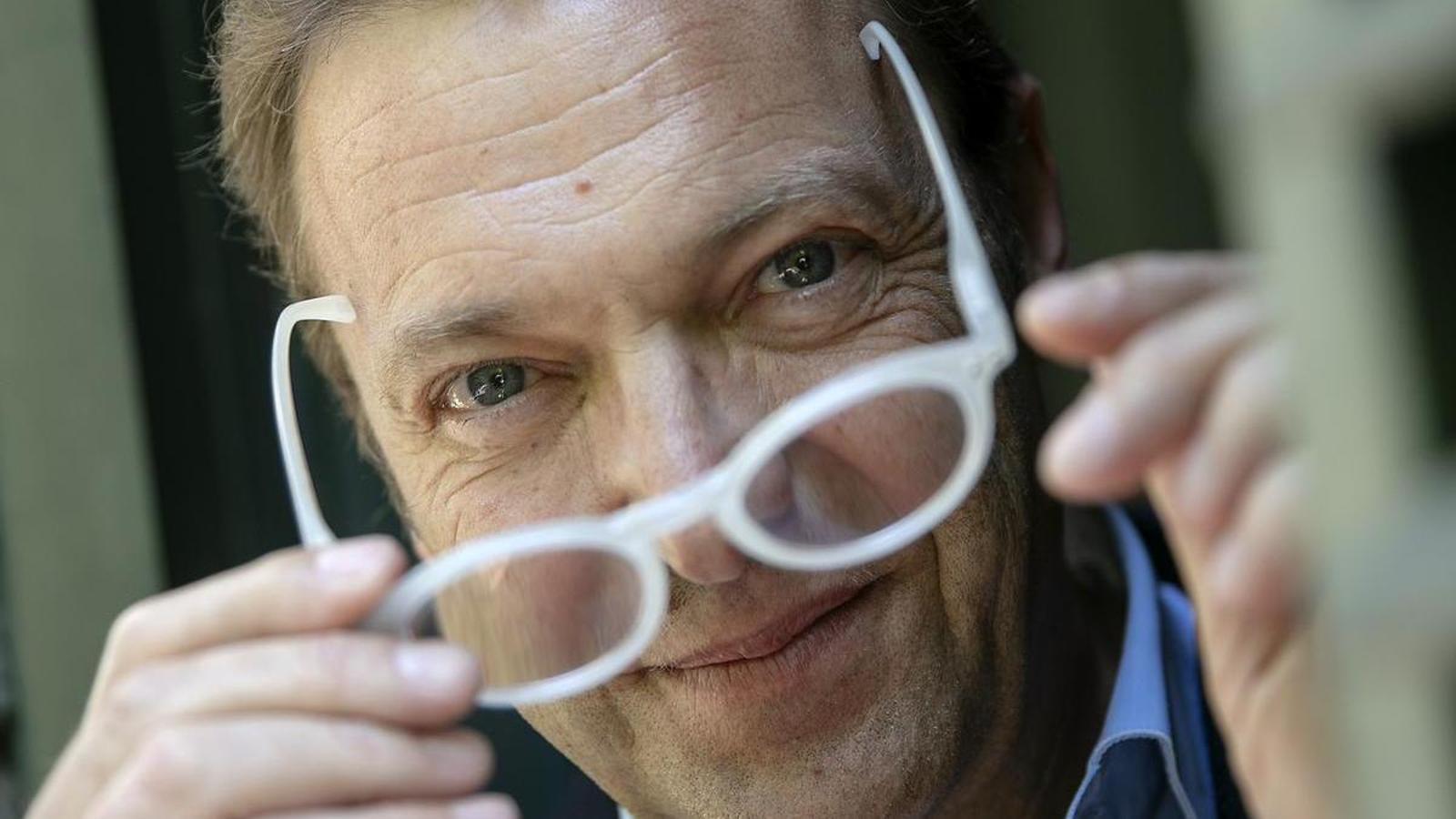
BarcelonaJordi Mateu (Barcelona, 1968), CEO of Summa Branding, a pioneer in the creation, construction, and management of brands, argues that they are like people, they have personality and, therefore, it is dangerous to want to transform them or modify their essence. With clients ranging from Inditex to Seat, RTVE, Roca, CaixaBank, FC Barcelona, or the Kings League, he assures that in his business and to have more chances, in a world where people are saturated with information, "less is more" and that, in addition to a product or service, experiences must be sold.
Could you describe Summa Branding with four facts?
— I would say that the most important are 50 people. 1990 or more than 35 years. Six million turnover.
Detail
— The 50 people are because it's the most important thing we have. Without being all that we are, we wouldn't have gotten as far as we have. 35 is for the years we've been doing branding. We actually created the company in 1990, before the 1992 Olympic Games, when the Barcelona brand – understood as the city as a brand – was about to become glorious, but it hadn't yet gained full brand momentum, even though we were on the right track. Summa Branding was the first branding agency in Catalonia and in Spain. We were the first to use this rather strange word. Nowadays everyone talks about it, but at that time people did marketing, communication, advertising, but not branding. And we were the first. That's why the year 1990 is very significant.
If I had to explain to a person on the street what I do, how would I do it?
— This has happened to me many times. We explain it in a very simple way, like when I explained it to my daughters. Our job is apparently very simple. It consists of taking a brand and doing everything possible to take it to a more interesting place.
And what is this about a more interesting place?
— What is requested of us is that, at the very least, that brand differentiates itself better from the competition. But that is the minimum required in a good job of branding. The two most important things I would add are that in this exercise we try to find and generate new business opportunities for that brand, which perhaps it doesn't even expect itself. In other words, discover new business opportunities and then, also nowadays, try to make that brand acquire cultural relevance.
Can there be more brand than product or service? That is to say, can it happen that there is practically nothing behind the brand?
— The formal answer would be no, deeply, no. What happens is that the product or service, today, must be complemented by a third leg, which is the experience. The brand experience. So, the formal answer is no. What cannot be done is to have a brand with a bad product or service, because no brand can sustain it. And sooner or later, nowadays everything is very transparent and anyone discovers us. What can be done is to have a brand that, in addition to having a product or service, offers an experience so powerful that it almost overshadows the service. I'll give a very clear example, which is Red Bull. It is evident that Red Bull has an isotonic drink, but it is not a drink that is extraordinarily mass-marketed, it never reaches the levels of Coca-Cola.
Is it possible to make a good product or service with little or no branding?
— There are people who, without having or paying too much attention to the brand, in certain industries, have done quite well. This happens especially in sectors where the brand may be more hidden, such as industrial activities, business-to-business (B2B), but more understood in the world of industry, not services. In mass consumption it is more stressful because you are already at a brand level... But there are some. That is to say, look, let's give an example. Nowadays we even put brands on lettuce. On salads, we would say, not on lettuce. If you are asked for a brand of salad or lettuce, you would surely say Florette.
Sometimes it is better to play the second fiddle than the first in a market, like the case of BMW versus, for example, Mercedes?
— Let's see, Mercedes is the top class. Mercedes is the car. Then new ones appear, new brands that compete with it, such as Audi and BMW. It's true that BMW is tied with Audi, although that's very relative, but both are clearly below Mercedes. There's a very good example about whether it's better to be second than first if you're not obsessed with turnover, and sometimes you can end up being first. Avis was second in car rental. Hertz was recognizably the first worldwide. Avis spent many years saying it was the number one car rental brand, but people didn't associate it with that. But one day, suddenly, someone there had a good idea and said, "we're number two, that's why we try harder". In English it was: that's why we try harder. Then with a powerful communication campaign, people placed it at the level of Hertz.

And electric cars?
— The fame as a brand has not been won by any traditional automotive brand. One from outside had to come, Tesla, which has introduced a new concept of car. When you have had a brand for so many years, it is very difficult to get out of that segment and create a new brand.
How is a brand modernization compatible in a company, for example, a century-old one?
— You must be very clear about not distorting the essence of the brand. If you disguise it as something else, in the identity field, in the graphic or visual field, you will surely tear it apart, because brands are like people, they have a personality. And if a person is used to wearing navy blue and a sweater, and suddenly one day they dress in pink, people won't recognize them. Many very well-known brands have evolved their identity. Many have done it very well. The most dangerous thing about a brand is, for example, wanting to appear younger because I've gotten old. That's nonsense.
What needs to be done?
— There are some assets to give it identity that must be identified very quickly. Changing a font, for example, if they have always written the brand in lowercase, you have to think about it a bit if you want to switch to uppercase or capital letters. If you have always been blue, you can give it more light, more vibrancy, but be careful if you want to change to red.
Are you sellers of intangible assets or smoke?
— Smoke and mirrors? No. Tangible assets that are very powerful for creating internal culture within companies and for communicating well externally. And assets, moreover, that are very valuable, which financially create a type of goodwill that is perfectly quantifiable. How much is the Coca-Cola brand worth or how much is the Apple brand worth?
Can everything be marked?
— Yes. Brand as a well-understood asset. I believe everything is a brand. Even you. We are all a brand. In a certain sphere, of friendship or family. We fulfill the attributes of a brand. We have a name that has been given to us, if we haven't changed it; a physique that has been given to us, if we haven't changed it nowadays; but above all more than that we have a way of dressing, a way of thinking. And that is a brand.
And how do they see the phenomenon of white label or distributor brands?
— They don't like it being called private label. And they emphasize that the product is as high quality as others, and it's true. When consuming a product, the mind influences it a lot. This happens, for example, with wines. Between one at 5 euros and one at 200, there's surely a difference. But between one at 5 euros and one at 15, or 20 or 60, there are many nuances. This coexistence between large consumer brands and private labels is very tense. They have gained immense power and the chains have them better exposed and they are cheaper. Then brands have to make a much greater effort to justify their price and that their brand is worth much more.
Do they also turn to influencers, social networks and new channels?
— Yes. I hardly ever talk about logos. We do strategy and design. And everything comes into play here, and if today to make a brand known, relevant, or recognized, it is necessary to resort to influencers, we do it. In fact, we helped create the Kings League, which is intrinsically native to the world of influence. All the presidents and the teams that play in it are influencers.
Is there any branding project you would have liked to do?
— There is a very good one. It's a logo, that of the Tate Modern museum, in London. It's wonderful, a wonderful identity. The meaning behind it is beautiful and at the time it was extremely groundbreaking and very modern and it stands the test of time. And it just says Tate, but blurry. This is very innovative. You see it blurry and when you go in, what you have is art in capital letters. The logo is to symbolize that the world is blurry and when you enter the museum you will see it clearly. I think it's splendid. We created a logo for RTVE based on light, not color, in 2008.
What should a brand have? What specific things should it have to be successful?
— In a brand, we talk about many ingredients. There are two fundamental principles that I try to apply always in projects: Less is more. That is to say, brands must know how to stay at the right point of product without distorting it. It must tend to be short. We tend to think that brands are more important than they are. People don't think about us. Brands think they are the most important thing in the world and that everyone gets up thinking about them. People are saturated with information. We shouldn't bother them. We must give them just enough to be recognized, to be loved. In the end, less is more. This means short names, simple identities with concrete value propositions. We did a project for Pimec. It's a claim, a purpose. The P has a small P inside. Less is more. That is to say, the right things; the most difficult. It's about synthesizing and getting to the essence. And the second condition I would tell you is that a brand must be, above all, action. Here in Barcelona we experienced it very clearly with the Olympic Games.
Let's repeat... We are all brands, right?
— Yes, we are all brands. Everything is a brand for the functioning of the mind. The human mind seeks shortcuts. And just as price is the ultimate synthesis, it will be well or badly placed, but it is the ultimate synthesis of value of an economically viable product. The brand must be the ultimate synthesis of a product's value proposition in the emotional and utility spheres.
Is your work often confused with advertising, public relations, etc.?
— Yes. Let's see, anyone can dare to make a logo. But not everyone will make it well done. One thing is skill and the other is talent. There are many people who have skill, but not so many with talent. I always tell clients that they should try to choose the agency that has the most talent. Some people confuse it with advertising and that is reckless. For example, if they ask you to organize a portfolio of brands, to see which ones are superfluous or which ones should be added. We did the brand architecture for Barça. It had 180 brands. Different expressions of the same brand. Starting with FC Barcelona and Barça, which are the same thing, but there were also Barça's, Barça's potatoes, children's, basketball... This decision to know which ones you should have and which ones you shouldn't, that's methodology. It's a technical decision.
