Putin uses peace talks to revive aspirations about Eastern Europe
The Kremlin wants a new European security order that justifies the invasion of Ukraine
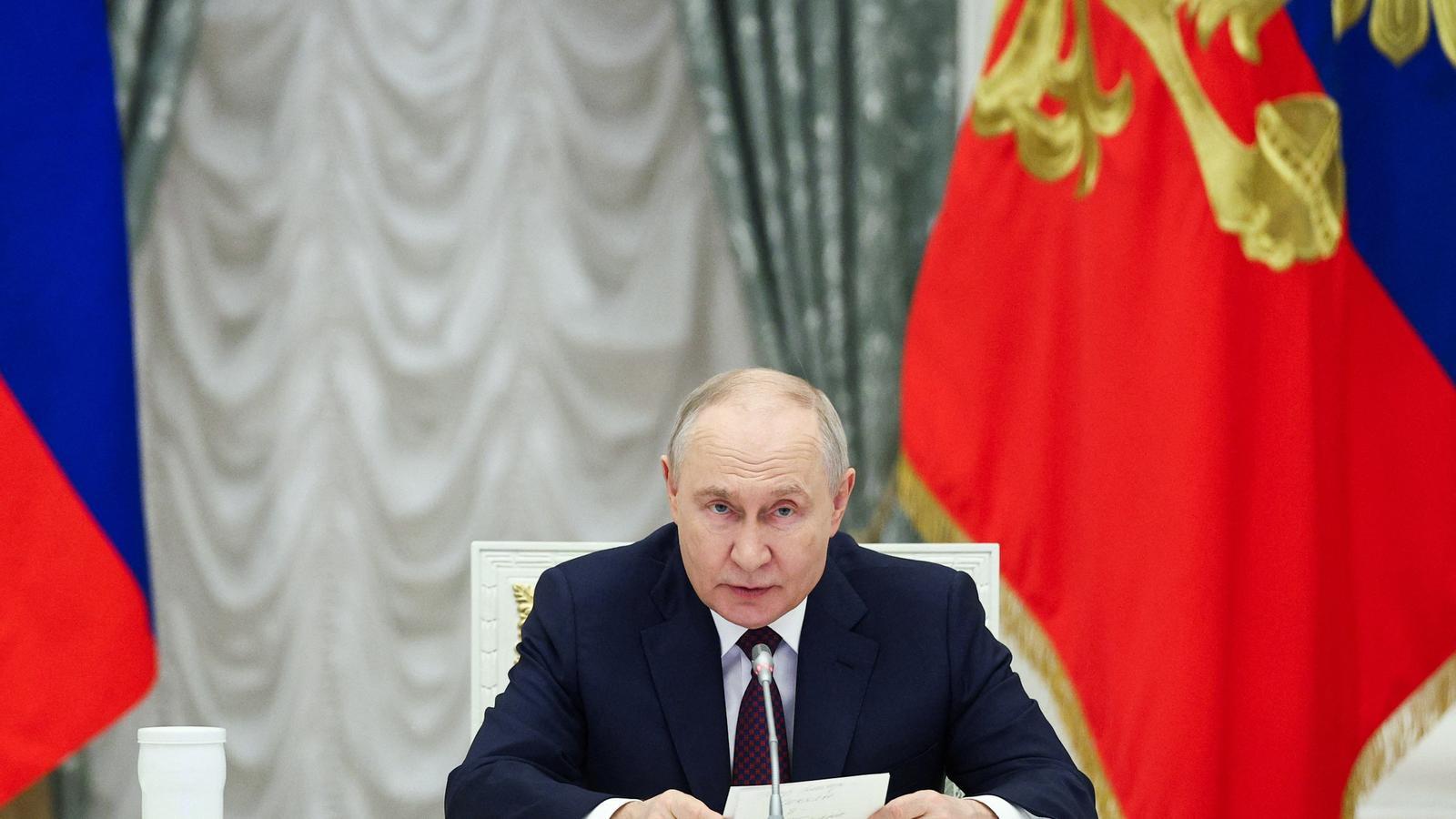

MoscowDespite remaining inflexible in his conditions for peace, Vladimir Putin has recently regained interest in diplomacy. The reason is that in the latest talks between Russia, Ukraine, and the United States, Donald Trump's emissaries have put on the table one of the demands that the Kremlin had always considered key to ending the war: the discussion of a new European security architecture. This formulation encompasses the demand to push NATO borders away from Russian territory and to prevent Ukraine's entry into the Alliance, and could open the doors for Putin to regain his zone of influence in Eastern Europe.
According to Ukrainian media, the Russian delegation demanded in Abu Dhabi an end to NATO expansion, a reduction of its military presence in countries that joined from 1997 onwards, and limits on the bloc's cooperation with Ukraine and other post-Soviet states. Moscow always viewed the entry of Warsaw Pact countries into the Alliance with suspicion, to the point that Russian analysts justify the invasion of Ukraine as the only possible way out after the West rejected the ultimatum to debate a new defensive balance on the continent in December 2021.
Fyodor Lukyanov, a foreign policy expert very close to the Kremlin, celebrates that the United States has finally agreed to address this issue and describes the step as "revolutionary". He recalls that Russia "has never taken off the agenda" this claim, which is among "the fundamental causes of the conflict". Mikhail Rostovsky, a columnist for the Moskovski Komsomolets, believes that the problem is that, since 2014, Kyiv "became a battering ram used to expel Moscow from a sphere it had always perceived as a zone of its vital national interests".
Thus, the Kremlin now sees this path as an opportunity to revive its historical aspirations for dominance, not only over Ukraine but also over the former allies of the USSR, and to rebuild what it has understood since the Tsarist era as a security belt intended to prevent any invasion.
Analysts like the Pole Slawomir Debski argue that Putin cannot afford a peace in which the only “prize” is the Donbas. Therefore, he says, he needs to turn the negotiations over the war into negotiations over a new European security architecture. The head of the Russian delegation to the Emirates himself, Vladimir Medinsky, fantasized about the idea of dividing up the world like the Allied powers did after the Second World War, in a conference equivalent to that of Yalta. “If we manage to create this security system, then we will ensure peace in Europe for decades, perhaps even centuries,” he asserted.
But the European Union has already stated that it does not think the strategic balance on the continent should be touched and considers it was Russia that tried to destroy it by invading Ukraine. The Russian political scientist in exile Ilya Matveev maintains that, by breaking the trust of his neighbors, Putin has caused European countries to skyrocket their defense spending in the face of a possible new attack and that rearmament will be the only source of deterrence. “However the war ends, the militarization of Europe will continue and will gain momentum,” he predicts.
Ukraine, defenseless
One of the most controversial points of Putin's conception of postwar guarantees is that they imply veto power over any allied defensive intervention in Kyiv. "It is not even about neutrality, but about ensuring that Ukraine can never reclaim territories occupied by Russia, as well as guaranteeing that no Western nation will be able to provide it with significant support," asserts the exiled Russian journalist Anton Barbashin. Putin confirmed this on Thursday in the presence of Trump's emissaries, Steve Witkoff and Jared Kushner, when he reminded them that foreign peacekeeping contingents in Ukraine would immediately become legitimate targets for the Russian army.
The Americans have asked Russia to make proposals for this new security framework. A senior official of the Russian Foreign Ministry, Aleksei Dobrinin, presented three possible formulas at an event in Moscow this week: a collective defense alliance or bilateral mutual assistance agreements, such as those Russia has with North Korea or Belarus; agreements to commit not to support the other party's adversaries in case of aggression, like the one the Kremlin signed with Iran, or bilateral non-aggression pacts, similar to the one Moscow has with Beijing.
Researcher Tatiana Stanovaya believes that, despite the fears of European governments, Washington "does not have a specific plan for the continent's security," but rather seeks to disengage from the defense of Europe and definitively abandon the war in Ukraine. But it is precisely this rush to soften the Russian position and move towards a quick resolution of the conflict that gives wings to Moscow's demands and threatens to legitimize Putin's reasons for launching the invasion.
