It was the economy, stupid: the keys to Trump's defeat
Inflation, the Iran war, support for Israel and aggressive anti-immigration policies have decided the 'midterms'

-
CAT -
CAST
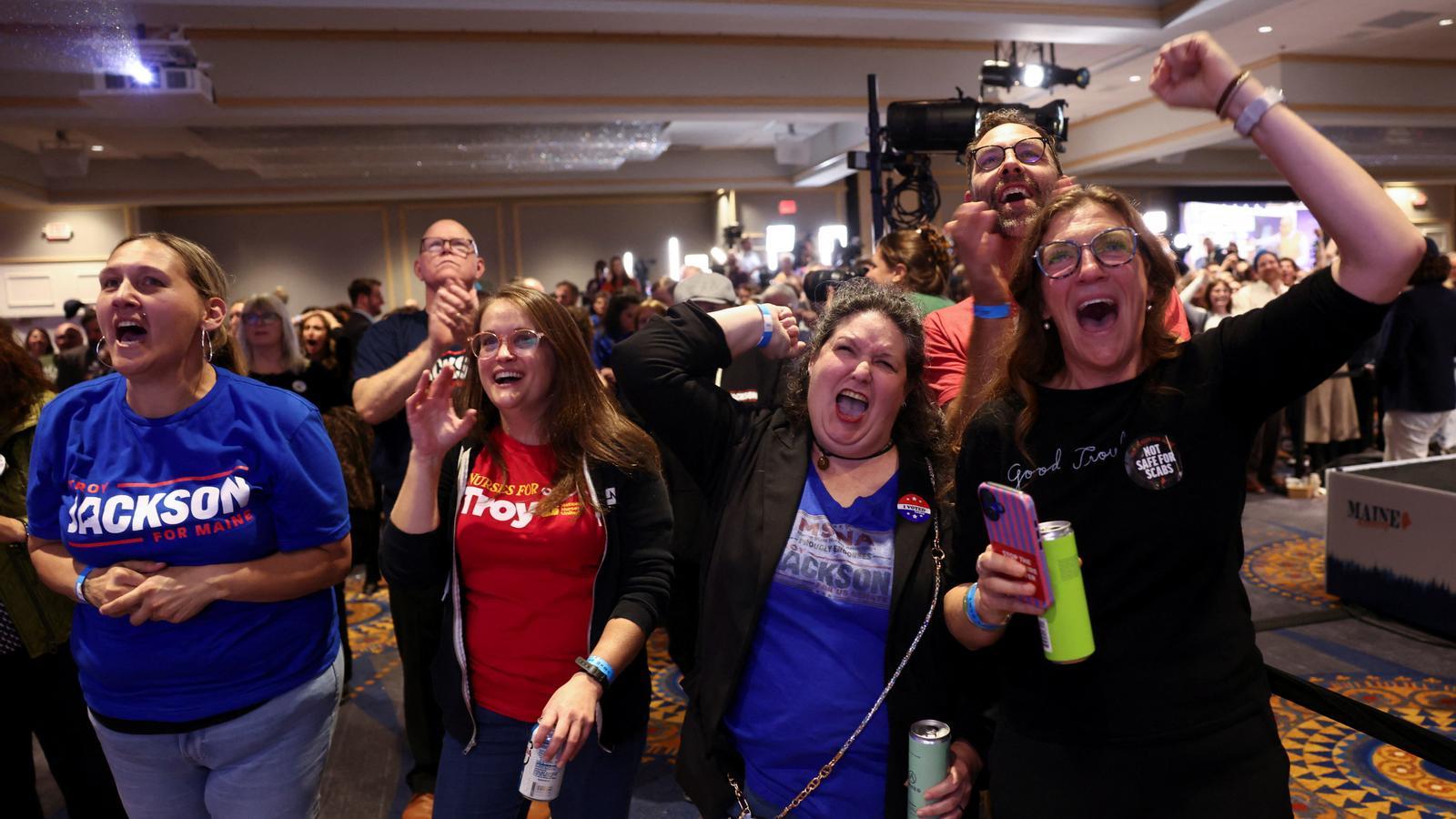
BarcelonaTrump had framed the midterm elections as a referendum on his administration, and the result has been a resounding triumph of the Democrats. The Democrats have gained control of both chambers and the Republicans have lost states they had controlled for decades, including Texas. The millionaire donations were of no use to him, nor were the loudspeakers of the technooligarchs – Elon Musk, Mark Zuckerberg, and Jeff Bezos – who surrounded him on the day of his inauguration, two years ago that feel like twenty.
The famous phrase that James Carville, the strategist for the campaign that Democrat Bill Clinton won in 1992, wrote on a whiteboard resonates today on the walls of the White House: "It's the economy, stupid." The rising cost of living and gasoline prices skyrocketed by his unpopular war in Iran have sunk the approval of Trump's administration.
These midterm elections were the first electoral test of Trump's second term. And they confirm what the polls had been indicating for months: a deep discontent with Trump, who has failed in his campaign promises, especially a "golden age" for the pockets of Americans and a withdrawal that would not lead the country to fight distant wars. The Democrats had enough to do by blaming Trump's war against Iran and the tariffs for the economic difficulties that are fueling the wave of unrest across the country. The Republicans have failed in their strategy of presenting their opponents as extremists, radicals, communists, and anti-Americans. Let's review the keys to the defeat of Trumpism.
The cost of living
The rising cost of living has been a determining factor in the electoral punishment for Donald Trump and the Republican Party. In September, inflation remained at 3.7% year-on-year, according to the latest official data. Energy prices have increased by 20.4% in one year (gasoline by 34.2%). The shopping basket has also offered no respite to families: fruits and vegetables have become 3.7% more expensive. Housing has soared by 3.2% and health insurance under Obamacare by 22%.
Trump's tariff war has also fueled inflation, and his response to try to contain prices ended up further annoying his rural base: the White House imported meat from abroad, which has left local ranchers in a very bad position, as they have also had to face soaring fuel prices. People have perceived it: in the polls, two-thirds of the electorate blamed Trump for the rising cost of living.
The revolt against the technooligarchs
Anticipating Trump's difficulties in the polls, the tech oligarchs invested heavily in the Republican campaign. Elon Musk alone allocated 291 million to it, according to Open Secrets. Of the top ten megadonors, eight have financed the conservative party, with a total of more than one billion dollars.
Because of this, in his historic victory speech James Talarico, the first Democrat elected senator for Texas since 1988, presented the result as the victory of David against Goliath: "We have shown that not even all the money in the world can defeat the people of Texas".
The unpopular Iran war
The war against Iran has ended up taking an electoral toll on Trump. The president had promised that it would be a quick operation, but the regime of the ayatollahs has resisted and has been able to fulfill its threat to close the Strait of Hormuz, a key passage for world trade in gas and oil. The American military failure has had a direct impact on the pockets of Americans: gasoline has become 34% more expensive and diesel about 70%.
Beyond the economic impact, the rejection of the war also shows the unrest over the failure to fulfill one of the great promises with which Trump arrived at the White House two years ago: to stop acting as the world's police and not to waste any more lives or money fighting wars away from home, under the banner of America first. According to a Reuters poll, 55% of Americans consider that the war against Iran has not been worth it, and a CBS exit poll confirms that the majority of voters believe that Trump was wrong to attack Iran, an opinion shared even by a quarter of the Republican electorate.
Support for Israel comes at a high price
The unconditional support for the State of Israel in the midst of the genocide in Gaza has also ended up costing the Republicans dearly, especially among the young electorate and minorities of Arab origin. Trump asked for the vote for Prime Minister Benjamin Netanyahu, after having asked for his pardon, and has maintained military aid to Israel throughout all these years. But according to the Chicago Council on Global Affairs, 56% of Americans want to reduce or eliminate military aid to Israel, a percentage that reaches 72% among Democrats. The new generation of Democrats has broken with the traditional policy of support for Israel, which also had an electoral cost in the defeat of Kamala Harris in 2024.
The debate has had a special impact in Michigan, where the Democratic candidate for the Senate, Abdul El-Sayed, of Egyptian origin and a defender of ending military aid to Israel, has won despite an intense campaign by the pro-Israel lobby AIPAC. To the point that his rival in the Democratic primaries, Haley Stevens, ended up supporting the Republican candidate, Mike Rogers. Talarico also asked during the Texas campaign to limit the sale of arms to Israel. In a desperate attempt to contain the defeat, Trump promised before the opening of the polls to stop the funding to Israel, which amounts to 4 billion dollars annually.
The leftward turn of Democrats
The Republicans' campaign has focused on trying to carry out a witch hunt against their rivals, accusing them of being "communists" or "radicals". For the party, these elections were an opportunity to rediscover a voice and identity of their own and reconnect with the electorate that stayed home during Trump's victory in 2024. The veteran independent senator Bernie Sanders, the soul of the party's progressive wing, hit the nail on the head two years ago: "It shouldn't surprise us much that a Democratic party that has abandoned the working class discovers that the working class has abandoned it". His words ceased to be a voice crying in the wilderness and the Mamdani effect, representing the Democratic Socialists of America (DSA) in the New York municipal elections, ended up proving he was right. At least five candidates linked to the left wing have won a seat in the House of Representatives: Darializa Avila Chevalier and Claire Valdez, in New York; Melat Kiros, in Colorado, Donavan McKinney, in Michigan and Chris Rabb, from Pennsylvania. El-Sayed distanced himself from this wing, even though he defends public healthcare, and has had the support of the party establishment, including that of former president Barack Obama.
The rise of this new generation of progressive leaders, many of whom have defeated Democratic establishment representatives in the primaries, reflects a demand for political renewal and more ambitious economic proposals. But the turn to the left is not homogeneous: moderate candidates have also achieved significant victories, which keeps the debate about the party's ideological future open.
Minorities assert themselves
Another key has been the vindication of minorities after two years of Trump's institutional racism policies, with the aggressive raids by ICE, the immigration and border control agency, against Black and Latino communities. Several elected officials represent this phenomenon: Keisha Lance Bottoms has become the first Black woman elected governor of Georgia, and Abdul El-Sayed, the first Muslim senator in the history of the United States. Hakeem Jeffries will be the first Black speaker of the House of Representatives. Chris Pappas, elected for New Hampshire, will be the first openly gay senator in the history of the United States.
