The US army will detonate more than 4 tons of weaponry in Iowa despite the risks to public health
The authorities ask the population to confine themselves for 48 hours because the deteriorated ammunition contains lead azide
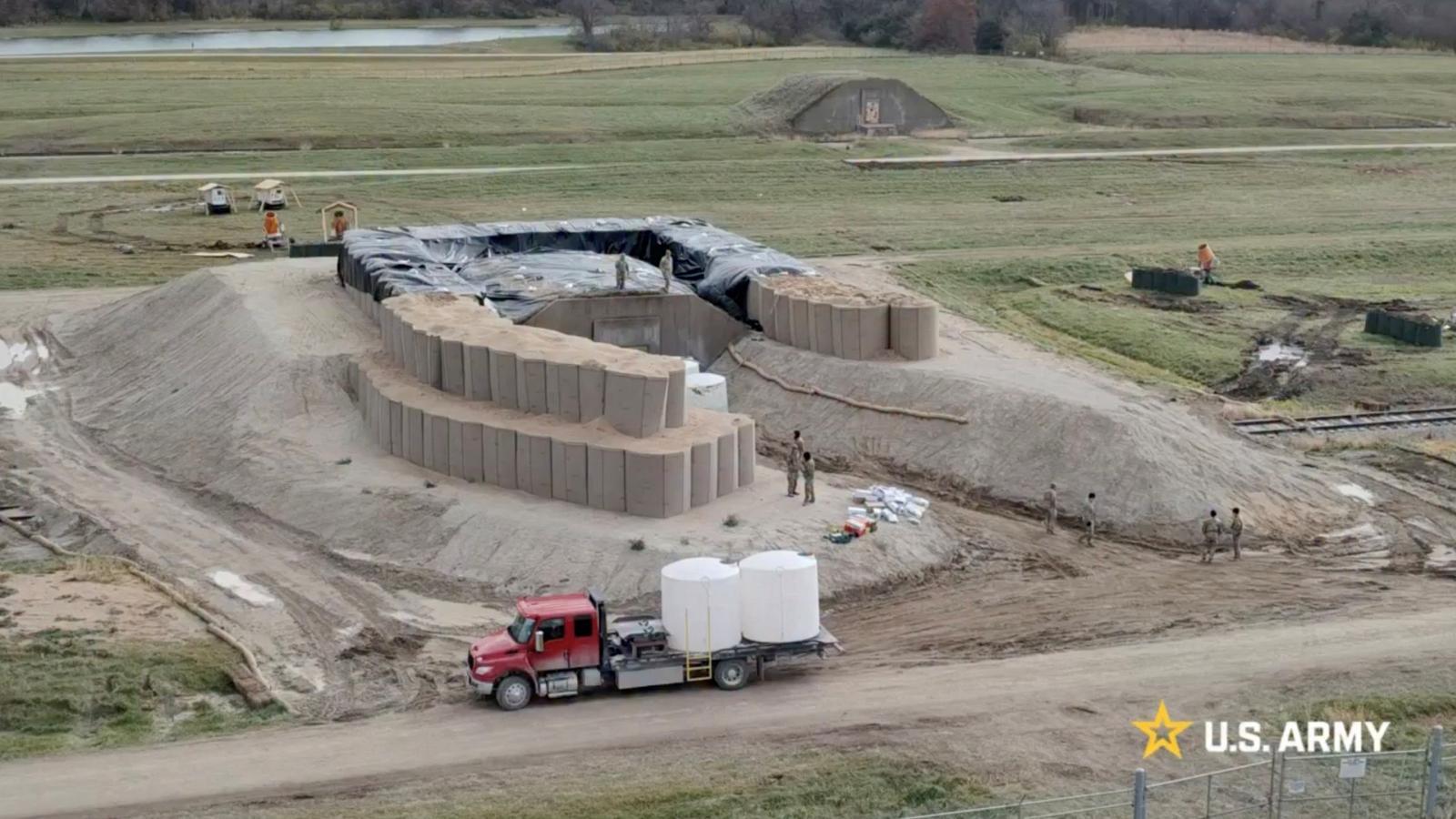
BarcelonaMore than 4 tons of explosives will be reduced to dust this Wednesday in the state of Iowa, where the United States military will detonate a large quantity of deteriorated ammunition at the Middletown ammunition plant. This is an action that has been delayed due to environmental and health concerns among the local population, as the weaponry contains lead azide. Given the risks to public health and the doubts raised by environmental organizations regarding the dispersion of toxic particles that the detonation may cause, the courts have frozen it for months, but on Monday a federal court lifted the suspension.
The US armed forces maintain that controlled detonation is the safest alternative for eliminating the stockpile, stored in 68 underground barrels, after specialists detected highly sensitive crystalline formations in 58 of the barrels. However, their own projections indicate that, despite the measures planned to contain contamination, the explosion could disperse particles of lead azide within a radius of 160 kilometers from the detonation point.
To avoid health consequences, health authorities have recommended that residents in the area remain indoors for 48 hours. The military also requests that citizens stay indoors for the duration of the detonation. Despite even asking that heating and cooling systems be set to recirculation mode to prevent outside air from entering homes, the armed forces have not provided any time frame during which one must stay indoors and follow the recommendations, a fact that generates uncertainty and concern among some residents of the area.

The controversy surrounding the operation has intensified after it became known that the army hired MuniRem Environmental in March to chemically neutralize the waste using a procedure that, according to its founder, the geochemist Valentine A. Nzengung, would have prevented the release of contaminants. The contract was cancelled in May and the army opted for a controlled explosion.
