Iran proposes to ban the passage of US and Israeli ships through Hormuz
Iran and Oman negotiate new entry and exit routes for commercial and oil tankers, without Washington's participation
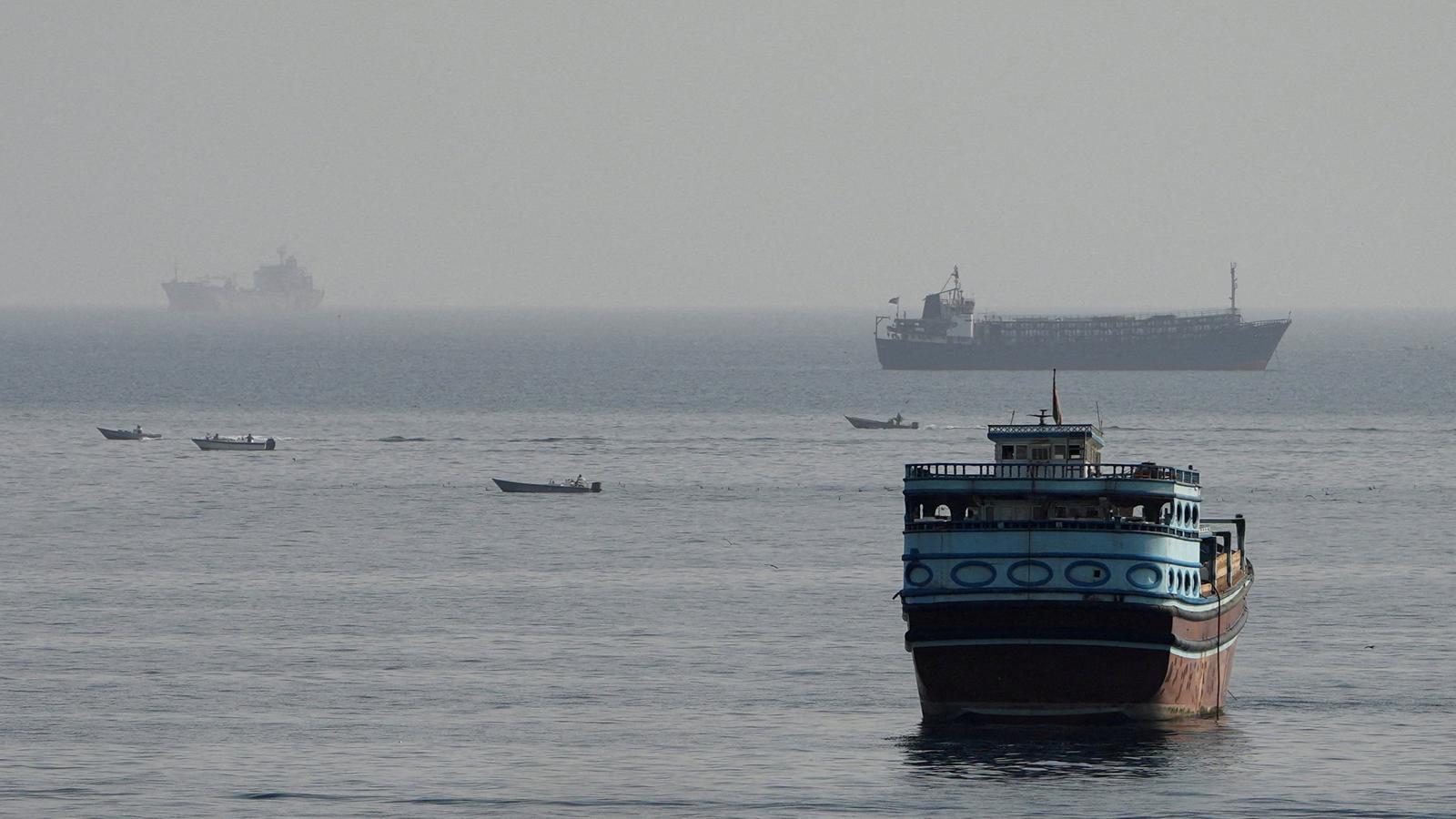

-
CAT -
CAST
BeirutNegotiations to reopen the Strait of Hormuz are advancing, although the final details remain unsettled. Iran and Oman have moved closer on a new maritime route to re-establish transit through this strategic passage, while Washington and Tehran maintain indirect contact to resolve the political obstacles that still block a definitive reopening.
US President Donald Trump stated this week that it could be achieved "very soon" and affirmed that the talks had made progress. From Tehran, authorities confirmed that negotiations with Oman have allowed the approval of the geographical coordinates for the new navigation route. Iranian Foreign Ministry spokesman Esmail Baghaei explained that the talks are focused on establishing "safe entry and exit maritime routes" that take into account the sovereign rights of Iran and Oman, as well as security concerns.
The negotiation between Tehran and Muscat focuses on how to guarantee the passage of ships through a strait shared by both countries, which has become one of the main focal points of international tension. The proposal on the table seeks to establish new entry and exit routes for commercial and oil tankers, with a mechanism that allows for the progressive resumption of navigation.
The reopening of the strait, however, does not depend solely on the understanding between Iran and Oman. Iranian authorities insist that passage will continue to be conditional on the lifting of the US blockade on ports. A matter that keeps the indirect negotiation between Iran and the United States open.
According to the Iranian Fars agency, a parliamentary commission is reviewing a bill that would prohibit US, Israeli, and other "hostile" countries' ships from transiting the Strait of Hormuz. The bill, which is still under expert review, also proposes imposing fines of up to 20% of the cargo value for violations of the imposed restrictions.
Who will supervise maritime traffic?
One of the most sensitive points is who and how will supervise maritime traffic. Some sources mentioned by international media point to a possible distribution of routes: ships entering the Persian Gulf would do so via a route under Iranian supervision, while the exit would be linked to a route under Omani control. The formula has not yet been officially confirmed and remains one of the most delicate aspects of the negotiation.
The issue of tariffs is also pending. Iran has raised the possibility of charging fees for ship transit, while Oman would advocate for a more limited formula. Washington, for its part, rejects any mandatory payment to use a maritime route that, before the crisis, functioned as an open international route.
The importance of the agreement goes far beyond the two riparian countries. One-fifth of the world's oil passes through the Strait of Hormuz, as well as a significant portion of the liquefied natural gas that supplies international markets. Any interruption of traffic has immediate consequences on energy prices, trade routes, and economies dependent on these imports.
The process has also awakened the interest of other regional actors. Pakistan has confirmed that it is holding consultations with different countries on the crisis in the Middle East and the situation in Hormuz. The Ministry of Foreign Affairs has highlighted the role played by Oman and has assured that Islamabad will continue its diplomatic efforts to favor a "global and lasting" solution.
The US is considering new attacks
But these advances come at a time of maximum tension. The United States and Israel are preparing, according to American sources cited by international media, for possible attacks against Iranian energy facilities, although President Donald Trump has not yet made a definitive decision. Tehran has already warned that it would respond with attacks against Israeli critical infrastructures and American energy facilities in the region.
Negotiations on Hormuz are thus progressing between two opposing realities. While Iran and Oman are trying to finalize the technical aspects to reopen a key maritime route, Washington and Tehran continue to negotiate the political conditions that will determine whether this agreement can ultimately become a stable solution to one of the most significant regional crises. The paradox is that Hormuz could be reopened at the negotiating table and closed again on the military front.
