Flávio Bolsonaro, the Brazilian candidate chosen by his father and that the far-right did not want
The former president, imprisoned, has anointed his eldest son as successor to maintain the monopoly of radicalism within the family clan

-
CAT -
CAST
Brazilian politics remains entrenched and polarized around the figures of Lula da Silva and Jair Bolsonaro, the last two presidents, who personify the two mass ideological movements with the greatest capacity for mobilization this century: democratic labor populism of social inclusion versus the far-right subservient to the interests of the United States.Four years later, there is a second face-to-face at the polls between Lula, who at 80 is seeking an unprecedented fourth term, and Bolsonaro, this time embodied by his eldest son, Senator Flávio, given that his father is disqualified and serving a 27-year and three-month home detention sentence for the coup attempt. It is an unequal confrontation, due to the curriculum and trajectory of the two contenders, in which the current president emerges as the favorite in the polls (41% of preferences in the first round compared to 36% for the oppositionist), but with all scenarios open.The electoral campaign for the October presidential elections – the first round will be on Sunday the 4th and, if necessary, the second will be on the 25th – has started with a low tone, with the protagonists saving their strength, aware that everything will be decided in the second half of September.Everything stays at home
The far-right's preferred candidate for these elections was the current governor of São Paulo, Tarcísio de Freitas, who had the support of landowners, big business, Faria Lima – the São Paulo avenue that names the country's main financial center –, all the centrist "hinge" parties of the Centrão, which in recent years have largely embraced radicalism, the great neopentecostal evangelical churches, and the main media groups that gave him a veneer of "moderation", ignoring the extermination policy that the São Paulo military police, under his mandate, has carried out in the favelas.Tarcísio de Freitas represented a new phase: Bolsonarism without Bolsonaro, a more presentable, modern, and chameleon-like ultraconservatism, stripped of the rudeness and outbursts of the former president. It was even speculated that the former first lady, Michelle Bolsonaro, would form a tandem with the São Paulo governor as a candidate for vice president. This move, however, generated a war of vanities, jealousies, and ambitions within the clan. The four sons, all of them with elected positions, united against their stepmother upon realizing they were losing control of their father's political capital.

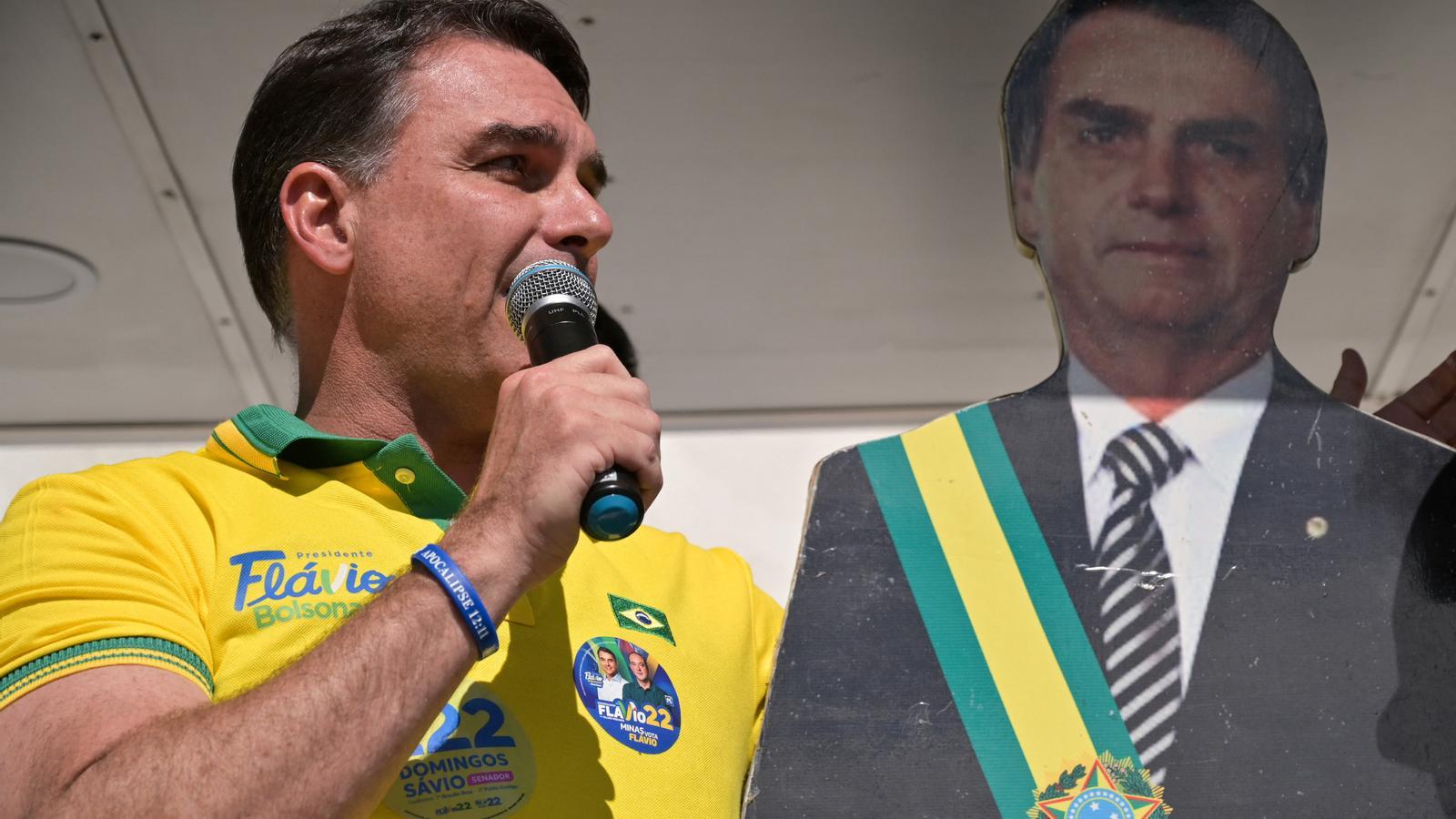
In December, Senator Flávio, 45, after visiting his father at the Brasília penitentiary center, where he was then imprisoned, surprised everyone by announcing his candidacy for president. The unexpected move was orchestrated by the former president, who throughout his political career has been characterized by unpredictability, by the senator himself, and by his brother, former congressman Eduardo, who lives in the United States, where he orchestrated the two tariffs (imposition of duties) that Donald Trump has applied to Brazil.The response among the opposing forces was the worst possible. The Ibovespa index of the São Paulo Stock Exchange plummeted by 4.31% and the dollar rose more than 2%. The negative reaction of the financial market, which has always shown itself to be against Lula's government, reflected the frustration of those who wanted a “new right”, upon realizing that Bolsonaro, jealous and unmoving, continued to set the pace, despite being confined.Companies under suspicion
The objective of Flávio Bolsonaro's candidacy, though it may seem like a paradox, is not precisely to win the elections. What is at stake for the family is to continue being the epicenter of the Brazilian far-right. For this reason, the senator is not considering stepping aside in the face of the scandals that have tarnished his candidacy. The most compromising is that of the recordings in which he asked Daniel Vorcaro, former owner of Banco Master, for money to finance a biopic about his father.The controversial banker, who committed $24 million to the project, has been detained since November 2025 as part of investigations into alleged irregularities by the financial institution, already liquidated by the Brazilian Central Bank, which allegedly left a hole of more than 7.8 billion euros (47 billion reals), covered by the Credit Guarantee Fund.Senator Flávio also does not seem willing to withdraw given the lack of explicit support from the Centrão parties, which now prioritize territorial pacts with Lula, mainly in the Northeast region, which is the left's great electoral stronghold.
The vice-presidential candidate, which a few months ago was a highly contested position among different power groups, has ended up being occupied by a figure from the third tier of the same party, the Liberal Party. It is Alfredo Gaspar, a federal deputy against whom a very serious accusation falls for an alleged sexual assault on a 13-year-old adolescent who would have become pregnant and had a baby girl. Despite this bleak scenario, it cannot be ruled out that the far-right candidacy could be electorally competitive, especially because the decisive factor in determining the vote, particularly in the second round, is not so much sympathy for the candidate as rejection of the opponent. Polls indicate a technical tie between Lula and Senator Bolsonaro in a hypothetical second round. The far-right would benefit from the hidden vote.
