Doctors without tools and patients trapped: Israel has annihilated the health system of Gaza
After three years of offensive, there is a lack of basic equipment and materials to attend to a population subjected to a chronic humanitarian crisis
-
CAT -
CAST
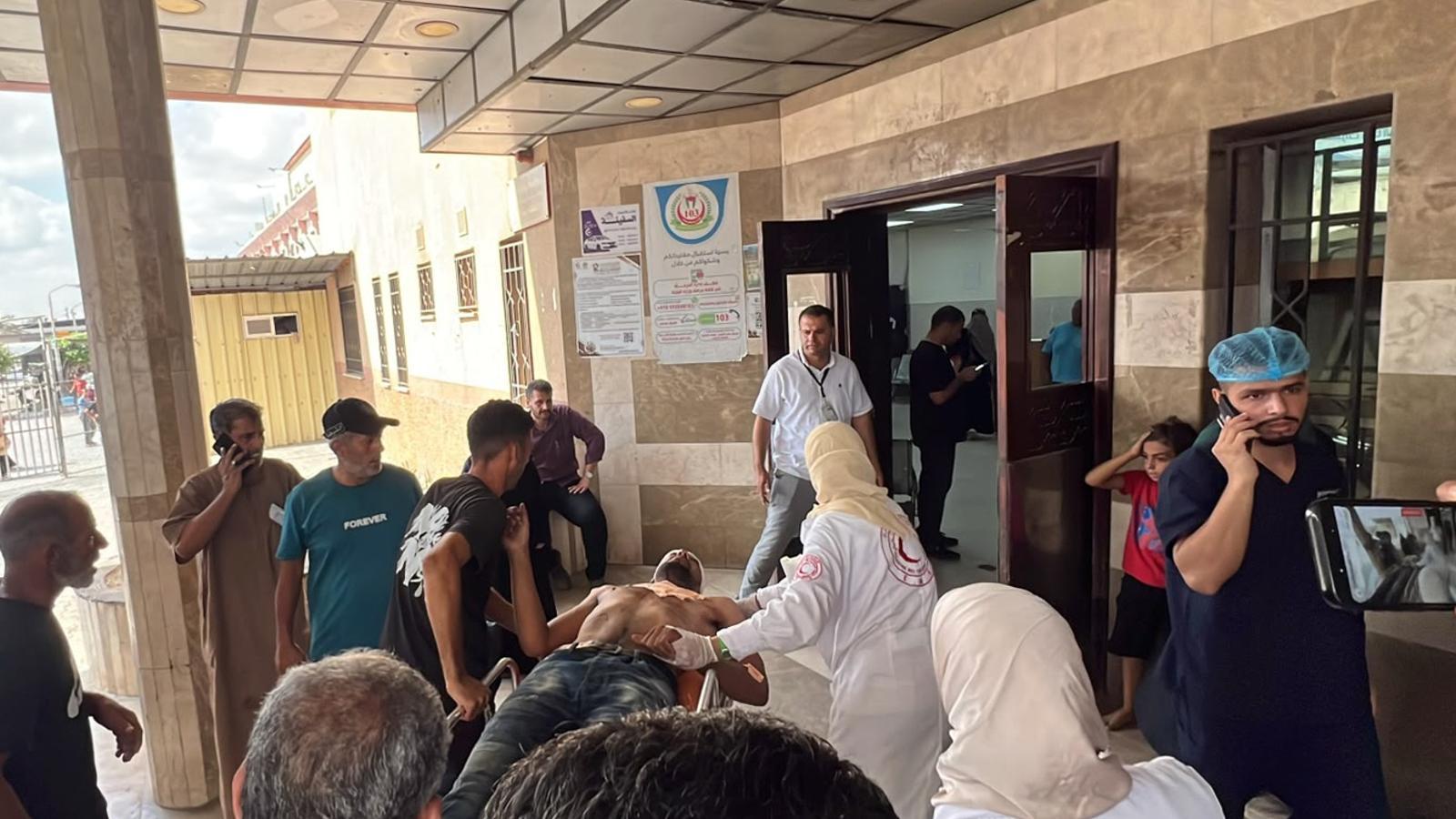
BarcelonaThree years after the start of Israel's genocidal offensive on Gaza, Dr. Abdelrahman, an orthopedist at one of the few hospitals that remain partially operational in the Strip, explains to ARA the impossible conditions in which they work, without basic tools, with a systematically destroyed healthcare system and a population facing a chronic humanitarian crisis. Before the war, he worked at the Indonesian Hospital, in the north of the Strip, which was put out of service because it is located within the zone under the control of the Israeli army. He has moved to the Nasser Medical Complex, in Khan Yunis, the largest one still functioning in the south of the Palestinian enclave, where the majority of the population has been displaced by bombings on civilian areas.
“We still have qualified doctors to perform operations, but we simply do not have the tools or the most basic material to perform them,” he explains in a WhatsApp conversation. Only 22 of the 34 hospitals in the Strip remain operational, and there is no surgical bed available in either the north or the south of the Strip. Entire specialties have disappeared: in Gaza, open-heart surgeries, transplants, and radiotherapy can no longer be performed. At Nasser, Abdelrahman explains that even the most elementary materials are missing. “We do not have simple things: physiological saline, gauze, bandages, and many essential medications for chronic illnesses.” According to the latest report from the Gaza Ministry of Health, 44% of essential medicines are at zero stock: due to the iron blockade imposed by Israel on the entry of goods into Gaza, there is a shortage of anesthetics, chemotherapy drugs, and insulin, which is essential for the 2,500 diabetic patients. Only 122 incubators remain operational, 40 fewer than before the war, and typically babies born with increasingly frequent low birth weight problems due to malnutrition and the stress of the mothers have to share an incubator, with the evident risk of contracting lethal infections.

Blind doctors
One of the most serious consequences of the destruction is the loss of diagnostic capacity. 62% of diagnostic devices have been destroyed. “We prioritize cases to ensure that the CT scanner remains available for emergencies,” explains Abdelrahman. “Many patients die because we do not have the tools to diagnose them properly.” Doctors have to work in the dark.
The lack of diagnosis is combined with an extreme shortage of surgical material. Abdelrahman lists the interventions he can no longer perform normally: total knee and hip replacements, arthroplasties, or arthroscopies. There is also a lack of intramedullary nails and anatomical plates to fix femur and tibia fractures. “Most of my patients have complicated fractures that, if not treated properly, will mark them for life,” he explains. And so health problems become chronic. Injuries that could have been treated with a quick intervention end in permanent pain, deformities, mobility difficulties, or disabilities.
Abdelrahman sees this every day among his patients. “Many have knee problems, such as arthrosis or ligament injuries, and a very poor quality of life. There is no solution for them. Only hoping to be able to travel if the war ends and we are allowed to leave this prison that is the Gaza Strip.” But leaving Gaza to receive treatment has also become a remote possibility. 2,027 patients have died while waiting for a medical evacuation. About 21,000 remain on the waiting list, and only 14% of the patients who needed to be evacuated have managed to leave. These are cases of cancer, complex traumatic injuries, heart diseases, or pathologies that cannot be treated within the Strip, waiting for months or years for an authorization that may arrive too late.

Lack of healthcare staff
The destroyed infrastructure is only part of the problem. A substantial part of the healthcare personnel has also been lost. The system is missing 2,074 medical professionals. There are only 1,363 doctors available: in three years, Gaza has lost a third of its doctors. Of the 70 gynecologists who worked in the Strip before the war, only 29 remain. Of the 100 pediatricians, 69 remain. A collapsed system that must respond simultaneously to war trauma, pregnancies, premature newborns, oncology patients, diabetics, and infectious diseases, for a population of two million people, but with far fewer professionals, fewer beds, and less equipment than three years ago.
Abdelrahman describes his exhaustion and that of his professional colleagues. “Almost all of us suffer from burnout due to the enormous workload,” he explains. In addition to the grueling hospital shifts, they have to deal with finding food and a safe place for their families. “The biggest challenge is finding the balance between meeting our families' needs and fulfilling our professional obligations, working overtime to try to help as much as we can,” he says. Even getting to the hospital has become an obstacle course. “There are no cars. And when you find one, the conditions are very uncomfortable. That is why we walk a lot: every day I walk at least seven kilometers due to a lack of transport.”

Conditions that make you sick
At the same time that the capacity of the healthcare system is decreasing, the needs of the population are growing. Respiratory and skin infections have skyrocketed, favored by overcrowding, the destruction of water and sanitation networks, and the precarious living conditions of hundreds of thousands of displaced people. Child malnutrition has also increased, which weakens the immune system and multiplies the risk of complications from infections that in other circumstances would be treatable. “There are so many problems here. Words never end and cannot explain how hard our lives are, especially for healthcare personnel,” summarizes Abed. “But we try to be strong and do everything we can.”
