Amira Hass: "We Jews of Israel have freedom of information, but I cannot force people to want to know"
Israeli journalist from 'Haaretz'
-
CAT -
CAST
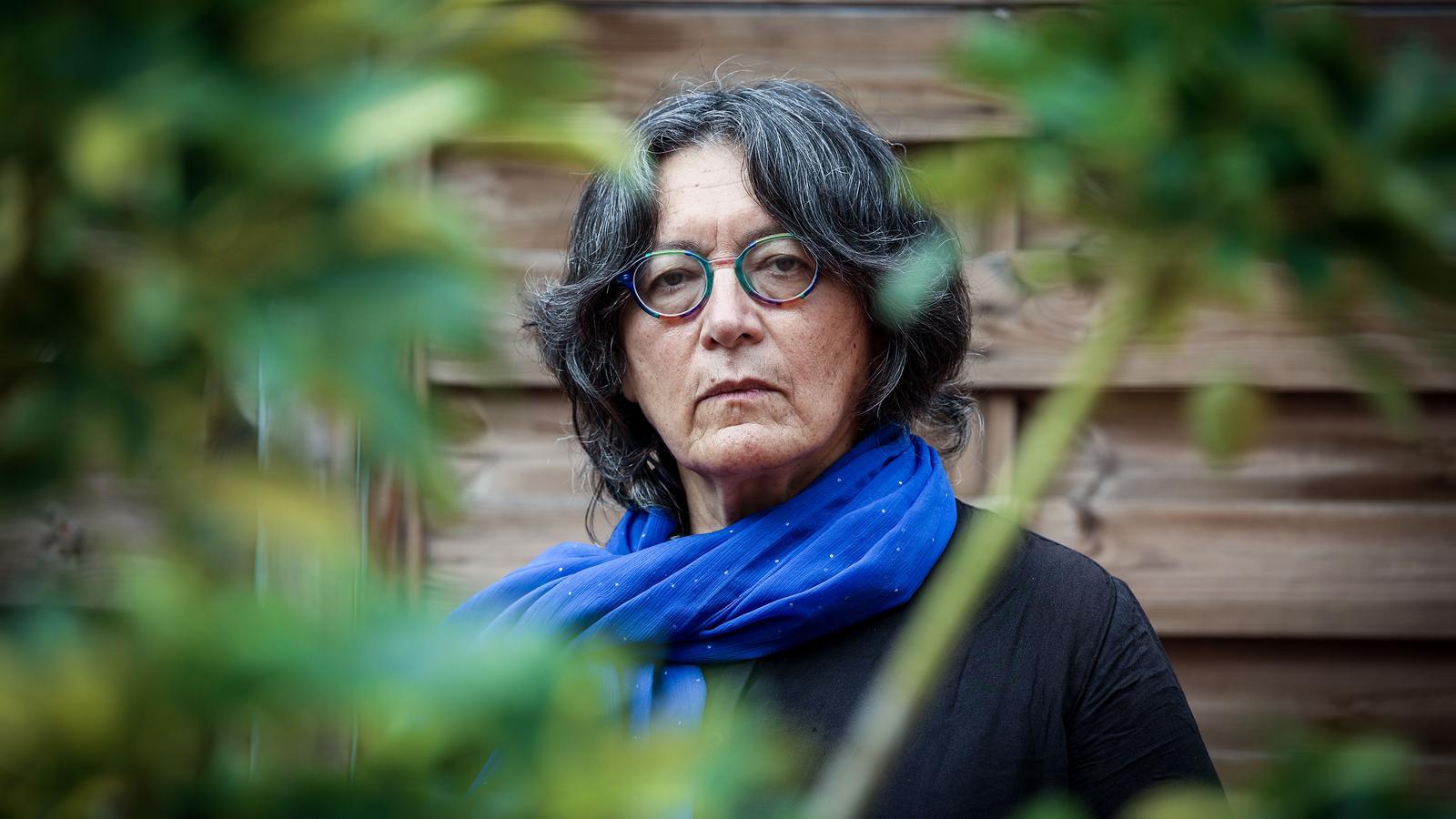
BarcelonaAmira Hass (Jerusalem, 1956) was the first Israeli journalist who decided to settle in the Palestinian occupied territories, first in Gaza and then in the West Bank, more than 30 years ago, to explain "the regime of occupation domination". And she is still dedicated to the same thing. Daughter of Holocaust survivors, she has become an international benchmark for field journalism, as rigorous as it is uncomfortable. This Monday she was awarded the Manuel Vázquez Montalbán international journalism prize, presented by the Journalists' Association of Catalonia.
Why did she decide to go and live in the Palestinian occupied territories?
— I arrived in Gaza around 1991. At that time, I was an activist, a volunteer for a group called Workers Hotline, which helped Palestinian workers who had been cheated by Israeli employers, and at the same time, I worked as a proofreader at Haaretz. I realized that there was a huge difference between what was written in Israeli newspapers about Gaza and what was actually happening there. They painted Gazans as primitive people, but I fell in love with the people of Gaza: welcoming and funny, with a great sense of humor. The first Intifada was still ongoing; there were curfews and soldiers in the streets, and settlements in Gaza. After the Oslo Accords, the newspaper asked me if I could cover the events in Gaza: they did not know that I had moved there; they discovered it by chance.
What is it like to explain to the occupiers what is happening in the occupied territory?
— I call it translating the occupation to the occupier. Today I know it is impossible, but back then, at that time, I still had the hope that I could explain it and people would see that it was wrong. There is a phrase in Hebrew that says: "Don't let the facts confuse you".
And this does not happen only in Israel.
— It happens everywhere. And I discovered it a long time ago. For years I have been able to write what I wanted, I could say what I wanted, and travel abroad and explain it and return without being arrested. We Jews in Israel have freedom of information, to say things, to criticize the government very harshly. And nothing happens. But you cannot force people to want to know. It is not about a lack of freedom: the problem is that people do not want to know. Look at the people in Manhattan: do they want to know what is happening in the poor part of New York? People do not want to know, especially when they have a part of the responsibility. And it is still a good sign, because it shows that they are aware that something is wrong and they do not want it to bother them. If they knew, they would be obliged to do something to correct it. This is the benign explanation. During the Gaza war, you could see that there were many people who did not know what was happening there and were happy about it. But there are also those who exhibit the suffering: I have seen things in WhatsApp groups where settlers share their attacks that I would not believe if you told me about them. They boast about how many trees they have uprooted, how many Palestinians they have expelled from their homes. They are proud of it. They know it and they applaud it.
I was surprised to find Israelis in Tel Aviv who identified as progressive and, in front of a foreign journalist, defended the killing of civilians in Gaza.
— I have written opinion pieces aimed exactly at these people. And blaming them, in a way, because they have refused to see the direct connection between the occupation, between the repression of another people, and for example Netanyahu's judicial reforms against which millions of Israelis took to the streets. They insisted that Israel is a democracy. But how much proof do you need to see that, after 60 years, you control one people and deprive another people of their rights? You cannot call it a democracy. But they continued to stubbornly deny it. We were already saying it in the 70s: a people that oppresses another will never be free.
Does what is happening remind you of the collusion of the German population with Nazism?
— My mother is a survivor of the Bergen-Belsen concentration camp. I remember that in the early 70s she was reading the memoirs of Simone de Beauvoir and she was struck by how she narrated a beautiful bicycle excursion that she and Jean-Paul Sartre took in 1943, when my mother was in a Gestapo prison. My mother died years ago, but since October 7th I have been thinking: "Mom, we are all on a bicycle excursion". This is hard to swallow, here and now, and also because looking back, you understand things about the Holocaust that perhaps were more abstract before. For me, the problem is a pattern that has continued for decades: Palestinians are seen as superfluous beings, and they can be deprived of water, their homes destroyed, and they can be murdered. And this is not only said by the military or high-ranking officials: it is also something that Israelis absorb.
Journalists like Yuval Abraham, director of No Other Land or No Other Land, and Haaretz itself, where you work, are under threat.
— Yuval cannot return to Israel after No Other Land [the documentary about the genocide in Gaza based on the testimonies of Israeli soldiers], because who knows what could happen to him. I think that in the next elections we will see to what extent the Israeli right and the fascist right are strong. Because, you know?, things can depend on a vote, but the Israeli right is very strong. The fact that Netanyahu and his fascist government have been able to remain in power three more years after October 7th, shows that the majority of Israelis accept them, despite their responsibility. And regarding Haaretz we will see what happens.
What is at stake in the Israeli elections on October 27th?
— If they do not lose much or if they win, the fascist far-right will feel even stronger. And I believe they will not lose much, which for them will be a victory. The settler attacks in the West Bank, whatever happens, will continue, because the army and the police and the Public Prosecutor's Office are either terrified and do not dare to do anything, or they support them, or both. If the so-called opposition achieves a majority, the settler attacks will also intensify, to test the new government. And if Netanyahu's coalition wins, even if it is by just one vote, they will see it as a blank check. What scares me the most is that the State of Israel is looking for a provocation in the West Bank so that the Palestinians lose their patience, to use it for a new mass expulsion.
