Social Democrat Frederiksen wins the elections in Denmark, but with a serious setback
The centrists of Els Moderats, led by the acting foreign minister, hold the key to governability

-
CAT -
CAST
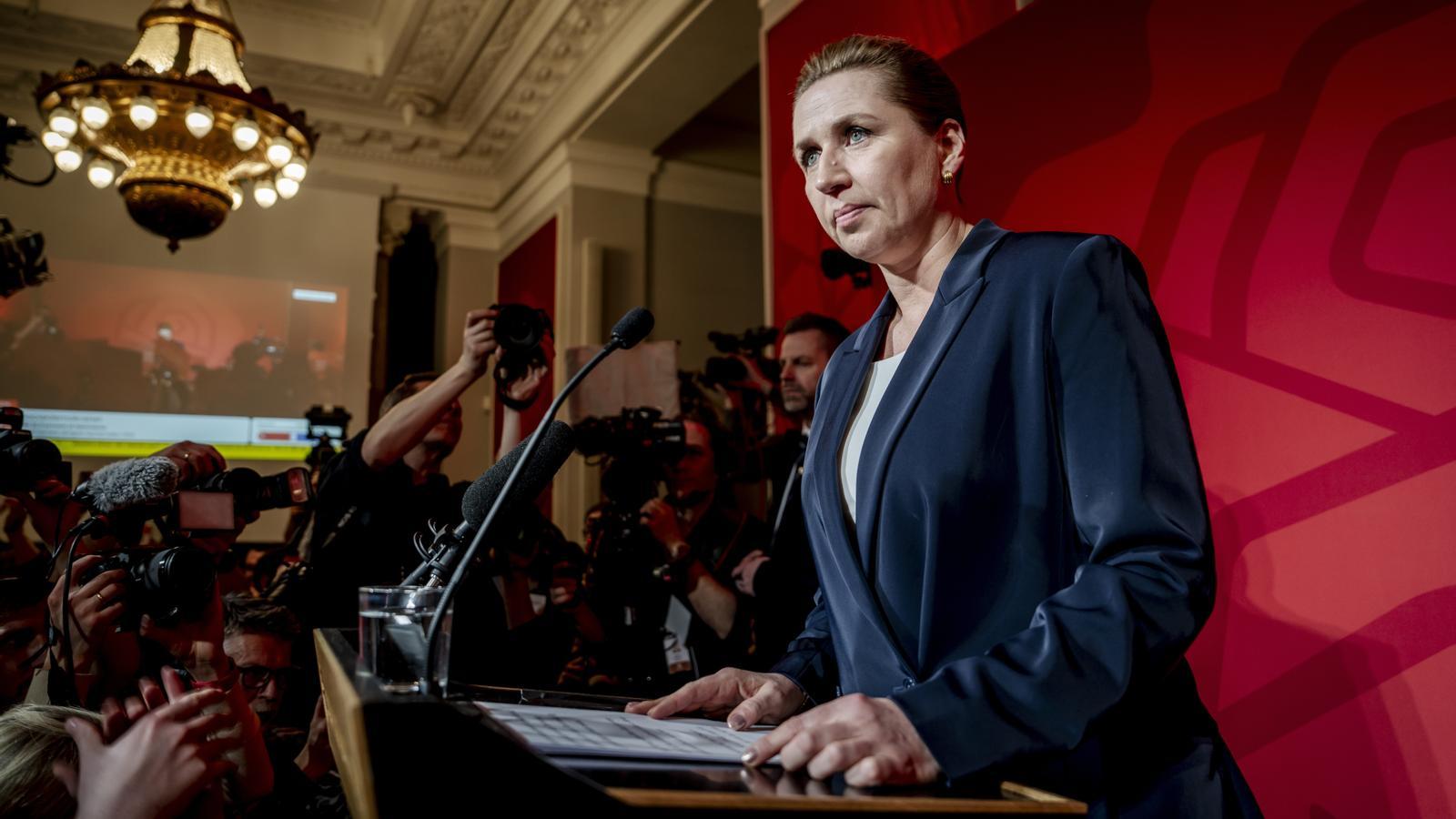
Denmark's Social Democratic Party, led by acting Prime Minister Mette Frederiksen, won Tuesday's general election, though it failed to secure an absolute majority for the left-wing (red) bloc after suffering a significant setback. With only 21.9% of the vote and 38 seats, the party achieved its worst results since 1901. In the 2022 election, Frederiksen, in power since 2019, won 50 seats and 27.54% of the vote. Despite the setback, the candidate seeking reelection managed to reverse a trend in the polls, which had seen her support plummet to 16%. Her strongest ally was Donald Trump and his ambition to annex Greenland by forceFrederiksen has displayed a profile of a strong stateswoman, sending troops and medical supplies to the island and positioning herself as the defender of Danish sovereignty against what many have described as "bullying" by the United States. It was in this favorable context that she called the early elections. But voters have created a highly fragmented Folketinget (the Danish Parliament). The gap between the traditional left-wing and right-wing blocs is only seven seats (84 to 77), in a quarter where an absolute majority is 90. "I have been responsible for this wonderful country for almost seven years," Frederiksen said when she appeared before her supporters in the early hours of the morning. "I am still ready to take on the responsibility as Prime Minister of Denmark," she affirmed. The Moderates hold the key to forming a government.
The key to who will form the government, however, lies with Els Moderats, a small centrist party that won 14 seats, two fewer than in the last parliamentary elections. Led by the outgoing Foreign Minister, Lars Løkke Rasmussen, former Prime Minister (2015-2019), it continues to maintain its position of kingmakerRasmussen retains the ability to tip the balance to the left or right.
In this regard, Troels Lund Poulsen, who leads the Liberals, the largest party in the blue bloc, has categorically ruled out re-entering the government with the Social Democrats, as in the previous legislature, and has urged Rasmussen to join the right. "It is possible to achieve a new direction in Denmark," he said. However, commentators on Danish political life consider this option the least likely.
They also rule out the so-called "Borgen route," referring to the famous television series, in which the country's first female prime minister, Birgitte Nyborg, leader of Els Moderats, achieves the position despite not winning the elections and leading a minority party. Negotiations are now underway and are expected to last for weeks or even months. According to analysts at public broadcaster DRTV, the most likely outcome is that Frederiksen will end up leading a government formed by her Social Democrats, the Red-Greens, the Moderates, and the Danish Social Liberal Party. In this regard, and taking up the challenge issued by the acting prime minister, Rasmussen stated: "Denmark is a small country of six million people, and we must unite."
Since the end of 2022, Denmark had been governed by the so-called SVM Cabinet, a coalition unprecedented in more than forty years, under Frederiksen's leadership. This government brought together the Social Democrats (S), the center-right Venstre (V) party, and the centrist Moderates (M) of the now kingmaker Rasmussen. Despite being historically rival parties, they agreed on a pragmatic approach in a context then dominated by due to the clash stemming from the war in UkraineDuring the previous legislature, the three parties had come close to an absolute majority, with 89 deputies: 50 from the Social Democrats, 23 from Venstre and 16 from Els Moderats.
