A Cornell University student reports that seven members of a fraternity drugged and raped her for hours
A 'New York Times' investigation reveals that the police omitted the rape accusation in the report to the Public Prosecutor's Office, which has reopened the case two years after the events

-
CAT -
CAST
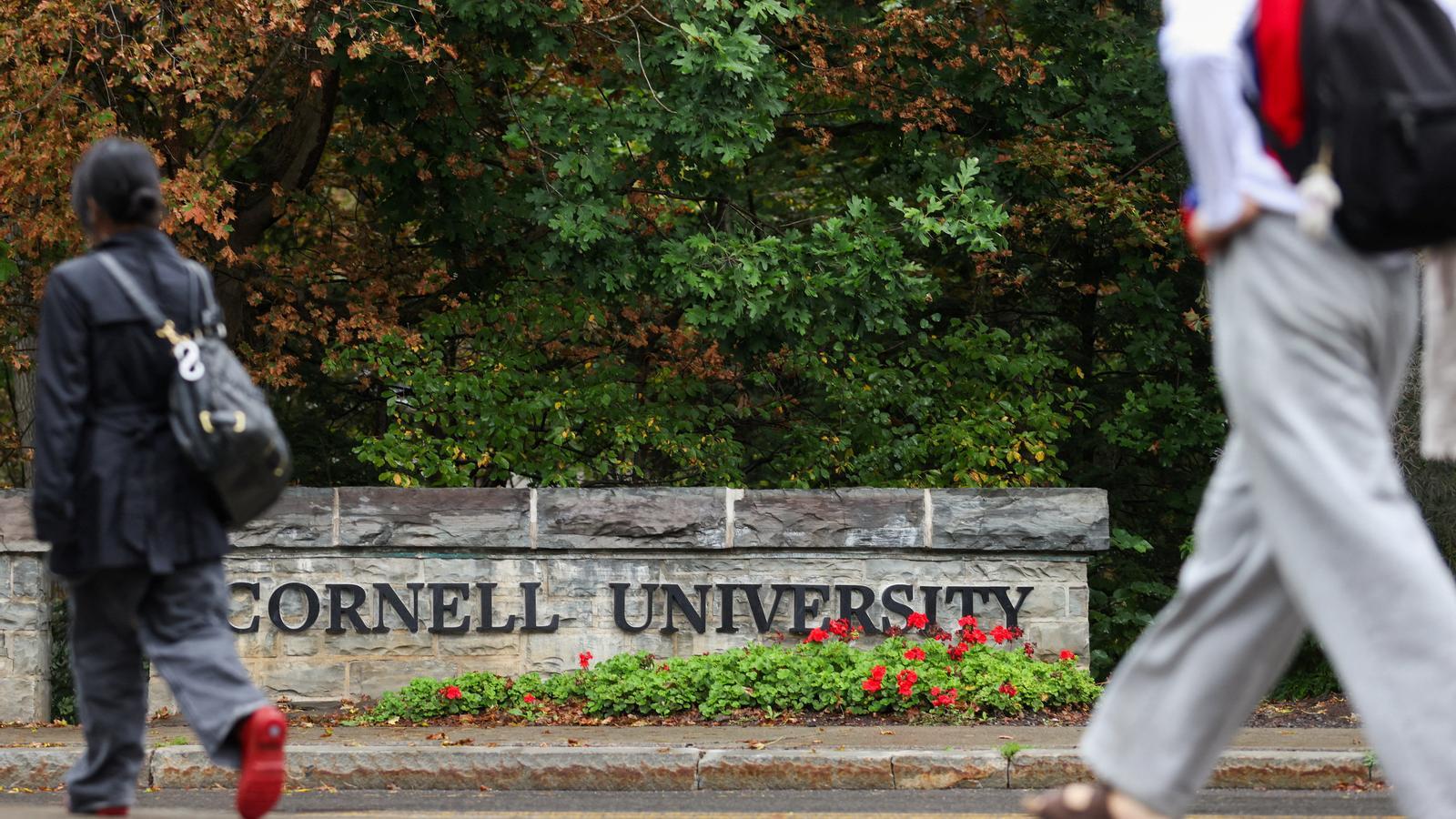
BarcelonaReports of sexual assault on university campuses are once again at the center of the debate in the United States following the case at Cornell University, in the state of New York. A student is accusing seven members of the Chi Phi fraternity of having drugged and raped her for hours at a university party in October 2024. The accuser, who uses the pseudonym Jane Doe to protect her identity, was 20 years old when the events took place. According to her account, two students pressured her to inhale a substance she believes was ketamine and, due to the intoxication, she was not in a condition to consent to sexual relations. The accusations have not been proven in court and the seven men deny having committed any inappropriate conduct.
Almost two years after the events, the case has returned to the spotlight following the reopening of the investigation by the Tompkins County District Attorney's Office, after the young woman filed a civil lawsuit against the university, the fraternity, and the seven students. According to the lawsuit and documents obtained by the New York Times, that night a message was circulated via Snapchat, in a group of about 50 fraternity members, saying that there was a woman available for sexual relations. Subsequently, several men allegedly went to the room where the young woman was. The accuser claims that the assaults lasted for hours and that she felt unable to stop them.

The police omitted the accusation of rape in the report to the Public Prosecutor's Office
The young woman explained the events to campus police a few weeks later. In an interview of more than a hundred pages, she stated that she had "100% confidence" that she had been raped and described the feeling of not being able to escape. However, the six-page report that the police sent to the Prosecutor's Office did not explicitly include this accusation. The Prosecutor's Office did not file criminal charges in 2024 and later argued that the initial sworn statement did not claim that the young woman had been drugged against her will or that she had suffered a gang rape. Jane Doe's lawyer maintains that the initial account and the subsequent lawsuit are not contradictory.
The documentation also shows how the young woman went about interpreting what had happened. In the days following the party, she had conversations with some of the students involved and, initially, did not describe the experience as a rape. Later on, after talking about it with other people and reading comments about the events on a university forum, she began to question the consent and ended up identifying the experience as a sexual assault. The experts consulted by the New York Times point out that people who have suffered an assault may take time to recognize it as such or explain it in a fragmented way, and that the delay in reporting does not, by itself, allow for determining what happened.
Cornell University opened an internal disciplinary investigation and sanctioned some of the students. The young woman, who left the institution, accuses the university and the student organizations of negligence and of not having protected her. In September 2026, she filed a civil lawsuit against Cornell, Chi Phi, seven of its members, and a sorority. Following the lawsuit and the new information regarding the handling of the complaint, the Prosecutor's Office has reopened the investigation to examine whether there is evidence that would allow the criminal proceedings to move forward. At the moment, none of the seven men have been criminally charged.

The difficulties in reporting assaults on campuses
The case has once again focused attention on sexual violence in North American universities and the difficulties victims face in reporting it. A 2019 survey by the Association of American Universities, involving more than 181,000 students from 33 universities, concluded that 13% had experienced some form of non-consensual sexual contact through physical force or inability to consent since they began their studies. The majority of students who reported having lived through these experiences had not communicated them to either university authorities or the police. The data include various forms of non-consensual sexual contact.
A case, that of the prestigious Cornell University, which has also revived the debate about the response mechanisms of these institutions, internal investigations, and the relationship with judicial authorities. Campus disciplinary procedures are different from criminal processes, and a university can impose sanctions without there being a criminal charge. In New York, furthermore, legislators and activists are calling for reform of legislation regarding sexual assault in situations of intoxication, because they consider that the current regulations make it difficult to prosecute some cases in which the victim was not in a condition to consent.
