Argentina lowers glacier protection and opens the way for mining in protected areas of the Andes
Milei reduces restrictions in mining while the street responds demanding the protection of the environment and sovereignty over natural resources

-
CAT -
CAST
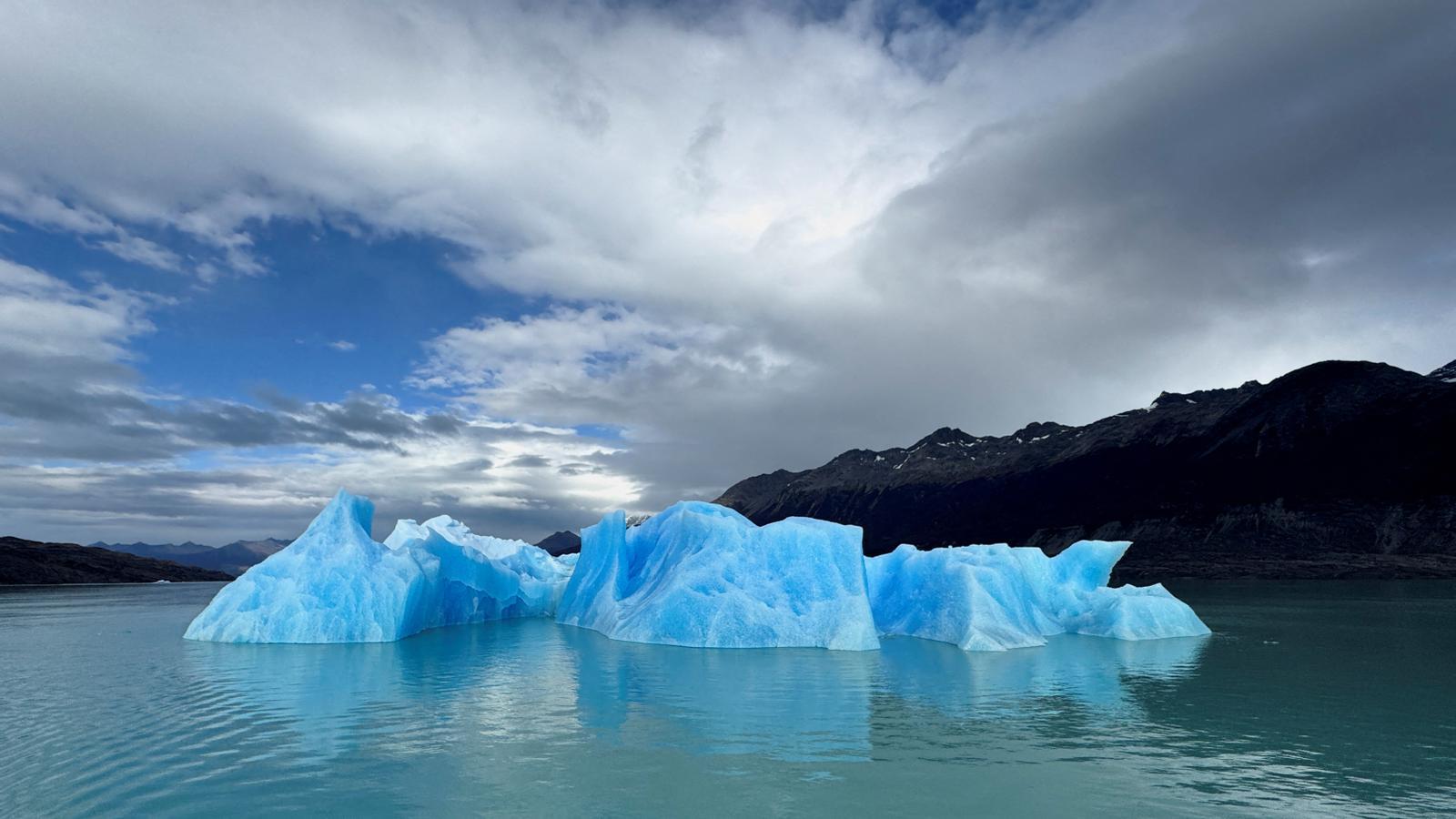
“Extractivism destroys everything and leaves nothing”, says Mercedes, forty years old, with a sign in her hands which reads “Water for life, not for mining”, as people arrive at the demonstration, in Plaza del Congreso in Buenos Aires, against the modification of the glacier law, promoted by Javier Milei's government. The deputies were discussing the modification of a 2010 text that prevented mining and hydrocarbon activity to protect the natural dynamics of ice and water quality in areas with glaciers and periglacial areas – frozen ground –. After twelve hours of debate, the law reform was approved with 137 votes in favor, 111 against, and three abstentions. “This only serves mining companies: it serves no Argentinian”, states Mercedes.Argentina has nearly 17,000 bodies of ice, covering almost 8,500 square kilometers (more than forty times the city of Buenos Aires). This was calculated by the Argentine Institute of Nivology, Glaciology and Environmental Sciences in the so-called National Inventory of Glaciers. "It is only 0.3% of Argentine territory," environmental lawyer Enrique Viale tells ARA. "It is a small surface area – he acknowledges – but mining is very voracious." Glaciers supply the hydrographic basins of a large part of the territory and constitute an important reserve of fresh water, suitable for human consumption. In this sense, both glaciers and periglacial areas are key to the balance of ecosystems and the conservation of biodiversity.The 2010 law offered broad protection to all glaciers and the periglacial environment, cataloged as "strategic reserves" of water; but the modification aims to conserve only ice bodies that fulfill an "effective hydrological function". If previously any glacier was protected by default, with exceptions, from now on it will be necessary to prove that the glacier deserves protection. "I'm here for the water," says Camila, 26, in Congress Square, as she pushes her bicycle. Camila, moreover, acknowledged to ARA that she feels "anxiety" about what might happen with "the gamble," which is being played with our most essential resource. “I would advise many of these people who make ideological use of glaciers to inform themselves well about what the modification of the law entails”, Roberto Cacciola, president of the Argentine Chamber of Mining Companies (CAEM), tells ARA. This businessman, who is dedicated to the extraction of gold and silver in the province of Santa Cruz, argues that, before intervening in territories, mining companies must pass several environmental impact studies and, if they do not, “the project is not carried out, period”. “Mining is a key economic activity –he adds–, not going any further, your mobile phone is full of metals and minerals”.Blank check to multinationals
One of the first measures Javier Milei approved upon becoming president was the regime of incentives for large investments (RIGI), with which it is intended to make Argentina an attractive country for large capitals, particularly in the mining sector, with tax benefits and deregulation. The majority of mining companies operating in the country are foreign, mainly from Canada, Australia, the United States, and China. “We are totally aligned with the national government,” says Cacciola, who argues that mining not only attracts investments but also brings jobs and prosperity to the territories.The other key point of the law modification is to give more decision-making power to the provinces: if until now the national government established environmental minimums for the whole country, now each provincial government will be able to define which areas are to be protected and in which mining activity is enabled. This, according to the government, reinforces the federal character of Argentina, but some experts, like Enrique Viale, warn that conflicts between jurisdictions may arise over access to water: “The mining lobby, which is one of the most powerful in the world, is responsible for silencing the consequences of its activity, because if people really knew them, there would be significant rejection”.In Congress Square, an eighty-year-old man carries a sign that says "Think like a glacier". "Glaciers, like mountains, are not dead beings, they are not a decoration, but they provide us with water and life". His name is Nilo Cayuqueos and he is of Mapuche origin. The Mapuche are one of the original communities historically in open conflict with public administration over land tenure and resource exploitation. "Mother Earth is wise, but Western culture has twisted everything for the benefit of money –he says–. It is fundamental that people become aware of what is at stake".
