Álvaro García Linera: "The far-right gives perverse answers, while the left remains in good manners"
Former Vice President of Bolivia and Marxist theorist

-
CAT -
CAST
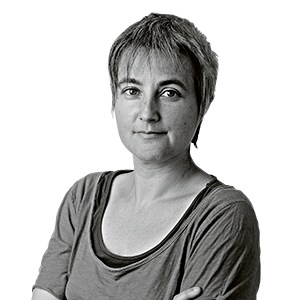
BarcelonaÁlvaro García Linera (Cochabamba, 1962) was vice president of Bolivia between 2006 and 2019, during Evo Morales' governments, and is one of the most influential intellectual figures of the Latin American left. A sociologist, former guerrilla fighter, and Marxist theorist, he combines political practice with theory on capitalism and social change. Author of Cuidar el alma popular (Bellaterra Edicions) has visited Barcelona at the invitation of Fira Literal.
We are living in a moment of great uncertainty, of unpredictability. Suddenly, the horizon of what was possible has been brutally expanded. What is happening to us?
— It is a moment of suspended time. And of systemic chaos. Societies, cyclically, in periods of 40 to 50 years, go through these moments of uncertainty. And I call it liminal time. It has to do with the exhaustion of cycles of economic organization and political legitimation, which allow for stability, growth, redistribution, and a certain predictability in how people imagine their future. But this is exhausted due to internal limits and a period of void, general stupor, disaffection, frustration opens up, which signifies the exhaustion of the way we previously organized the economy and the set of ideas that allowed us to adhere, rulers with the ruled, in a given time. And I believe this will last for at least another decade. There is something that is in decline and something that has not yet appeared. And that is why it causes this despair. We know what is no longer good, but we have no idea what could be good. What is interesting is that in these periods, when something collapses, we are in the twilight of the old "gods" that allowed for collective adhesions: globalization, technology. The old political system begins to limp, to weaken. New leaders emerge, there are reforms, but then they are not strong enough, people get angry, they polarize, the logic of hatred, the logic of resentment, also the logic of solidarity. It is as if society is liquefying and we do not yet know how it will recrystallize.
And where does this lead us?
— Everything is open and at the same time everything is falling. It will depend on three elements: on the capacity of societies to recover sustained economic growth, on what technological support allows for the recovery of productivity and economic expansion, and on the system of ideas that allows all this to be legitimized. There could be a reconstitution of capitalism, on a new technological basis —it is assumed it will be AI, a new way of organizing economic geographies and accumulation processes, of business gain—, or free electrons, revolutionary processes, or very reactionary ones, could occur. The possibility of a revolution is always open: revolutions never happen in times of stability, they happen in these moments, even though they are very improbable, one must work towards them. But the most probable thing is a reconstitution of capitalism.
On what basis?
— There are three elements that allow us to begin to imagine the future amidst this systemic chaos. The first is the geofragmentation of economies. Your mobile phone has a chip manufactured in Taiwan, the integrated circuits in China, it was designed in Silicon Valley, the plastic comes from Singapore and it was assembled in Mexico. From this globalizing logic of production, we will move to a regionalized logic. The United States, on the one hand, trying to articulate industrial systems and raw material vassalage towards the south. China, with the extension of the Silk Road, to articulate markets, raw materials, linking Africa and part of Latin America. And Europe is trying to articulate its industry and its defense. Russia is focusing on its southern markets. The second element is the protagonism of the State in the co-management of the market, whether in the style of the United States (with public resources at the service of private investment) or the Chinese (which fixes a space for foreign investment, another for Chinese private investment, and another for state investment). The third factor is the selective promotion of certain strategic industries, industrialization policies. It remains to be seen on what technological basis and under what ideological legitimation, but I believe these three trends are already unchangeable.
But this is not sustainable.
— The political and economic planners we have do not care about the next generation.
Why is the far-right growing?
— When there is regularity, stability, the world does not change. Because it works. People are calm. There is an imaginary of what is to come. But in these times when everything is in question, when everything overwhelms us, when everything is a problem, when it seems that we don't find north or anything to hold onto, it is when the possibilities of new courses, new orientations open up. That is why the extreme right is growing, because it is a response of security to uncertainty, in the face of fear, it is a response of violence, of hatred and resentment to what we do not understand. It is a perverted response, but it is a response. And the left cannot speak the language of stability either, they cannot speak as they spoke when everything was working well. They also have to be bold, have the capacity to invent worlds, but that they are credible. The left has limitations in imagining a future, and in translating that imagined future into something rooted in people's experience. It has to give answers to people who don't know how they will pay the rent. The right, in its own way, does it: it tells them that their problem is the fault of Moroccans or South Americans. It is a perverted response, but it is a response. And we, the left, have no answer. They are bolder in their perversion, in their degeneration, in the corruption of the future, they visualize it. And the left remains in good manners.
But this means taking measures to end the privileges of a minority.
— The right blames the weakest, who are many, unprotected, weak, disorganized, precarious, and it is on their bodies that the adjustment will be made. And the left finds itself facing a dilemma: to touch no one and, therefore, to do little, to appear timid, with good manners, but powerless in the face of the gravity of the problems. And in these times of uncertainty, if you don't form an adversary on whom to unload the explanation of why we are doing badly, and you want to please everyone, in the end your language becomes too lukewarm in a time when people can't stand lukewarmness. We, when we led the government of Bolivia, called it the foreign oligarchy and the agro-industrial, they represented the opposition to the people. And then we created a unity and an identity around this sector that groups together against them, who are responsible for the economic crisis. You come to government and then you seek to incorporate them, but already with new conditions, no longer with their capacity to concentrate wealth, but more temperate.
The experience of Evo Morales' government ended badly, after twenty years. And now there are new peasant mobilizations in Bolivia.
— We lasted twenty years and lifted 30% of the people out of poverty, with annual growth rates of 5%. There were problems, we lacked more industrial policy and the fundamental error was political leadership. We didn't know how to make an effective generational transition, because: we are a generation that entrenched itself thinking that only we could lead, we believed we were irreplaceable. The government of Luis Arce was a very bad management on our part: economic, political, and moral. It was a decadent closure. And then the government of Rodrigo Paz entered with much expectation, almost like a blank check, as happened with Milei in Argentina. And what has happened is that this blank check has shortened in time very quickly, only six months. The government has imposed an economic adjustment on the peasantry, has betrayed the sectors that voted for it, and has cut rights. And this has generated a peasant uprising.
How does Chavismo fare after Maduro's capture and Castroism with the United States blockade of Cuba?
— Anywhere in the world, a left-wing project will always be harassed: isolation, blockade... This should not be the case, but it is what happens. As if someone dedicated themselves to throwing stones at a bottle, with all malice. And if you know this will happen, you must build a bottle that is resistant.
