Croquettes, lentils and other school canteen dramas
The changes in the canteen menus have added a little more drama, if that was possible, to school meals, which have always been in the spotlight

-
CAT -
CAST
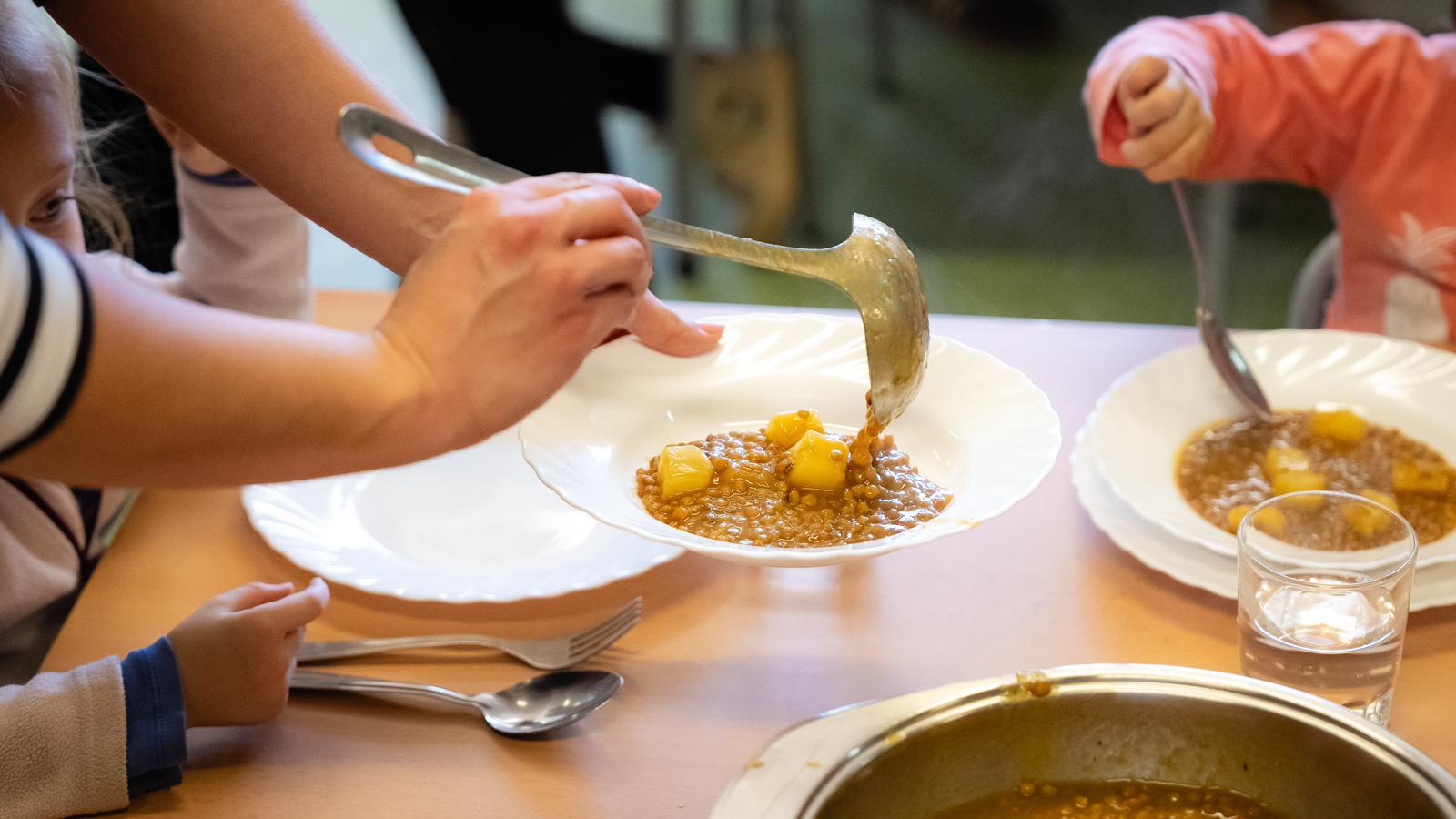
BarcelonaIn school canteens, we have run out of croquettes. We no longer have banana yogurts, and the macaroni is wholemeal. The day there is a vegetable starter and lentils as a main course, the students (and indeed all of us) suffer a brutal shock because culturally for us they are two starters and we miss a main course. The changes in the canteen menus have added a bit more drama, if that were possible, to school food, which has always been in the spotlight. I have attended courses on communication in schools, and all attendees agree: one of the most common complaints is about food. Whether we are from a public or private school, from Girona or Penedès, the canteen issue is always a struggle, and it's very difficult to get it right. Once a week, which almost always tends to coincide with the fateful day of legumes, I have to serve meals at my school. And after many hours of serving meals under my belt, I have come to the conclusion that, even if Ferran Adrià himself came to spherify olives, there would be complaints.
Observing the dining hall dynamics is a first-class sociological exercise because the class's attitudes change completely, different groups form, and you see students' behavior beyond the academic part. How they eat, how dirty they leave it, how they treat the supervisors and the kitchen staff, and even what relationship they have with food. This half hour a week allows me to discover many things about my 1st year ESO class and also food camouflage techniques that I didn't know about because I used to go home for lunch when I was little. The methods for making food disappear would be envied by Houdini himself. Crumpled napkins, crushed vegetables on the side of the plate, and fish quartered into countless pieces to make me believe it has been moderately tasted. Plate changes are a constant, it's like the shell game on La Rambla: when you're not paying attention, the omelet has already flown to another plate. The roles in the dining room are well-defined, and everyone knows who to foist off what they don't want onto. Fussy eaters
I think it is extremely important that all students, especially adolescents, have a good relationship with food and that mealtime is relaxed. Sometimes I notice comments like "will you eat all of this?" or "will you have seconds today too?" which worry me much more than the scattering of broccoli worthy of Pollock that splashes all over the plate. I believe that the importance lies not in finishing everything but in eating a varied diet and enjoying the conversation, the laughter, the after-dinner chats, or singing "Happy Birthday" by banging your cutlery loudly on the table. All of this builds community, builds school, and the dining room is another part of the entire educational machinery.
I also have to tell you that in these years I have noticed that students are increasingly picky eaters and often discover dishes for the first time. We have smoothed the path so much for them with the children's menu of macaroni and breaded meat that I have found myself with little diners who have never eaten cod or who ask me hundreds of times what vichyssoise is. You can imagine that afterwards I have to explain what a leek is and no, it's not what they think, I tell them it's like an onion. It is urgent to include a subject on gastronomic culture, not only to learn a few basic recipes, which would be very good, but also to have minimum knowledge of the product and the season and to know that kilometer zero does not mean going to buy at the supermarket next to home. As you can see, the dining room is more than a service, it is an essential part of the craft of educating and must be taken great care of to guarantee the well-being of all the students who have lunch at school every day.
