Europe needs to wake up: "We are facing clear military threats and we are not prepared"
The ARA Enfoquem conference confirms the weaknesses of the EU in a world dominated by great superpowers
-
CAT -
CAST
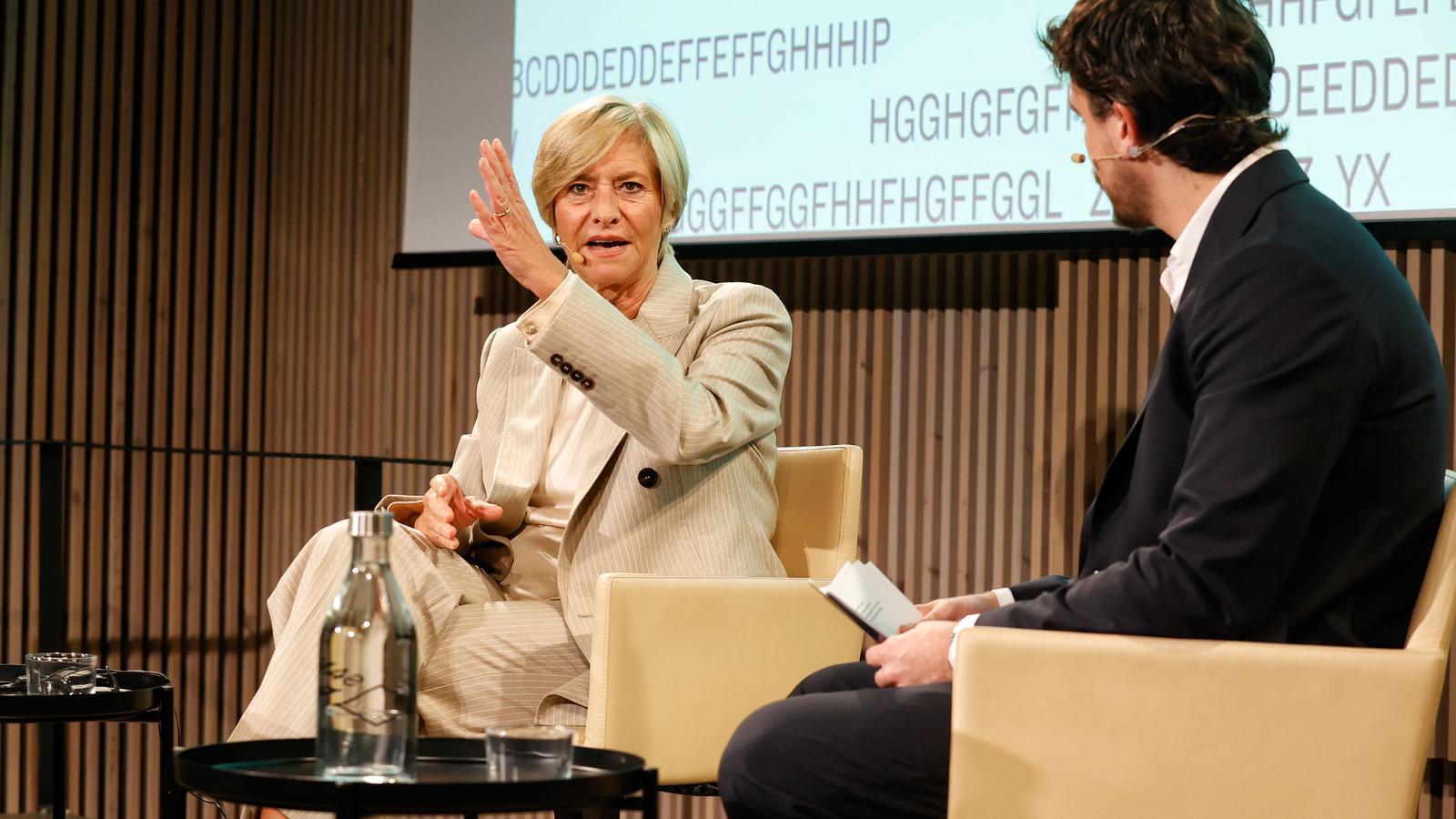
Barcelona"There are many international actors who are interested in weakening Europe, which is the last bastion of liberal democracy". This warning from the former Italian Minister of Defence between 2014 and 2017, Roberta Pinotti, hovered over the room at the Sant Pau Modernista Precinct where 200 people invited by ARA attended the Enfoquem conference to analyse the state of European security. The diagnosis that Pinotti drew is very clear: Europe is a kind of garden in a wild world that has suddenly been left without its guardian and now has to run to protect itself. It must wake up. The most explicit threat is the Russian one, but there are many more.

Pinotti, who spoke with the head of the International section of ARA, Francesc Millan, placed the beginning of the paradigm shift in the year 2008, when at the Munich Security Conference Vladimir Putin threatened NATO. Regrettably, no one paid him any mind. Not even the annexation of Crimea in 2014 was taken seriously, nor the start of the war in the Donbas. Nor when in 2022 the intelligence services of the United States and Great Britain warned European chancelleries of the concentration of Russian troops on the border with Ukraine and of his plans for conquest. The former minister recalled that Europeans could not quite believe it. "We thought it was a simple show of force. We said, 'It doesn't suit him, Russia has a fragile economy, why would he embark on a war?' We did not imagine that Putin wanted to reactivate the telephone line with Washington and sit back at the table of the great powers. Putin does not care about the suffering of the population, and that is something we, the Europeans, do not understand."
At that moment it seemed that Europe was waking up from its dream, but there has been no move from words to deeds. For many reasons. Pinotti pointed out that the EU is designed for other objectives that are not defense, but said that ways should be sought to move forward with concrete alliances of countries to bypass the right of veto. Investing in defense, yes, but seeking a balance with social spending, as Pedro Sánchez defends. "I would have done the same as him with NATO", he confessed regarding the commitment to allocate 5% of the GDP to it.
European weaknesses
In another panel, the doctor in international security Guillem Colom Piella took it upon himself to make it clear to the audience that Europe is not a strategic actor right now, and that it will not be one either. This bath of realism and humility preceded a very stark diagnosis. "For many years, little and poor investment has been made in defense. The result is that we now have clear military threats, the main one being Russia, and we are not prepared," he concluded. From another point of view, the migration expert and former MEP Anna Terrón wanted to downplay it. "We are not so far from where we were. We are not on the UN Security Council now, either. Our main weapon was soft power. And now it turns out that the world has changed," she said. Terrón agreed with Pinotti that for both Putin and Donald Trump, Europe is an enemy to be defeated because it represents a model contrary to their autocratic values.
Colom warned that increasing conventional military capabilities is not enough, as threats are now much more varied, and pointed to this summer's episode at the Ceuta fence. "The Ceuta fence would be Donald Trump's dream to have in Mexico. It is not true that Europe has a lax border policy," Terrón wanted to point out. Pinotti had already warned before that the goal of hybrid warfare is to create instability, whether by attacking communications or interfering in electoral processes.
The role of Catalonia
And what role should Catalonia play in all of this? Well, that was the question analyzed in the first dialogue by the director of ARA, Esther Vera, and the Minister of the Presidency, Albert Dalmau. For the minister, Catalonia has industrial and innovation potentials that make it an ideal territory for developing projects related to the defense and technology sector. "This is a sector that is currently concentrated in Madrid, the Basque Country, Asturias, and Andalusia, and we want to play our part based on our economic weight, and we account for 19% of the GDP," Dalmau wanted to emphasize.

Right now, one of the main European technological projects that Catalonia aspires to host is an AI gigafactory in Móra d'Ebre, an investment of more than 4 billion euros. But Dalmau complained about the slowness of European processes, which means it has taken them a year just to submit the application. "We must increase defense capacity, but we cannot do so at the expense of social cohesion," warned the minister, since this makes societies more resilient. This is perhaps the European differential factor: "Seeking a balance between defense and social needs," in the words of Roberta Pinotti. Because if Europe renounces being Europe, what will have been the point of it all?
