The most unique instrument of Catalan culture endures at the foot of Montseny
The 42nd edition of the Arbúcies Flabiol Festival will bring together on October 24 and 25 flabiol players, musicians and lovers of popular culture with a program of concerts, parades and workshops

-
CAT -
CAST
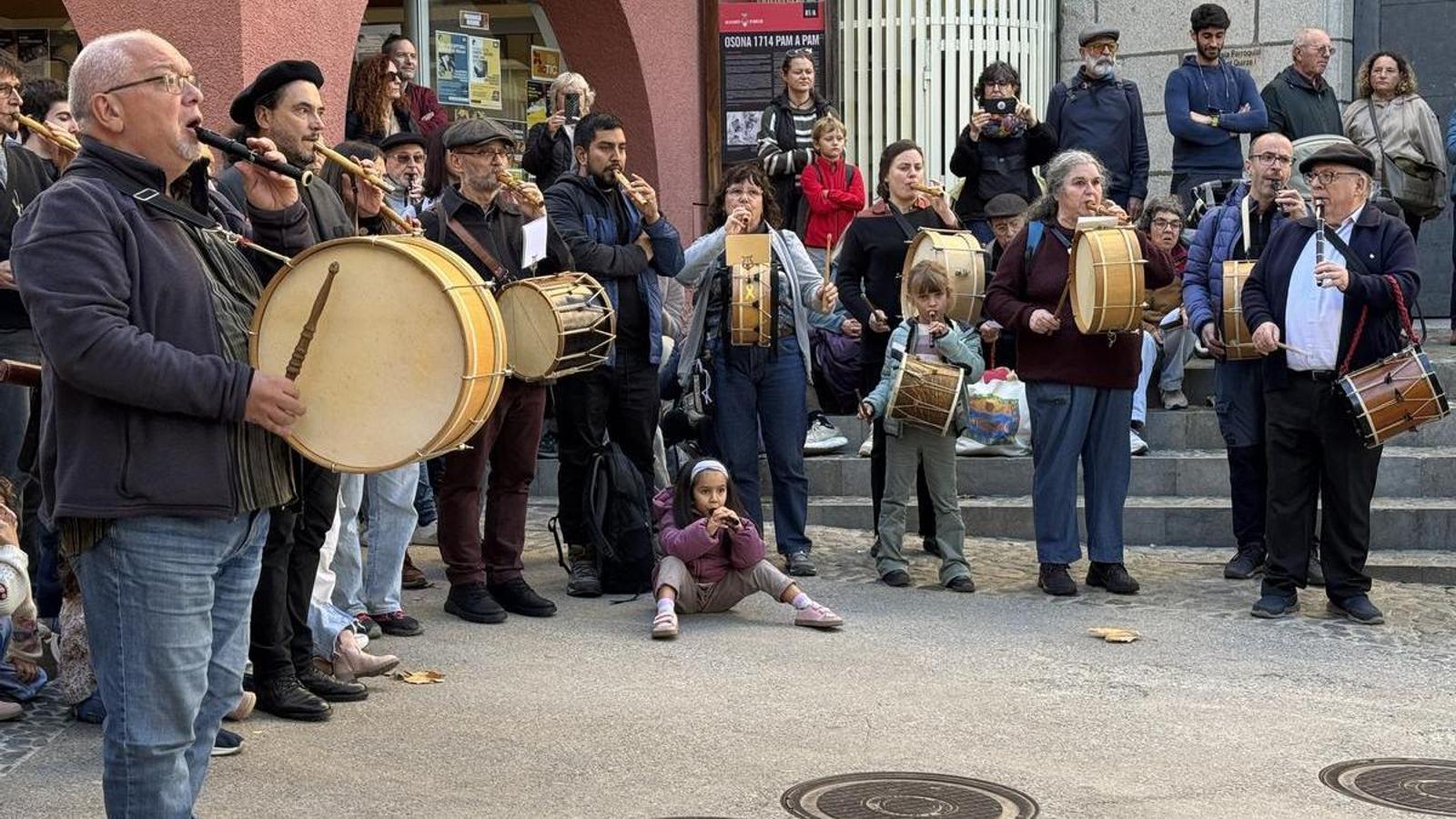
GironaThe flabiol is a unique instrument in the world. A short, narrow, and high-pitched flute, heir to medieval wind instruments, with five holes for tuning the notes. Three-holed flutes and piccolos can be found throughout the Peninsula, in Zamora, Aragon, or the Basque Country, but five-holed ones, like the flabiol, only in Catalonia and the Balearic Islands. And one of the Catalan municipalities where this instrument is most deeply rooted is Arbúcies, at the foot of the Montseny. Since 1985, the Flabiol Festival has been held there, which this weekend of October 24th and 25th reaches its 42nd edition. The gathering brings together flabiol players from all over the Catalan Countries, roots musicians, and lovers of popular culture with a program that includes concerts, parades, colloquiums, and workshops.
The initiative, organized by the Arbúcies town council and the Flabiol Festival Committee, is very well received and shows signs of the growing interest that popular culture awakens. Also among the youngest, who increasingly decide to study this instrument in music schools across the country, from Olot to Tarragona, and who are encouraged to incorporate it into festivals and music groups. "It is an intangible heritage that, if we maintain and care for it, has great value. The flabiol is a wealth that only we possess and it gives singularity to our way of playing, dancing, and celebrating," argues Jordi Puig, member of the Flabiol Festival Committee.
Precisely to make this world known and consolidate the generational handover, throughout this week the Arbúcies flabiol player Lluís Marmí is visiting the municipality's educational centers, and on Saturday, young flabiol players between 12 and 25 years old will participate in a training day of coexistence and learning.
Flabiol players are either cobla musicians, who accompany the sardanes with the tambourine, or traditional music performers, who often play with a larger drum and make giants or stick dancers dance. The instrument is practically the same, with only some difference in keys, but the musical practice is quite different. "The cobla player must read scores, must be very good at sight-reading, and master classical interpretation. The traditional one, on the other hand, must know all the bestiary, accompany stick dances, make giants dance, know how to move well in a parade, and animate these spaces," points out Puig.
Arbúcies, Catalan capital of the flabiol
The location of the Flabiol Festival in Arbúcies is not a circumstantial fact. At the end of the 19th century and the beginning of the 20th, throughout the Montseny area, from Espinelves to Brunyola, but especially in this small town, the flabiol remained the main dance instrument that enlivened parties and structured social gatherings, unlike the Pyrenees, where accordions and violins gained prominence. During all this time, to supply the numerous performers who played at local country festivals, Arbúcies became a great center for the production of flabiols with renowned luthiers. And the annual meeting is an heir to this legacy: "With the recovery of traditional music after Francoism, the Flabiol Festival was born as a meeting point between the oldest flabiol players and the young people who wanted to preserve this tradition," recalls Puig.
This year's program will begin on Saturday, October 24th, with a performance of 'sardanes obligades' for flabiol by the Cobla Lluïsos de Taradell, followed by the XXVII Flabiol Colloquiums, the popular chestnut festival, and the midnight serenade. At night, the Teatre de Cal Xic will also host the concert of the guest musicians of this edition, Dídac Martorell and Àlex Ibáñez, from the Xeremiers des Prat, coming from the Balearic Islands. On Sunday, the Luthier and Flabiol Products Fair will give way to the gathering of 'gegants' (giants), the parade, and the dance exhibition at the Plaça de la Vila. The festival will close in the afternoon with the Grand Flabiol Concert, which will pay tribute to Lluís Parareda, a flabiol player faithful to the gathering since the early years, with the joint performance of the 'ball dels garrofins' of Moià.

