Meritxell Falgueras: "A wine teacher tried to sexually assault me, and the industry protected him so it wouldn't get out"
Sommelier

-
CAT -
CAST
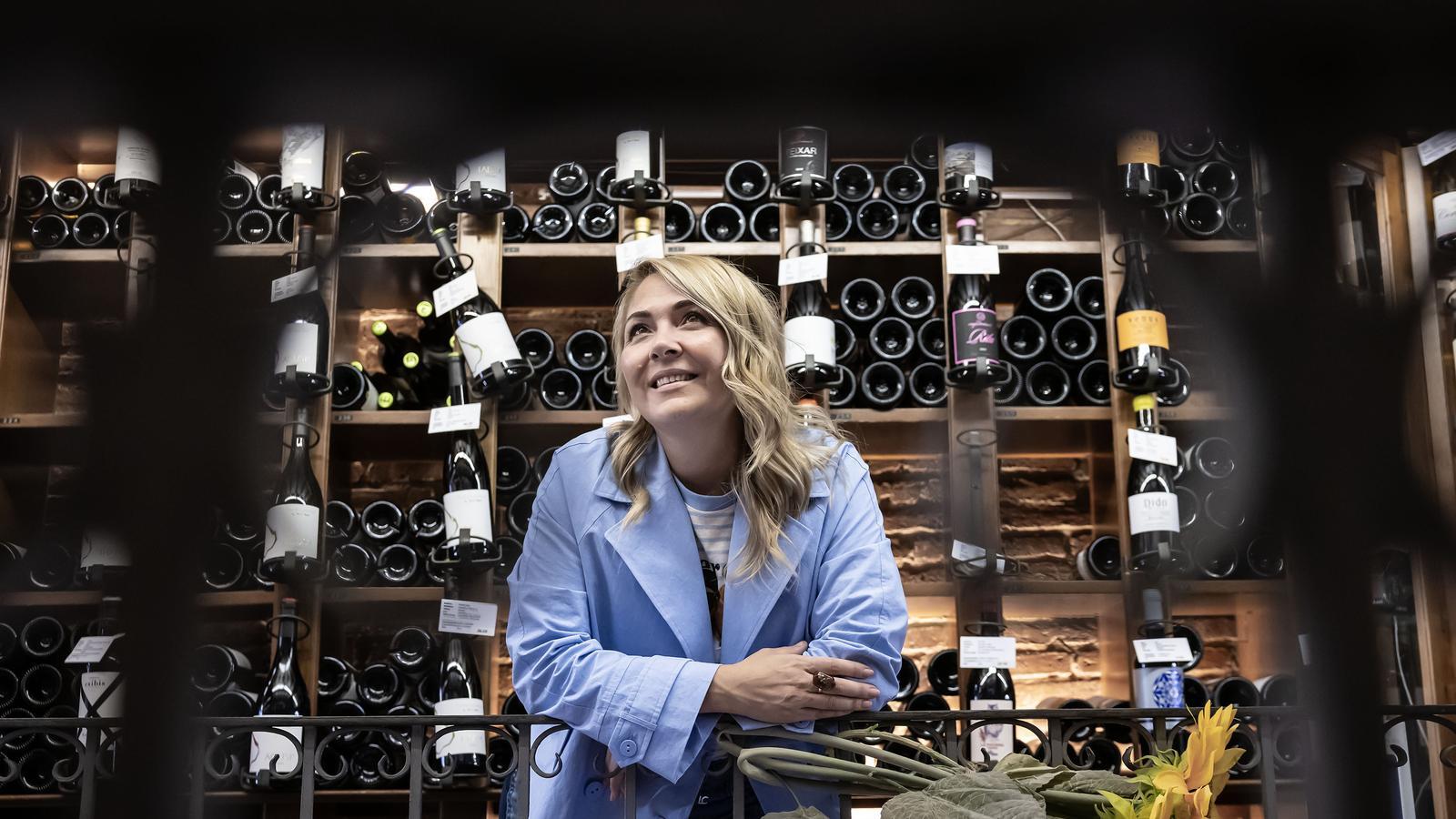
BarcelonaWe interviewed the sommelier and communicator Meritxell Falgueras (Barcelona, 1981) in her native neighborhood, which she has called the Soho of Barcelona in her novels: the Sants neighborhood. We meet at Bodega Bartolí and afterwards we will go to the family shop, Celler de Gelida, where we will meet her brother Ferran and her father, Toni Falgueras. Meritxell has just published the book Women of Wine (Planeta Gastro), in which she has included studies, interviews, and surveys to which she has dedicated four years of her life.

Four years to research a thesis that you already suspected.
— Yes, but I thought it was my idea, a feeling I had had based on my life's biography. I thought I was the only one who had suffered uncomfortable treatment in the wine world. I am the daughter of Toni Falgueras, the ex-wife of a wine producer, and I had always encountered unpleasant situations. I thought it was just me, and one day I wanted to check if other women who work in this field had also experienced it. A piece of data I have: 40% of women who work in wine do so through inheritance.
Daughters of wine makers.
— Yes, and many in rural areas. It is very difficult for them to have said anything because they might report their own family. That's why I chose to conduct anonymous surveys. I did four hundred.
What awkward situations have you experienced?
— A wine professor, from my sommelier studies, tried to sexually assault me, and the industry protected him so it wouldn't come out. I explain it in the book. It's easy to know who he is, because he is very recognized in the industry. He is a man who always used to say that wines smelled like pussy, and when he said it everyone laughed at his jokes. Now he doesn't say it as much. He continues to be well-placed in important positions. I have realized that the industry protects him, that it hides these behaviors. I have also realized that people haven't read my book because I have written it very clearly.
In surveys, women, sommeliers, oenologists, viticulturists, tell you that they have also experienced similar situations.
— There are also those who don't. Álvaro Palacios' daughter, Lola Palacios, told me she had never experienced any uncomfortable situations. Testimonies like hers make me very happy. Marta Casas, from Parés Baltà, also explained it to me. Then there are also women who tell me they haven't had any problems, but then it turns out they are working half-time at the family winery or that they handle communications when they are highly trained. They say they have preferred to dedicate themselves to the family. They have made sacrifices when they are prepared to hold management positions. I put it another way: I have realized that we women have normalized work situations that we should not have accepted. My own mother, from Celler de Gelida, has been nominated for the Isabel Mijares awards, and she has never won. Why not? Because Celler de Gelida is my father. I also think that if I, who always explain everything, who go around with a microphone in my hand, have experienced these situations... I think about the women who live in rural areas, who perhaps do not have the means to raise their voice.
You are the mother of a daughter and a son.
— I made the book for my daughter. Also because I've gotten older, and with age I've thought about how I've been able to endure everything I've endured. I've been punished because I'm blonde, nice, and because I'm a communicator. I've always communicated the world of wine differently than it had been traditionally done. I used to make pairings for going out in jeans or for when you get divorced. Then the sector told me I was doing silly things. Now I see young people communicating wine by advocating for the drink. I've never done that, because I've always linked wine with culture. Since it's culture, I've linked wine with many other sectors, like fashion. And when I did fashion, they told me I was superficial. On the other hand, when they link wine and football, they say it's a very profound pairing.
I follow you, and you are very active. You go to many events in Barcelona.
— I try to go to all of them, because I am part of the wine culture. Wine is a lifestyle. It's my job, and I think I can contribute a lot. Now, as a communicator, but before I was a salesperson, a shop assistant. What I like most about it all is communication. Think that I am a blend of the humanities degree and the master's in wine communication. I've been working for twenty-five years spreading the word about wine.
Can I ask you if you can make a living?
— I earn my living as a consultant for El Fuerte luxury hotels. Also as a teacher, and with social media, promoting brands. I worked at Nespresso for fifteen years, and learned a lot. At Damm, I presented the Inedit beer. If one day I can't make a living with all this, I think I'll be able to go back to the family store, Celler de Gelida.
I return to the book again. There are many data, many graphs. You base theories on data.
— Because I didn't want to write a book with imposter syndrome. So, with the studies I've done, I've learned that only 15% of CEOs of wineries worldwide are women, while 20% of winemakers are women.
Is it different compared to other sectors?
— No. The Más Mujeres institute maintains that it is no more serious than other sectors, but what happens in the wine world is that many events take place at night, at parties, dinners, fairs, and wine has alcohol. Spitting out wine has now been normalized, but it wasn't done before.
You were a pioneer, Meritxell, in talking about alcoholism.
— The industry turned on me because they told me I shouldn't talk about it. Sometimes I've had the feeling that I was ahead on different topics. Look how many alcohol-free wines there are on the market now. They are talked about a lot, now! The industry knows that nowadays one should drink well and little. In the hotels I advise, alcohol-free cocktails are a success. And both young people and older people order them.
The wine world is scared with sales figures.
— It always is. They are farmers, who know that their work is tied to bad weather, to trends, and that makes them pessimistic from the start. There are other professional sectors that are more about marketing, they are the ones who say everything is going well for them, but producers, by definition, are always the opposite.
Can I ask you if at home you are one of those who drink wine? Or do you drink to socialize?
— I don't drink at home. Besides, since I turned 40, I've learned that I have to have a glass of wine and a glass of water, because otherwise I can't handle it. When I communicate, I can't stand medicalizing wine. I'm not a doctor and, therefore, I can't communicate that it's good for the heart. But as a communicator, I can say that a wine is good for a first date, for declaring yourself, for saying things that need to be said while looking someone in the eyes. In other words, I rely on emotions and feelings. I know they tell me I'm frivolous, because I've wanted to simplify wine, but that's not the case. I am very well-trained, and I think like the philosopher Nietzsche: superficiality and complexity go hand in hand. I also have to say that I don't drink at home because my partner is an ex-alcoholic. And I already drink for work, so at home I seek balance.
To finish, what do you have left to do?
— I would like to move to the big screen. I have projects in the works that I can't talk about, but I would like to talk about wine on the big screen.
