'Weddings' graduates eager to have a good time
Marta Pazos signs her first Mozart in a musically very happy and theatrically effective premiere night
-
CAT -
CAST
- Music: Wolfgang A. Mozart. Libretto: Lorenzo Da PonteStage direction: Marta Pazos. Musical direction: Giovanni Antonini.Performers: Luca Pisaroni, Sara Blanch, Andrè Schuen, Adriana González, Julia Lezhneva, Mireia Pintó, Roberto Scandiuzzi, Roger Padullés, Moisés Marín, Lucía García, José Luis Navarro, Natàlia Perelló, the Symphony Orchestra of the Gran Teatre del Liceu and the Choir of the Gran Teatre del Liceu (directed by David-Huy Nguyen Phung).
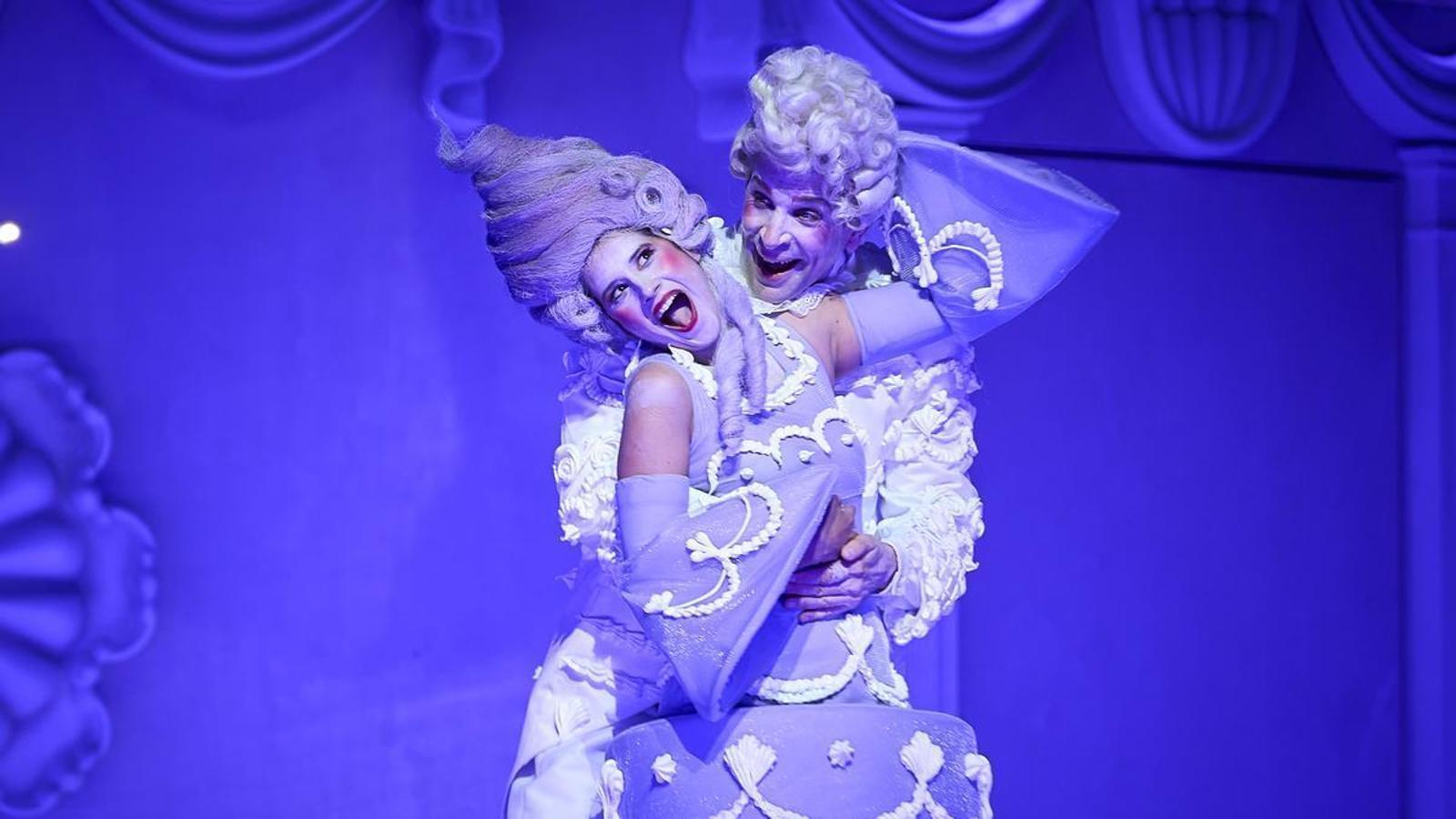
With Le nozze di Figaro (1786), the poet Lorenzo Da Ponte began his collaboration with Wolfgang Amadeus Mozart, which would continue with two more operas: Don Giovanni (1787) and Così fan tutte (1790). And it must be said that the first of the three operas is the most perfect in terms of theatrical machinery. It is logical, therefore, that Marta Pazos has enthusiastically embraced the proposal made by the Liceu. Three weeks before her debut at the Grec Theatre with The Threepenny Opera (Dreigroschenoper), the Galician director has culminated a work processed through slow cooking in terms of ideas and the overall design of the show.Pazos has based the dramaturgical concept of this Nozze di Figaro on the famous article Notes on Camp, which Susan Sontag published in 1964. The North American writer states, among other things: "The camp sensibility is one that is open to a double meaning in which things can be taken. But it is not about the familiar dichotomous construction of a literal meaning, on the one hand, and a symbolic meaning, on the other. It is, rather, the difference between the thing as it means something, anything, and the thing as pure artifice." This passage is, I think, the keystone of Pazos's idea when approaching Mozart's opera. The aesthetic category of camp, markedly baroque and postmodern, permeates the show with good ideas, some close to the universe of Barrie Kosky and with occasional choreographic touches that are only partially effective. The giant cake that presides over the stage designed by Max Glaenzel – based on an idea by Pazos herself – is complemented by Agustín Petronio's costumes, markedly and deliberately grotesque, and to which, I think, the reference to packaging associated with culinary products that we all consume is superfluous. And Pazos explains the opera's story well, although he leaves a more precise portrait of the characters in the inkwell. Nevertheless, the production was liked and received more ovations than protests.

The visual excess of the spectacle, however, is counterbalanced by the solidity of a good musical team in the premiere's cast, led by the refined interpretation of Giovanni Antonini with a reduced titular orchestra, in which the woodwind instruments particularly shone. Opting for a philological interpretation without stridency, the Italian master has managed to find the balance between the folle journée of some of the soloists and the emotional restraint of the work's more reflective arias, with an impeccable sense of accompaniment despite some happily resolved intonation problems. Throughout the night, he imposed highly contrasting tempos and overused excessive volume, without contrasts, at the end of the second act. Antonini is not characterized by excessive theatricality, but rather, as we said, opts for refinement. And in Mozart, this is indispensable. A Sara Blanch without flaws
On stage, Sara Blanch delivers a textbook Susanna, with all the ingredients of such a rich character and without any cracks in the Mozartean style. The soprano from the Ebre region is capable of stopping time in passages like the sensual Deh vieni, non tardar or of gliding through the lightness of the concertante numbers without losing momentum. And she has a luxury partner, because Luca Pisaroni has always been a great Figaro. Incisive when necessary and with stylistic command, his voice has lost freshness and shows slight wear in the upper register (which sounds muffled) but the overall performance remains convincing.

Sensational Julia Lezhneva's Cherubino, with homegrown ornamentation in the canzonetta in the second act and with a fun stage performance of infectious vitality. Andrè Schuen, debuting at the Liceu, is a Count whose seams as the great lied singer he is are showing. And this detracts somewhat from the authority that defines Almaviva. But the Tyrolean baritone shows promise and could be a good Count in the not-too-distant future. For her part, the Guatemalan Adriana González displays technical command in service of the Countess, although her voice lacks the purity or transparency that Mozart always demands. The singing is impeccable and the pianissimos in the reprise of the first section of Dove sono work, but another repertoire would suit the soprano.Mireia Pintó is a convincing Marcellina in expressiveness alongside the excellent Basilio by Roger Padullés. A shame that the arias from the fourth act are suppressed – let's admit it – they interrupt the narrative flow, but in the hands of these two experienced local singers, they could have complemented a happy musical night. work, but the soprano suits another repertoire.

